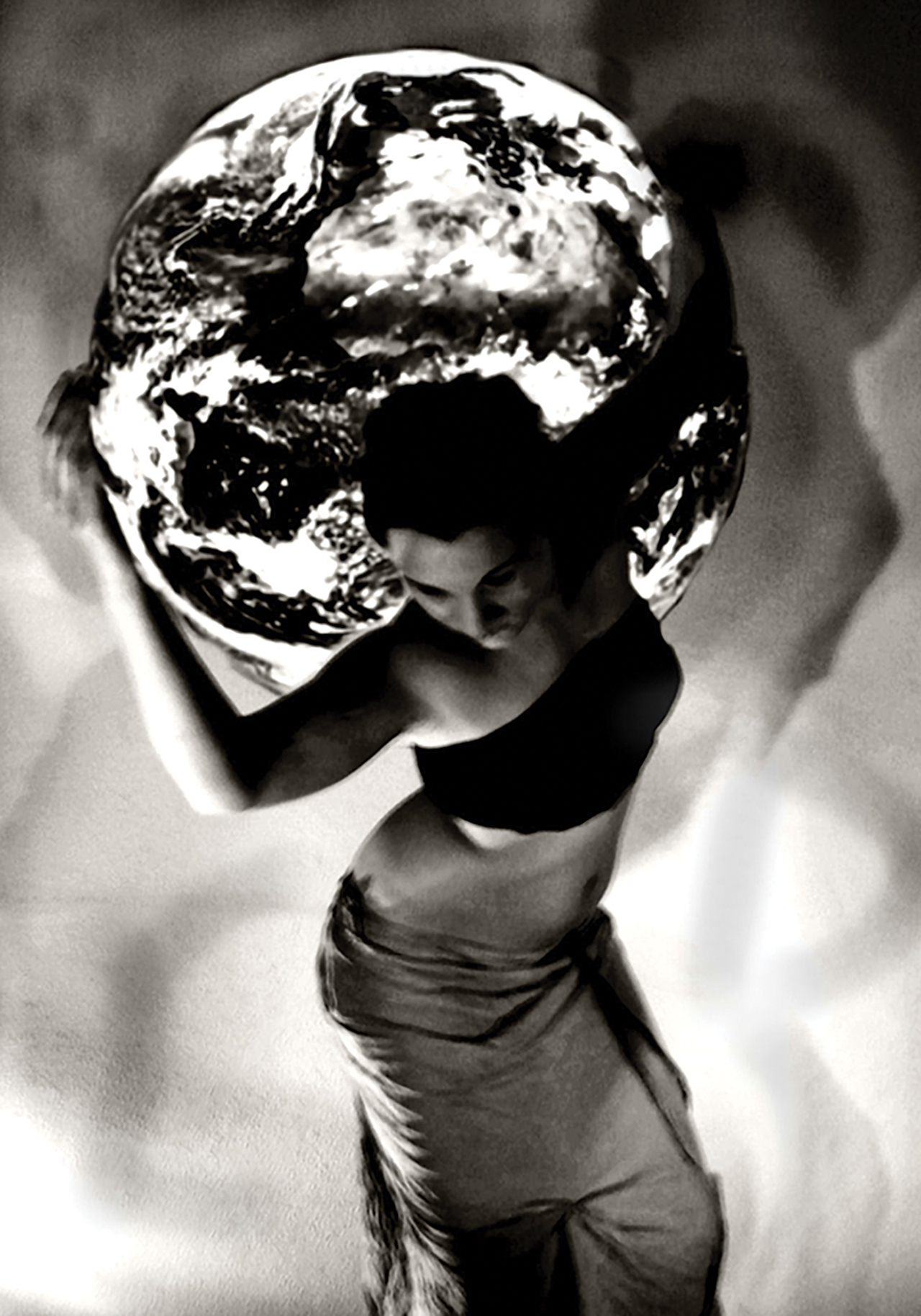
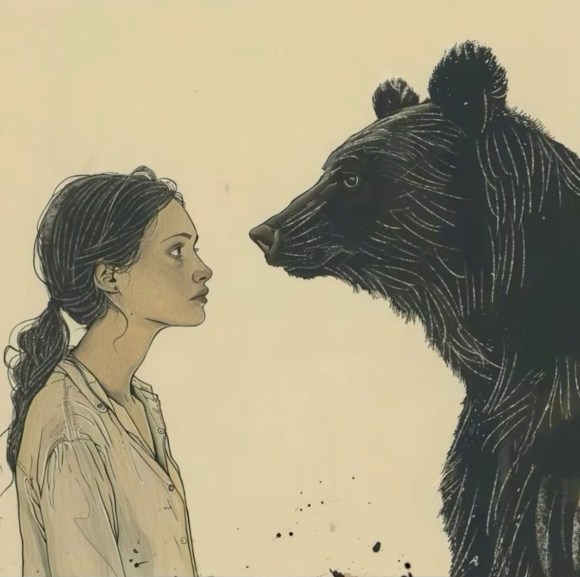
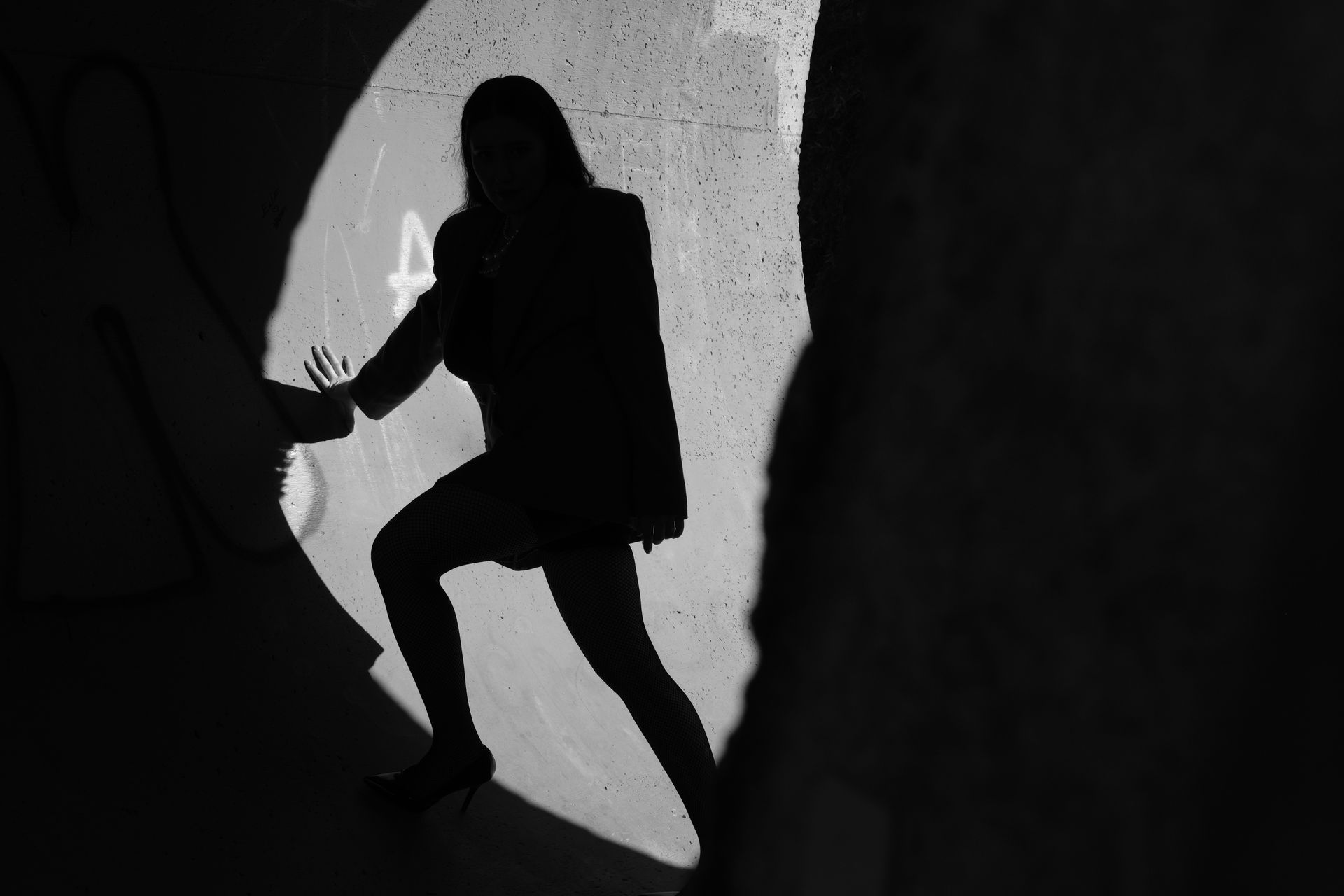
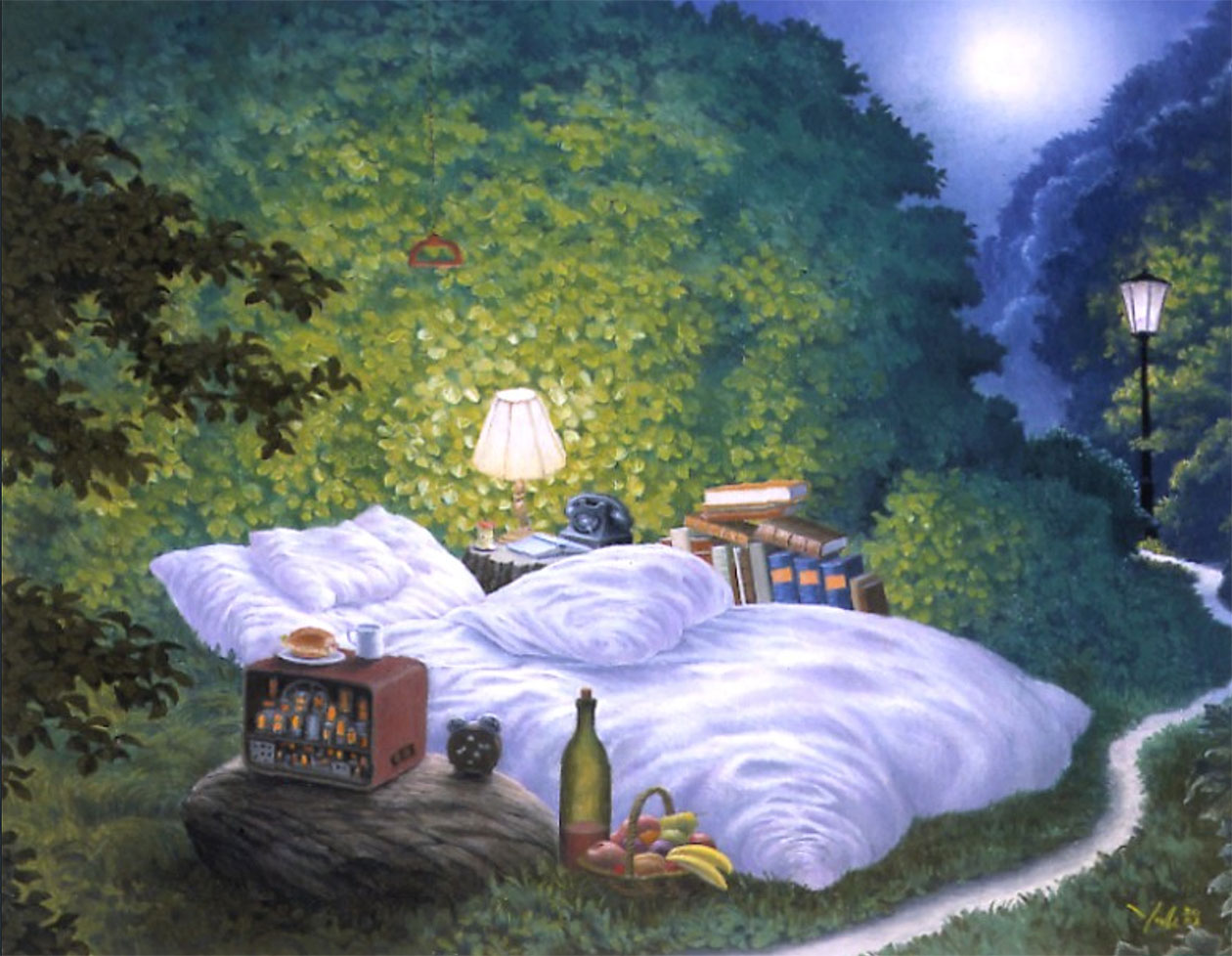
Atlas Was a Woman, by Céline (Melle-T), Deviant Art, 2007
For a friend (or two)(or three)
Even strong women break / fall apart in parking lots our lives upside down / wheels spinning Curse our way through or sleep it out / drink it out, consume it Find the weight so unbearable / our hearts just stop Sure, we can be both / strong and broken capable and crying / put together and a total fucking mess
all
at
the
same
time
Never underestimate the power in that / the force it takes to hold ourselves up while balancing the world
IT BEARS REPEATING
The upcoming series of blog posts is in honor of ALL the women who can, who do, and who keep on doing – who persist – no matter what. They are part of “You Mean A Woman Can Open It,” MANIFEST (zine) #14.
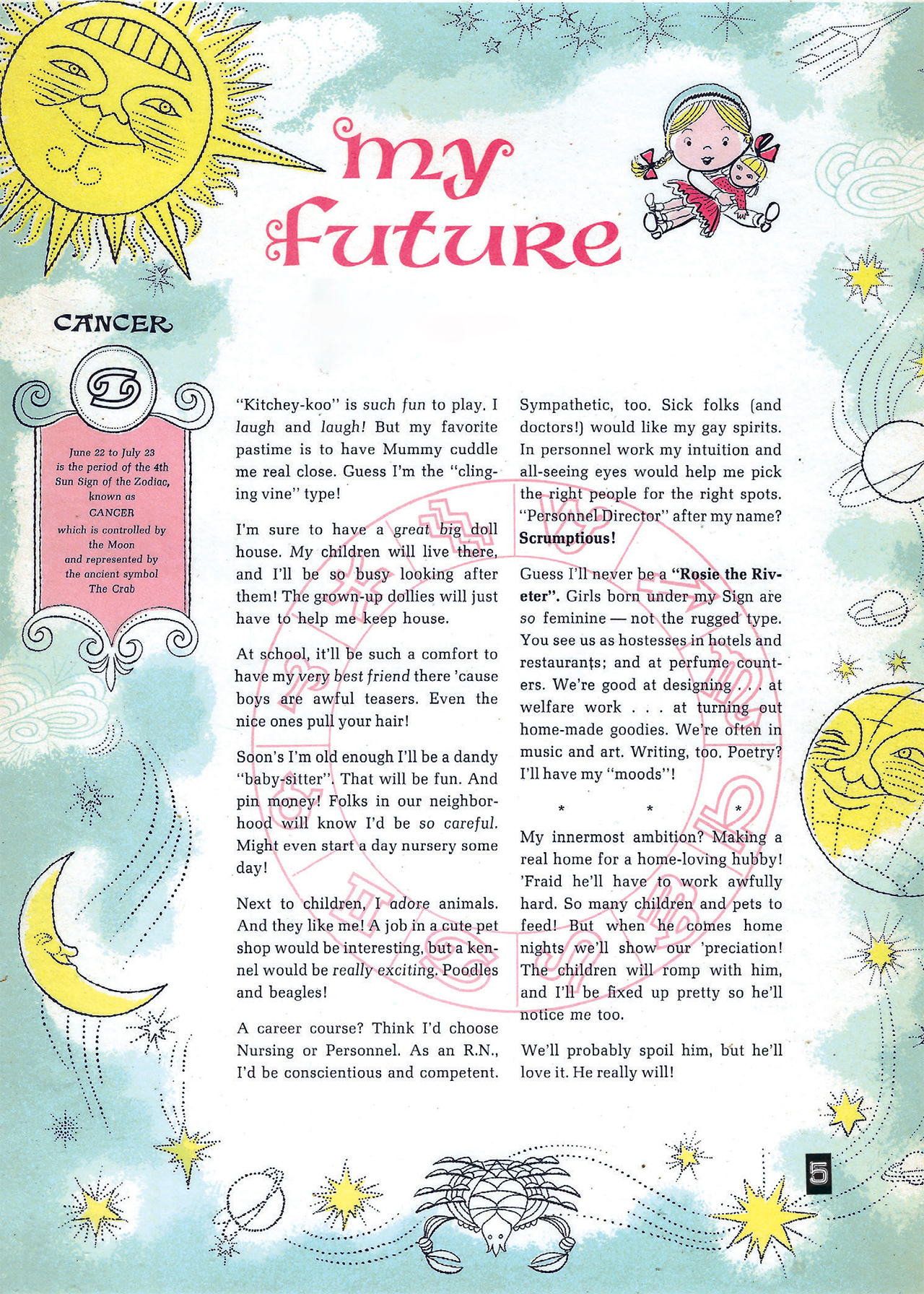
You Mean A Woman Can Open It? 1953 Alcoa Aluminum advertisement.
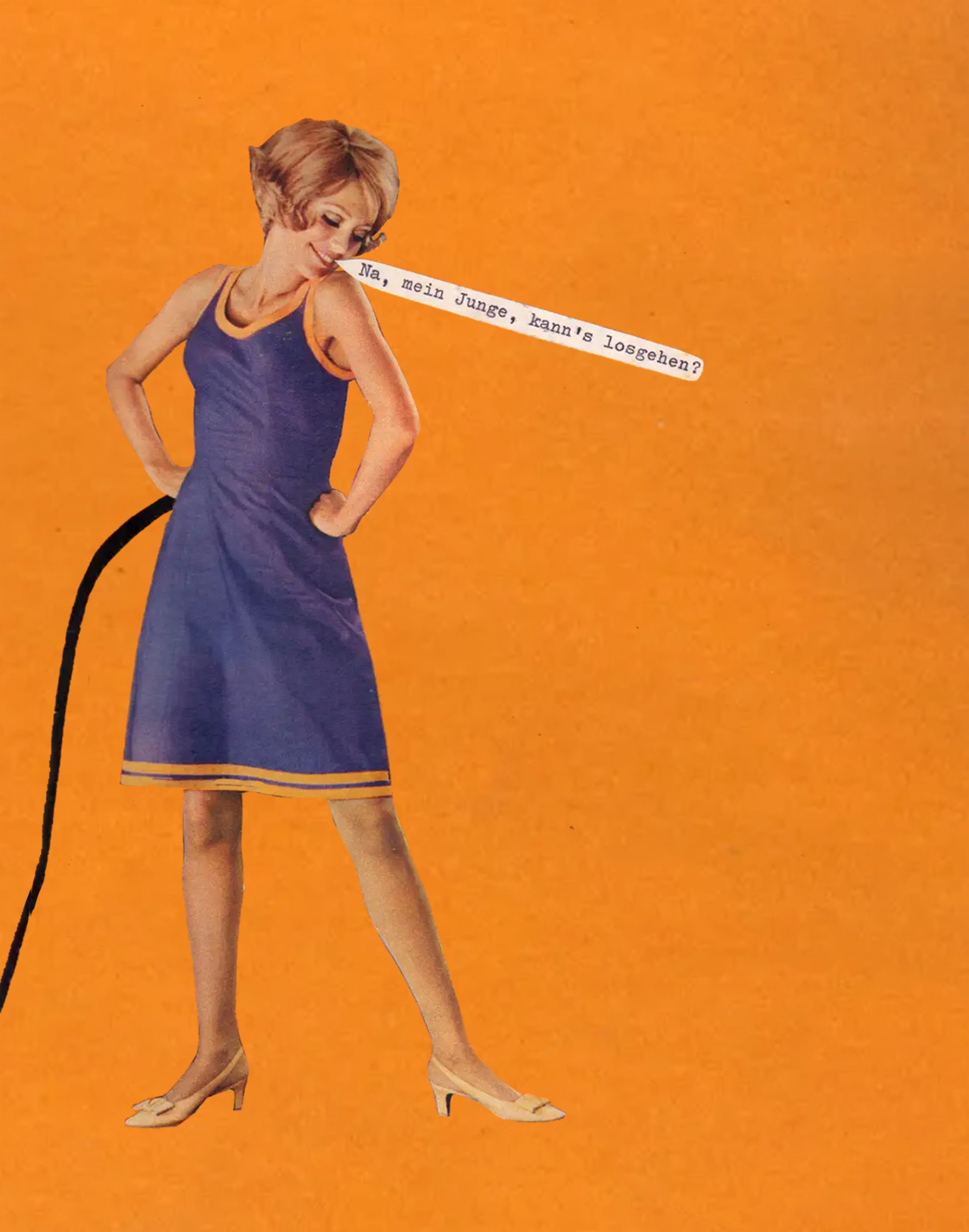
Well, my boy, let’s get started, from “For me, the perfect hostess is the lady with the whip,” German Artist’s Book, 1960s.
Best Loved Nursery Rhymes Picture Book, circa 1950s.
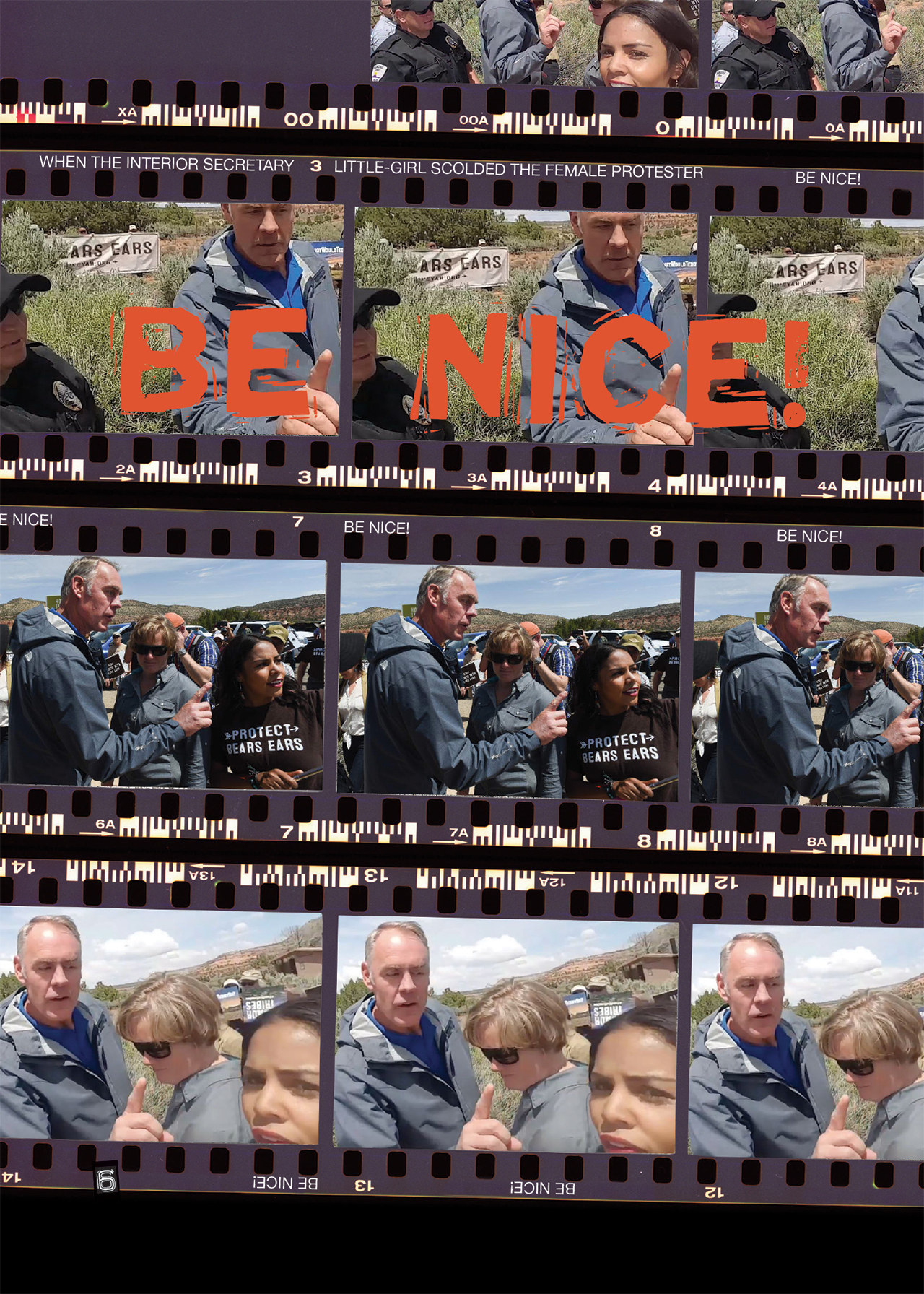
Photos of Ryan Zinke from “Interior Secretary Orders Protester To ‘Be Nice’ During Visit To Bears Ears,” Huffington Post, May 2017.
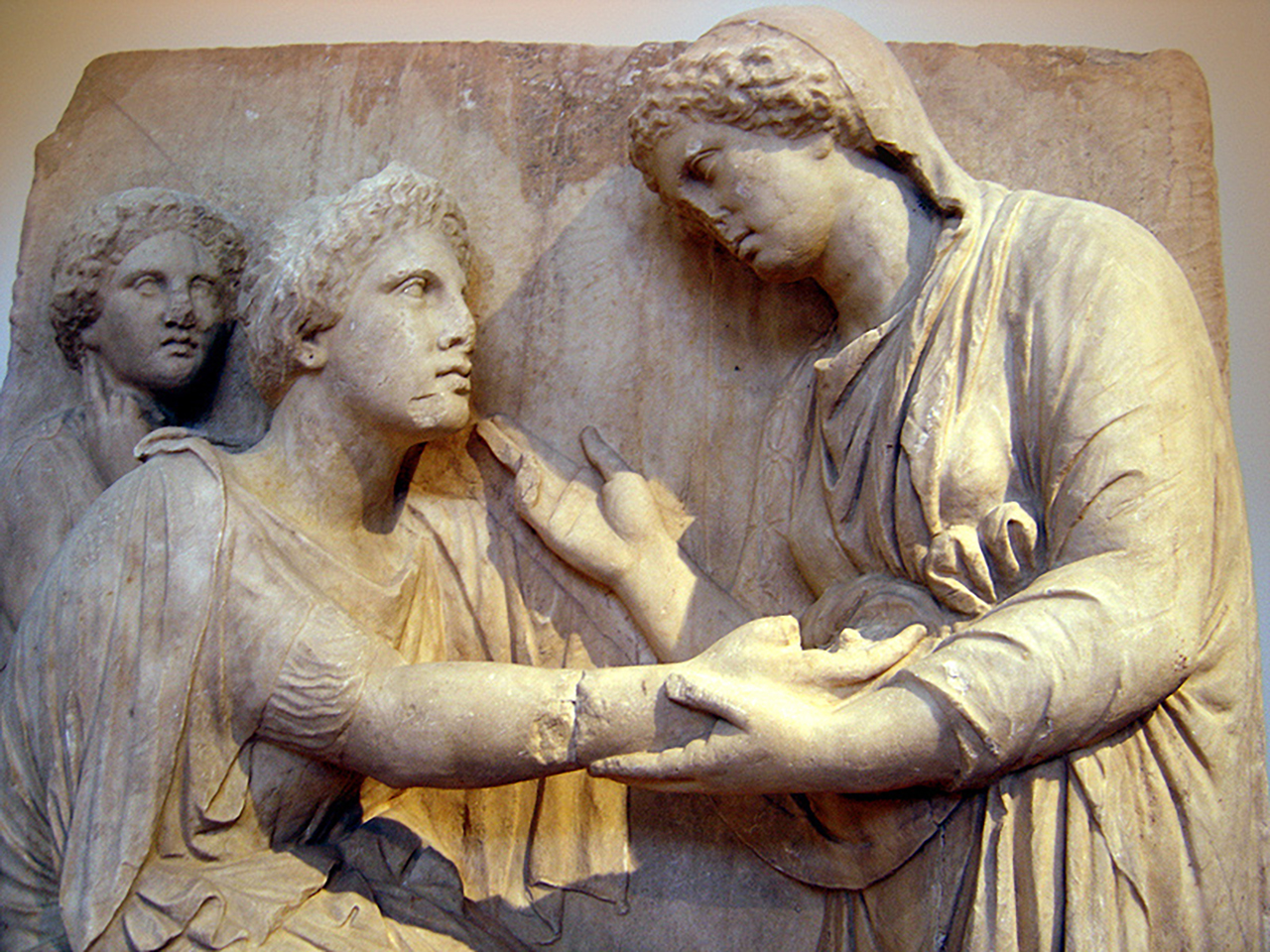
Family group on a grave marker from Athens, National Archaeological Museum, Athens
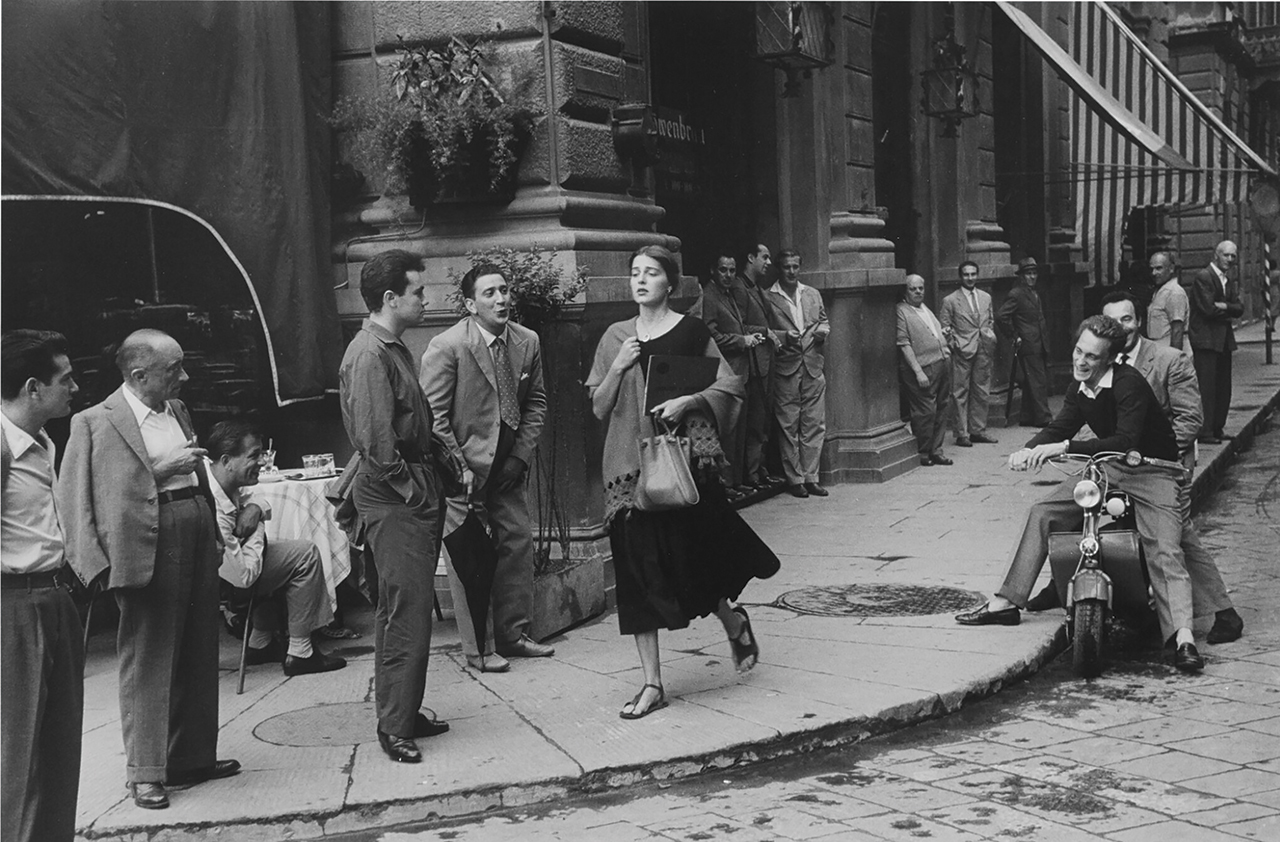
“An American Girl in Italy,” (Ninalee Craig) by Ruth Orkin, 1951.
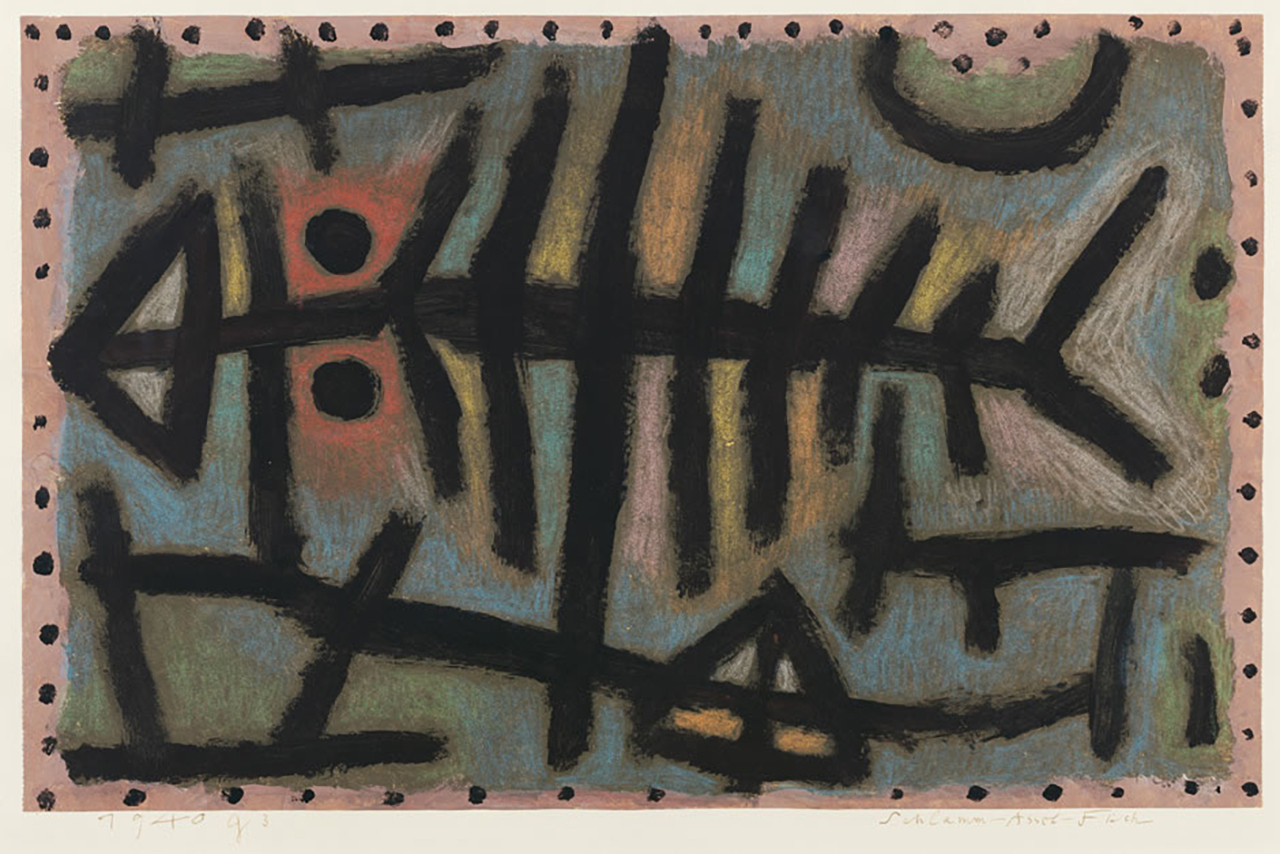
Mess of Fish, Paul Klee
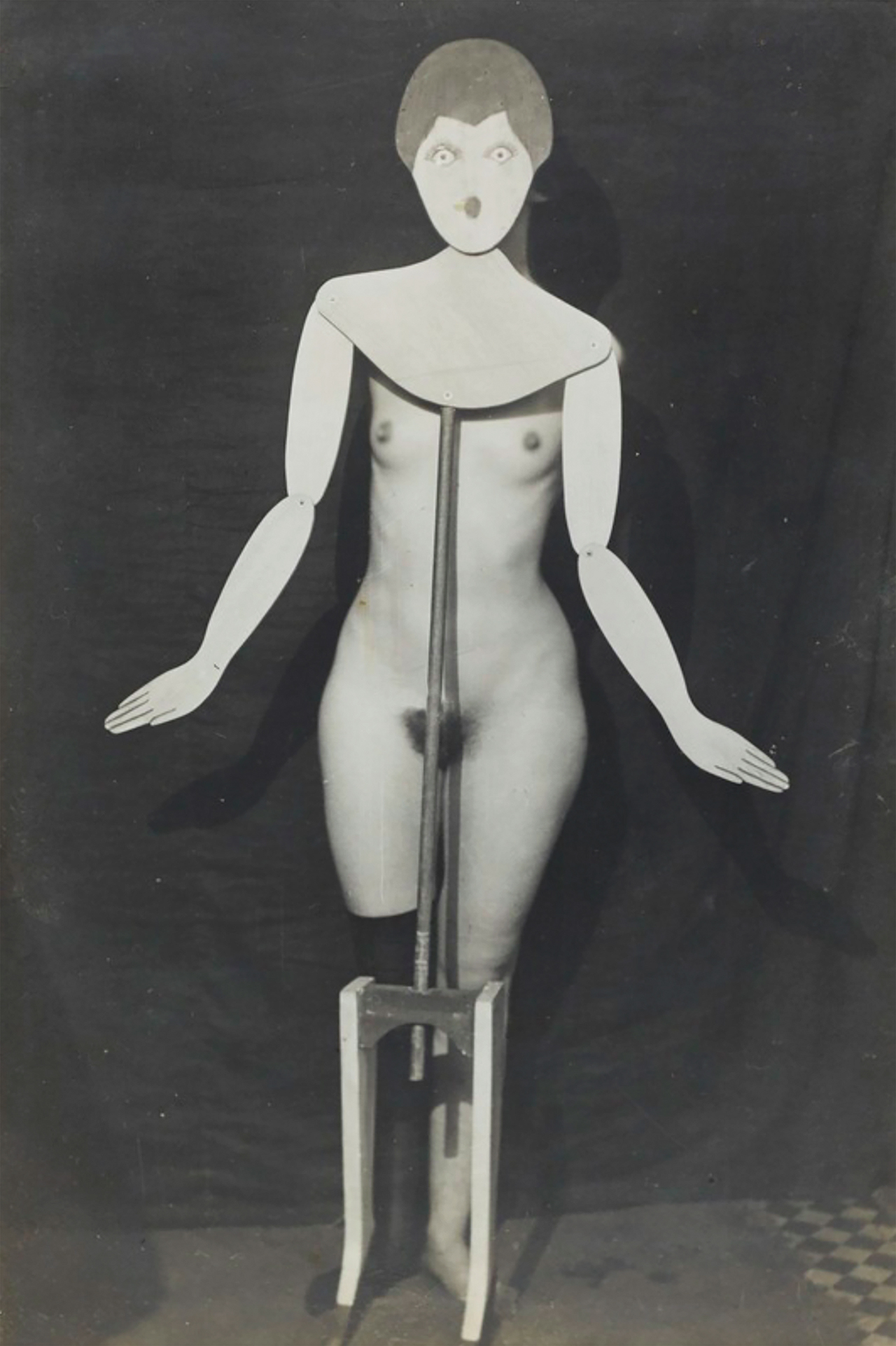
The coat-stand (Porte manteau), by Man Ray, 1920.
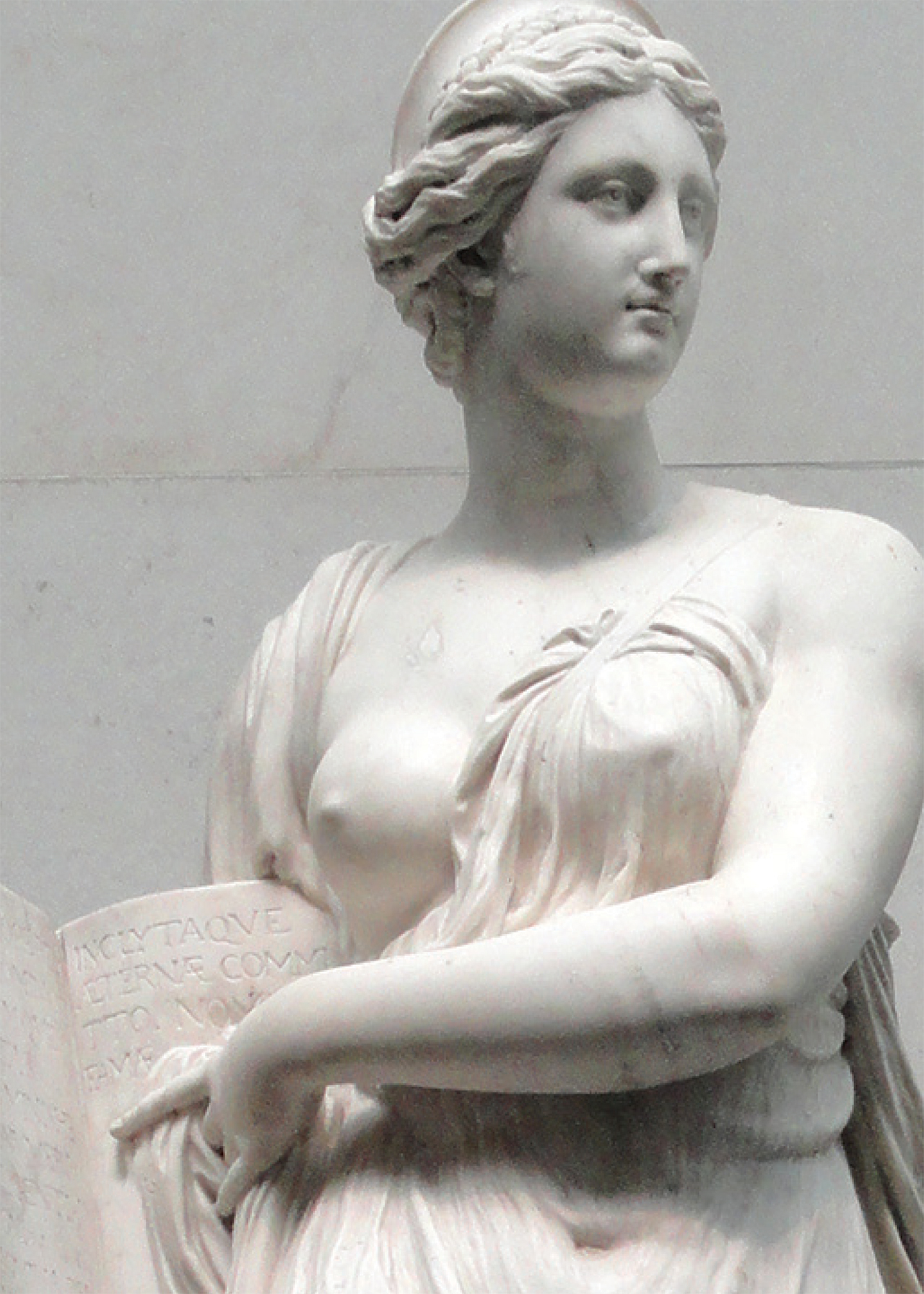
Calliope, Augustin Pajou, 1763.
Vogue sewing pattern, 1980s.
“The history of the pussy bow blouse,” Bethany Armitage, CraftWorld, March 2019.
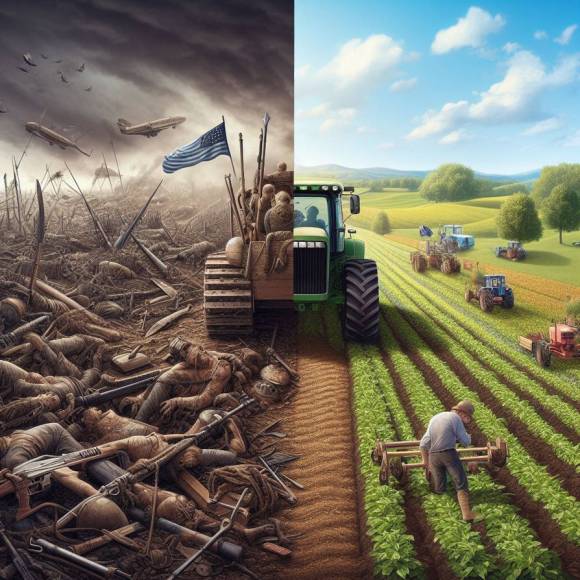
Atlas Was a Woman, by Céline (Melle-T), Deviant Art, 2007.
From the collection of Richard Freiherr von Krafft-Ebing (1840-1902) a German-Austrian psychiatrist + early sexologist, 1886.
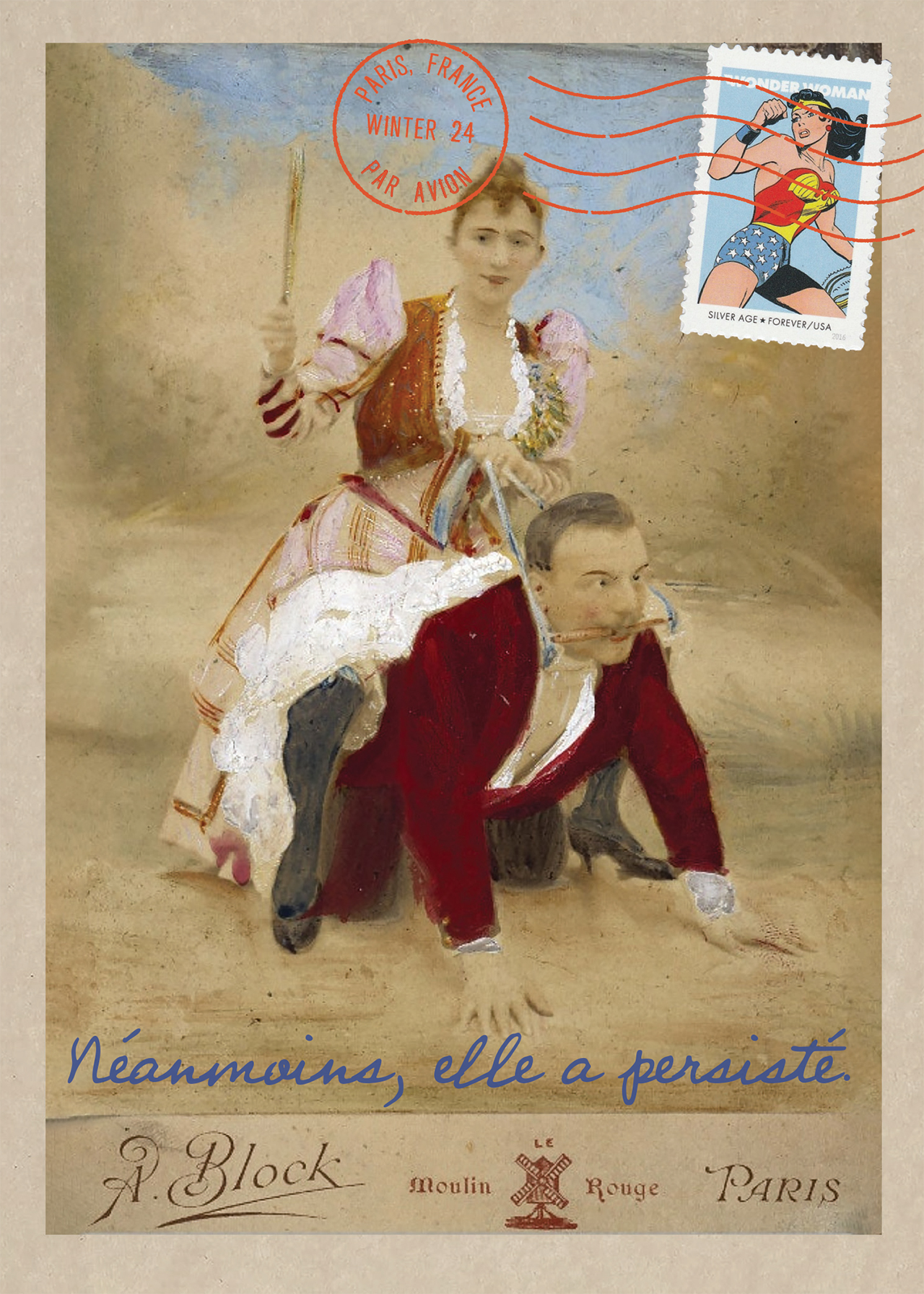
“Nevertheless, she persisted” – an expression adopted by feminists, especially in the U.S. after the Senate voted to require Senator Elizabeth Warren to stop speaking during the confirmation of Jeff Sessions as U.S. Attorney General.
From the collection of Richard Freiherr von Krafft-Ebing (1840-1902) a German-Austrian psychiatrist + early sexologist, 1886.
IT BEARS REPEATING
The upcoming series of blog posts is in honor of ALL the women who can, who do, and who keep on doing – who persist – no matter what. They are part of “You Mean A Woman Can Open It,” MANIFEST (zine) #14.
You Mean A Woman Can Open It? 1953 Alcoa Aluminum advertisement.
Well, my boy, let’s get started, from “For me, the perfect hostess is the lady with the whip,” German Artist’s Book, 1960s.
Best Loved Nursery Rhymes Picture Book, circa 1950s.
Photos of Ryan Zinke from “Interior Secretary Orders Protester To ‘Be Nice’ During Visit To Bears Ears,” Huffington Post, May 2017.
Family group on a grave marker from Athens, National Archaeological Museum, Athens
“An American Girl in Italy,” (Ninalee Craig) by Ruth Orkin, 1951.
Mess of Fish, Paul Klee
The coat-stand (Porte manteau), by Man Ray, 1920.
Calliope, Augustin Pajou, 1763.
Vogue sewing pattern, 1980s.
“The history of the pussy bow blouse,” Bethany Armitage, CraftWorld, March 2019.
Atlas Was a Woman, by Céline (Melle-T), Deviant Art, 2007.
From the collection of Richard Freiherr von Krafft-Ebing (1840-1902) a German-Austrian psychiatrist + early sexologist, 1886.
“Nevertheless, she persisted” – an expression adopted by feminists, especially in the U.S. after the Senate voted to require Senator Elizabeth Warren to stop speaking during the confirmation of Jeff Sessions as U.S. Attorney General.
The year was 1989. I was just out of college and still job searching when I read a want ad in the local newspaper: Seeking Creative Assistant.
When they asked me to bring samples of my work to the interview, I wasn’t sure what I could show them — I’d just been working at a coffee shop making donuts up until then.
So I sorted through my school papers, thought about what a Creative Assistant might be asked to do, and gathered my samples: a 50-page research project on popular magazines at UMass in 1987, an essay about summer people in Connecticut, copies of the high school newspaper I’d edited, and some photos of my annual summer parties, including the most recent Christmas in July.
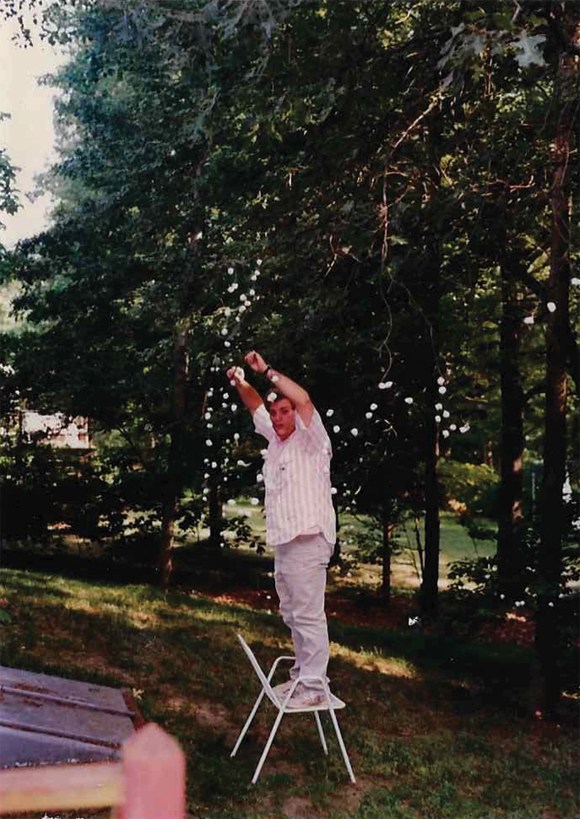
It was the photo of a friend hanging cotton-ball snow for the Christmas party that got me the job, or so Margaret Sprague told me later.
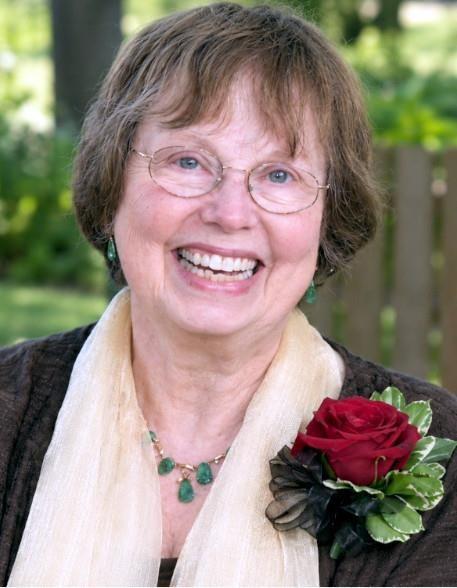
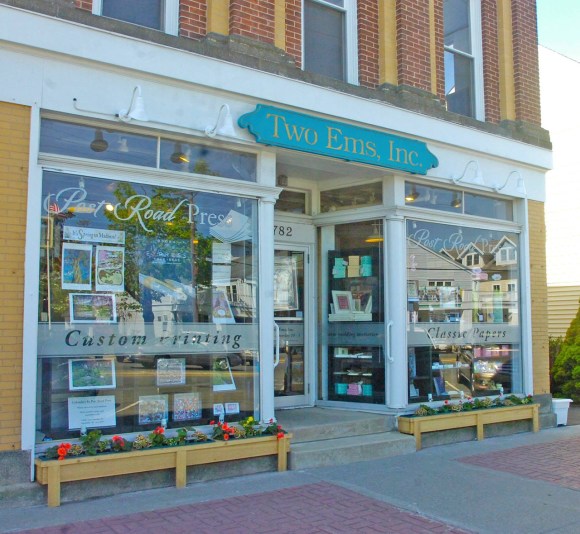
Margaret was the owner of Two Ems, Inc. in Madison, Connecticut, and one of the first rock stars I ever met! 🌟
She started Two Ems in 1980, around the time she was publishing Amie, an award-winning magazine for women on the Connecticut shoreline. By 1989, the business had grown to include a long list of services — public relations, publishing, graphic design, printing — management of the Madison Chamber of Commerce, and a staff of 10 part- and full-time employees (including their new Creative Assistant).
If you asked her about the name of the business — and its double square/double M logo — she would explain how an “em”was a printing term that referred to a unit of measurement in typography.
The term came from the width of the letter “M” in a given typeface. That’s why it’s called an “em.” Back in the days of metal type, each letter was cast on a small block of metal. The width of the capital “M” was roughly equal to the average size of the type and could be used as a standard unit for spacing and layout.1
So an “em” was an important term for communicating with typesetters and printers about margins, indents, and other spacing concerns.
As a woman working in the late 70s and early 80s, Margaret believed that putting this knowledge front-and-center in her business name would give her credibility in the male-dominated world of printing and publishing.
Then she’d tell you, with a sly smile, that her maiden name was Molitor, so Two Ems was a double entendre, hiding in plain sight!
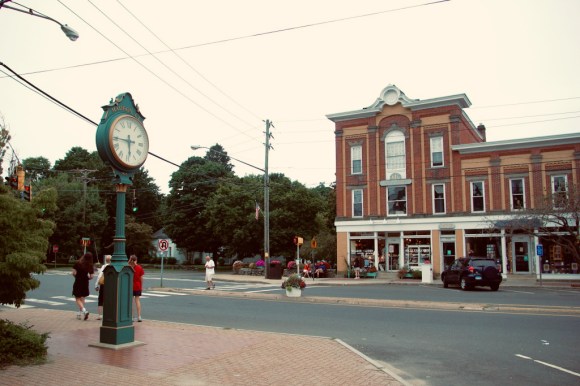
Two Ems was an anchor in Madison for more than 40 years — transforming from a public relations and communications company to a treasured downtown business that provided publishing, printing, and retail services for the shoreline.
According to her recent obituary, in addition to Two Ems, Margaret had varied interests and enjoyed volunteering, often in leadership roles, for the church and many service organizations, including Phi Mu Fraternity, the American Association of University Women, the Deacon John Grave Foundation, the Madison Historical Society, the Daughters of the American Revolution, and the Connecticut Girl Scouts. She created and published a lifestyle magazine for women, produced her own television show on community cable access, and wrote and presented first-person historical accounts to teach new generations about the lives of influential American women.
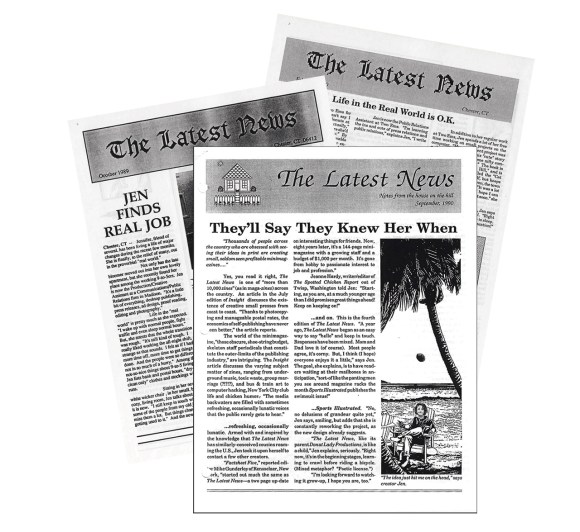
It’s no coincidence that the list of services listed in a Two Ems brochure from 1990 is almost identical to the services I offer my Words by Jen clients today. While I only worked for Margaret a mere two years, I learned so much of what I know now from her and my time at Two Ems: the hieroglyphics of proofreading marks, desktop publishing in Pagemaker on a Mac, how to write a proper press release and design an effective ad. She even encouraged my first foray into publishing, my zine The Latest News.
Truth be told, I would not have been able to do what I do now were it not for those early days at Two Ems with Margaret at the helm. There was a clever creativity about Two Ems, and about Margaret herself, that I have and always will admire.
(or The Time a New Client Came to My Office with Porn Streaming on His Laptop)
He thinks he is a god perhaps because he’s seen through flesh and bone, formed breasts from mounds of earth, created his own father, he says — a graven image in profile.
He pours nectar in a cup, licks ambrosia from wizened lips, insisting the indulgences please his wife, then asks if I am single, looking for collusion.
Finding no inroad, he puts his foot down with bombastic flare, digs a heel into the ground and cocks a smirk, “I know the cut of your jib,” he says with bluster.
But I am moored firmly — unmoved by gods and their theatrics, preferring mere mortals, their rough-hewn souls, and flawed finishes.
IT BEARS REPEATING
The upcoming series of blog posts is in honor of ALL the women who can, who do, and who keep on doing – who persist – no matter what. They are part of “You Mean A Woman Can Open It,” MANIFEST (zine) #14.
You Mean A Woman Can Open It? 1953 Alcoa Aluminum advertisement.
Well, my boy, let’s get started, from “For me, the perfect hostess is the lady with the whip,” German Artist’s Book, 1960s.
Best Loved Nursery Rhymes Picture Book, circa 1950s.
Photos of Ryan Zinke from “Interior Secretary Orders Protester To ‘Be Nice’ During Visit To Bears Ears,” Huffington Post, May 2017.
Family group on a grave marker from Athens, National Archaeological Museum, Athens
“An American Girl in Italy,” (Ninalee Craig) by Ruth Orkin, 1951.
Mess of Fish, Paul Klee
The coat-stand (Porte manteau), by Man Ray, 1920.
Calliope, Augustin Pajou, 1763.
Vogue sewing pattern, 1980s.
“The history of the pussy bow blouse,” Bethany Armitage, CraftWorld, March 2019.
Atlas Was a Woman, by Céline (Melle-T), Deviant Art, 2007.
From the collection of Richard Freiherr von Krafft-Ebing (1840-1902) a German-Austrian psychiatrist + early sexologist, 1886.
“Nevertheless, she persisted” – an expression adopted by feminists, especially in the U.S. after the Senate voted to require Senator Elizabeth Warren to stop speaking during the confirmation of Jeff Sessions as U.S. Attorney General.
One of the things I say often in my work is “We need a fresh set of eyes.” I remember a poster at my first job that had those words written in large print with a pair of glaring eyeballs. As a graphic designer — then and now — it meant having somebody else look at your work before it went to press, because you’d been staring at it for so long you were not going see the typos and other mistakes.
I was thinking about “fresh set of eyes” just this week. My friend Alyssa, age 6, was visiting, and we were looking through one of my old journals filled with collage, paintings, and cut-out pieces of paper. She was curious and asking lots of questions.
TBH, I was curious too!
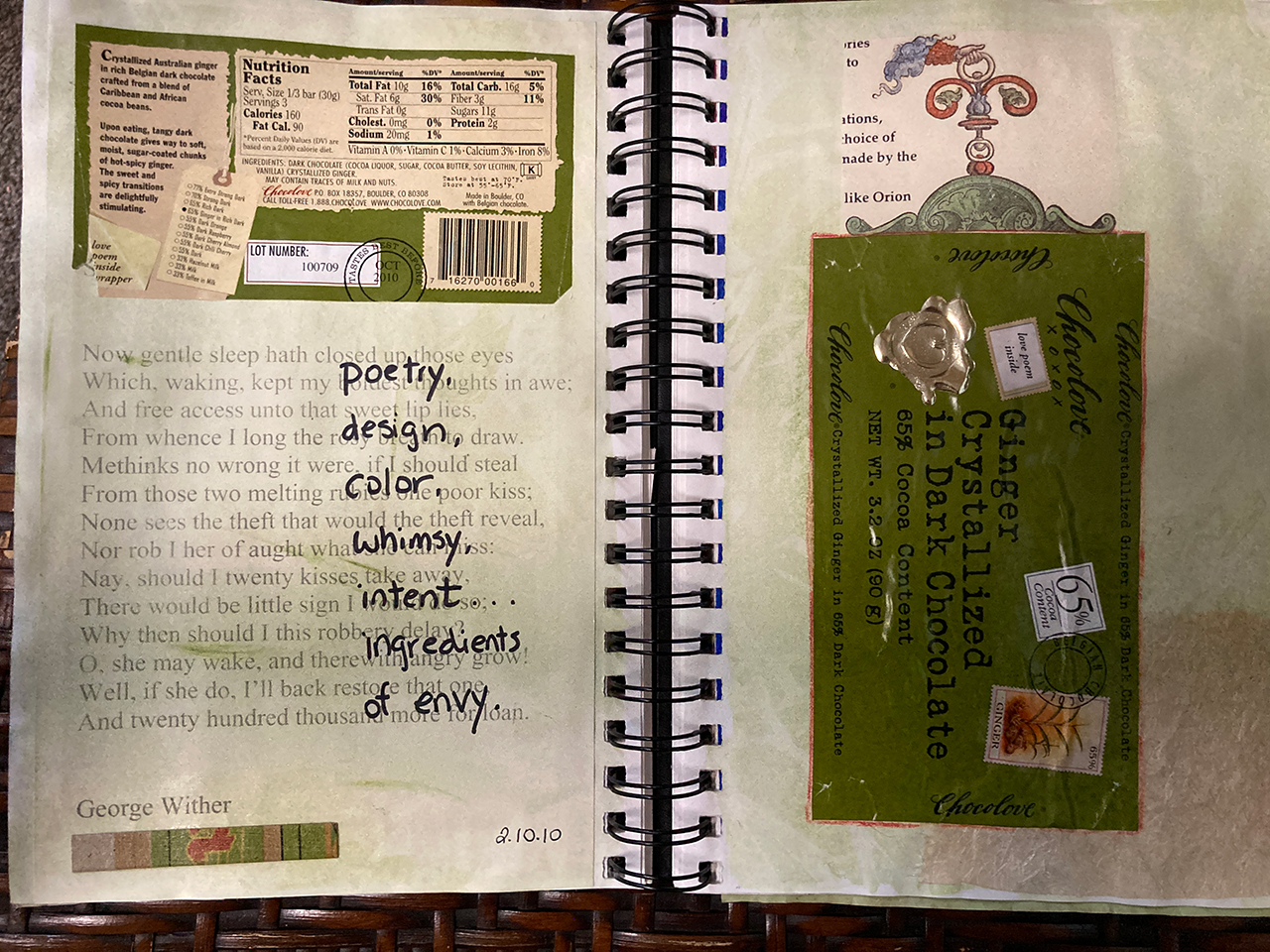
On those pages were teabag fobs and candy bar wrappers, stamps and quotes, and all of the things that I was seeing with fresh eyes — back then, as an artist new to collage and mixed media. It made me think a lot about what I see now versus what I was seeing back then.
I remember learning about fonts and typefaces when I first got into graphic design back in the late 80s. It was so exciting! Everywhere I looked, I was seeing fonts — the Helveticas and Times New Romans, the Zapf Chanceries and Couriers. I remember paying a lot of attention to those for a long time.
It was the same thing with the collage journals. I was seeing what I was learning, seeing the possibilities of ephemera all around. It’s the Baader–Meinhof phenomenon — when you start to notice something more often because you’re aware of it. More simply, it’s paying attention. That was the mantra of my former mentor Dale Carlson: PAY ATTENTION! It was, for her, synonymous with meditation.
It was that same attention PAY ATTENTION that I remember clearly when I started walking in the woods. Everything was new: the sites, the sounds, the smells! I wanted to have names for the trees and the flowers and those weird white stalks clustered in the middle of the forest (Indian Ghost Pipe)!
I would take photos. Get down on my hands and knees to examine leaves and petals. I learned plant ID and Latin names. Studied tree barks. Learned bird calls by sound and mnemonics.
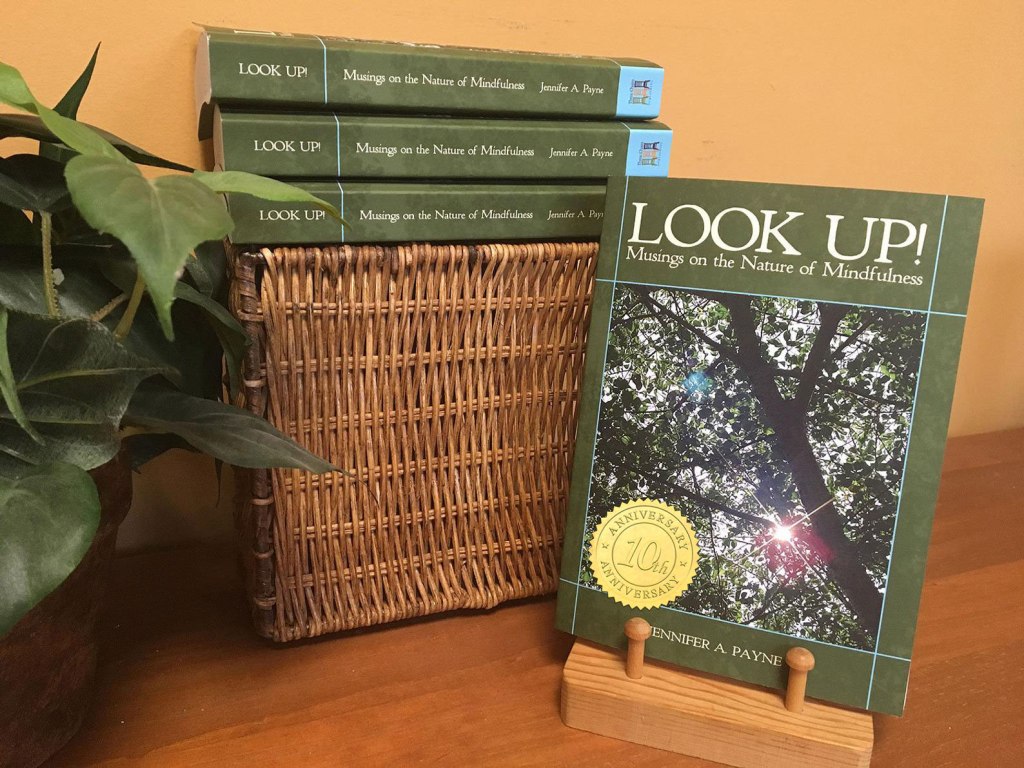
It was that attention, that observation and consideration, that became the foundation of my blog writing and my first book: LOOK UP! Musings on the Nature of Mindfulness. Mindfulness or awareness, maybe even mediation, that’s what we’re talking about right?
Paying attention. Being mindful. Being present!
I know I’m not the only one who can say I’m not nearly as mindful or present as I was when I was writing LOOK UP! Smartphones and social media were just babies back then. We were all riding high on the hope of the Obama presidency, and Climate Change was something we still could change. Life was good. Oh sure, there were distractions. And it wasn’t completely idyllic. But it certainly wasn’t the chaotic, attention-depleting, disappointing world that we live in now.
But here’s the interesting thing…when I settle down into something that demands my attention, something that needs me to be fully present, like answering the myriad questions of my friend Alyssa or writing this essay, when I engaged in these things that require my attention and my focus, all of the external chaos fades away.
It’s like that science experiment where soap parts the pepper and water. Attention parts chaos.
I know some folks who can sit quietly in meditation, who can do the deep breathing and the pushing away of thoughts. That’s not me. And I’ve struggled with that for more than 20 years! But Dale was the first person to explain to me that there are many ways to meditate. This is what she says in her book Stop the Pain: Adult Mediations:
“If you like to read, begin your journey into stillness with reading, Krishnamurti or the Bible, Buddhist teachings, the Hindu Gita, the prose of W.E.B. Du Bois, Chief Seattle, a Walt Whitman poem, the Tao. If your nervous system is the result of an active gene pool or you are personally too frayed to sit down right off, begin with a walk, yoga or other stretch postures, a bike ride, gardening, a swim, or learn one of the attentive arts, kung fu, taekwondo, tai chi, Sufi dancing.”
For me, anything that stops the busy brain, anything that disconnects me momentarily from this chaotic world we’re living in, that’s meditation, that’s being present with yourself for a little while. And we all need that!
So what are the ways that you reconnect with yourself? What are the ways that you disconnect from all of the things swirling around you?
I confess, I was a bit offended when one of the characters on my favorite television show walked on scene wearing a pussy bow blouse recently.
The show – Grey’s Anatomy – has long been known for putting women front and center. Strong female characters on screen, important topics like abortion rights and domestic violence, and women in roles from producers and directors, to writers and camera operators.
So the pussy bow surprised me. I’ve always thought of the fashion as something women had to wear in the 70s and 80s; a requisite corporate uniform to simulate the male necktie. Right?
Wrong.
Not a euphemism – originally anyhow – the pussy bow “tied high under your chin” was named after a ribbon one might tie around a kitten’s neck. It first appeared as a design in the early 20th century, and was considered highly feminine. It was a favorite of movie stars in the 1940s and 50s, and later picked up by designers like Coco Chanel and Yves Saint Laurent. But, “over the years the pussy-bow blouse has evolved into a symbol of power for women in popular culture,” writes Bethany Armitage from CraftWorld.
“In the 1960s and 70s, as new opportunities began to grow and develop for working women, so did the popularity of the blouse. Trailblazing women who led the way to the top of their corporate careers had no established examples of how to dress and so looked to their male counterparts for cues. The blouse emulated an alternative to the traditional suit and tie, combining masculine work wear with a frill of femininity which made it an ideal choice for women who were looking to stand out and make an impact in a male-dominated environment.”
Fast forward a few decades, and apparently, the pussy bow blouse is making a big comeback. Again. It’s considered retro and vintage. A fashion statement. It’s a sign of female power, as well as a humble nod to the women who boldly stepped into the workforce and never, ever, looked back.
IT BEARS REPEATING
The upcoming series of blog posts is in honor of ALL the women who can, who do, and who keep on doing – who persist – no matter what. They are part of “You Mean A Woman Can Open It,” MANIFEST (zine) #14.
You Mean A Woman Can Open It? 1953 Alcoa Aluminum advertisement.
Well, my boy, let’s get started, from “For me, the perfect hostess is the lady with the whip,” German Artist’s Book, 1960s.
Best Loved Nursery Rhymes Picture Book, circa 1950s.
Photos of Ryan Zinke from “Interior Secretary Orders Protester To ‘Be Nice’ During Visit To Bears Ears,” Huffington Post, May 2017.
Family group on a grave marker from Athens, National Archaeological Museum, Athens
“An American Girl in Italy,” (Ninalee Craig) by Ruth Orkin, 1951.
Mess of Fish, Paul Klee
The coat-stand (Porte manteau), by Man Ray, 1920.
Calliope, Augustin Pajou, 1763.
Vogue sewing pattern, 1980s.
“The history of the pussy bow blouse,” Bethany Armitage, CraftWorld, March 2019.
Atlas Was a Woman, by Céline (Melle-T), Deviant Art, 2007.
From the collection of Richard Freiherr von Krafft-Ebing (1840-1902) a German-Austrian psychiatrist + early sexologist, 1886.
“Nevertheless, she persisted” – an expression adopted by feminists, especially in the U.S. after the Senate voted to require Senator Elizabeth Warren to stop speaking during the confirmation of Jeff Sessions as U.S. Attorney General.
We sit, five of us, naked around the meeting table in the office of men who arrive, late, in suits and ties, and we laugh at how silly it is — smart women, business women, and these men — these men — insisting their way as we play along, again then he calls me girl — a little girl — and we laugh.
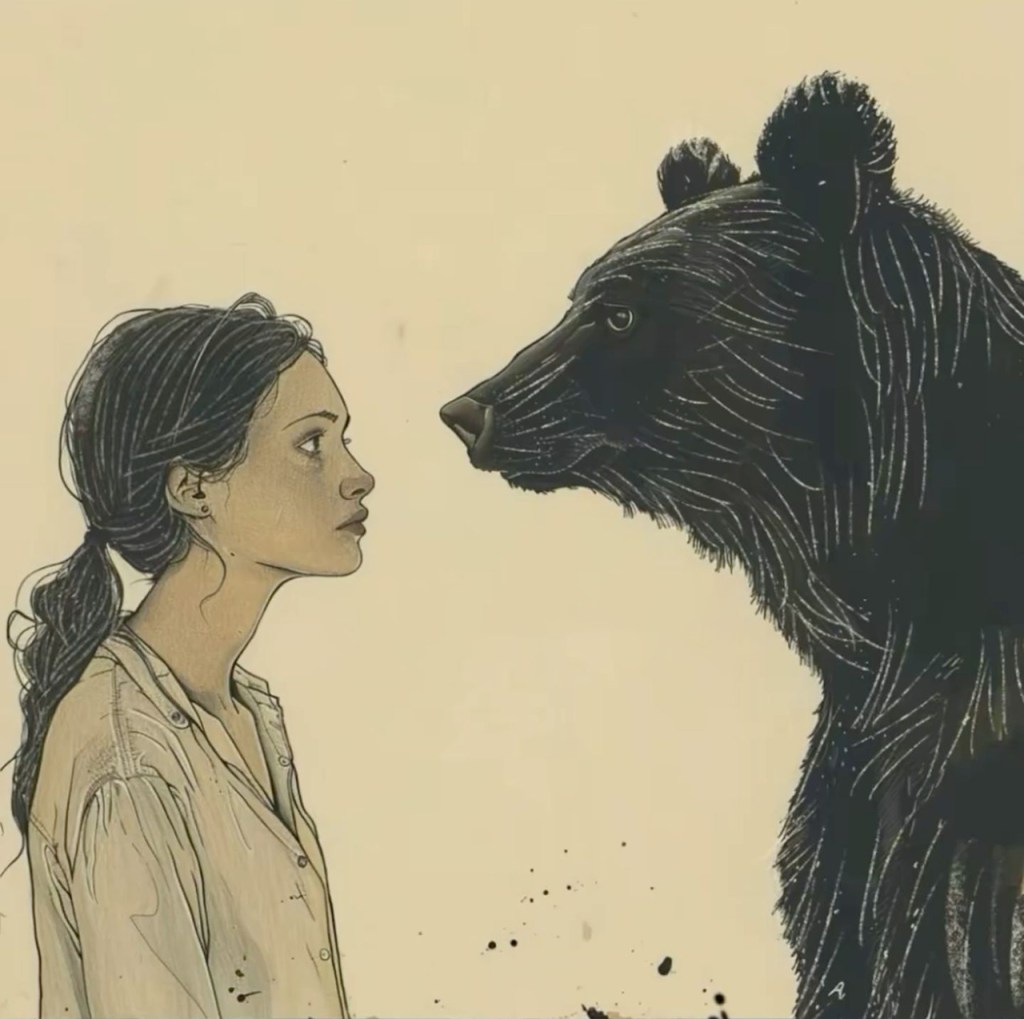
Later, in the lobby, as I hold up a bedsheet to my hide my self, I see across the room the lover who loved with shouts and shoves; he smiles and we embrace like old friends, then he shape-shifts bear, fox, jackal, demon holds a fist up to my face and laughs — he laughs —
And I wake up, naked deciphering dreams, their train window filmstrip passing, passing passing ever so briefly resurfacing to remind and retell stories almost forgot — but not — ever.
IT BEARS REPEATING
The upcoming series of blog posts is in honor of ALL the women who can, who do, and who keep on doing – who persist – no matter what. They are part of “You Mean A Woman Can Open It,” MANIFEST (zine) #14.
You Mean A Woman Can Open It? 1953 Alcoa Aluminum advertisement.
Well, my boy, let’s get started, from “For me, the perfect hostess is the lady with the whip,” German Artist’s Book, 1960s.
Best Loved Nursery Rhymes Picture Book, circa 1950s.
Photos of Ryan Zinke from “Interior Secretary Orders Protester To ‘Be Nice’ During Visit To Bears Ears,” Huffington Post, May 2017.
Family group on a grave marker from Athens, National Archaeological Museum, Athens
“An American Girl in Italy,” (Ninalee Craig) by Ruth Orkin, 1951.
Mess of Fish, Paul Klee
The coat-stand (Porte manteau), by Man Ray, 1920.
Calliope, Augustin Pajou, 1763.
Vogue sewing pattern, 1980s.
“The history of the pussy bow blouse,” Bethany Armitage, CraftWorld, March 2019.
Atlas Was a Woman, by Céline (Melle-T), Deviant Art, 2007.
From the collection of Richard Freiherr von Krafft-Ebing (1840-1902) a German-Austrian psychiatrist + early sexologist, 1886.
“Nevertheless, she persisted” – an expression adopted by feminists, especially in the U.S. after the Senate voted to require Senator Elizabeth Warren to stop speaking during the confirmation of Jeff Sessions as U.S. Attorney General.
I rarely thought of that night in the gatehouse that overlooked the Sound, salt air moist on lips, and wine.
You wore a white sweater, the kind mariners wear while they tear hooks from small fish and throw them overboard.
There was a fire in the fireplace, and you sat on the floor next to me with your arm around my shoulders, laughing.
I can still see your face, that smirk of a smile that made my heart swim; feel the spot in my chest where love and anxiety mixed often with you.
There was a white robe in your bathroom, a second toothbrush in a cup — the things a woman leaves behind when she is certain she will not be discarded.
They were not mine.
My things were in a pile on the floor next to your bed where you left me in the dark, gutted and alone — the sound of a door somewhere shutting.
IT BEARS REPEATING
The upcoming series of blog posts is in honor of ALL the women who can, who do, and who keep on doing – who persist – no matter what. They are part of “You Mean A Woman Can Open It,” MANIFEST (zine) #14.
You Mean A Woman Can Open It? 1953 Alcoa Aluminum advertisement.
Well, my boy, let’s get started, from “For me, the perfect hostess is the lady with the whip,” German Artist’s Book, 1960s.
Best Loved Nursery Rhymes Picture Book, circa 1950s.
Photos of Ryan Zinke from “Interior Secretary Orders Protester To ‘Be Nice’ During Visit To Bears Ears,” Huffington Post, May 2017.
Family group on a grave marker from Athens, National Archaeological Museum, Athens
“An American Girl in Italy,” (Ninalee Craig) by Ruth Orkin, 1951.
Mess of Fish, Paul Klee
The coat-stand (Porte manteau), by Man Ray, 1920.
Calliope, Augustin Pajou, 1763.
Vogue sewing pattern, 1980s.
“The history of the pussy bow blouse,” Bethany Armitage, CraftWorld, March 2019.
Atlas Was a Woman, by Céline (Melle-T), Deviant Art, 2007.
From the collection of Richard Freiherr von Krafft-Ebing (1840-1902) a German-Austrian psychiatrist + early sexologist, 1886.
“Nevertheless, she persisted” – an expression adopted by feminists, especially in the U.S. after the Senate voted to require Senator Elizabeth Warren to stop speaking during the confirmation of Jeff Sessions as U.S. Attorney General.
“An American Girl in Italy,” (Ninalee Craig) by Ruth Orkin, 1951.
the one who watched her walk to sixth grade from his front door, bathrobe open, exposed
the one who slipped a tongue when no one was watching, just a goodnight kiss to a friend’s teen daughter
the one who assumed flirt meant fuck, crushed her hard against a suddenly reclined seat
the one who grabbed her like a Happy Meal expectation after their drive-thru supper
the one who insisted on air conditioning in winter, who joked about cold nipples while pouring hot coffee in the breakroom
the one who called her “girl” in a room full of men, then ignored her while she led the meeting
the one who slammed her into a corner, left bruises as a reminder that dishes were to be done before he got home
the one who dined her, wined her, loved her, then left her alone, in the dark…and never came back
IT BEARS REPEATING
The upcoming series of blog posts is in honor of ALL the women who can, who do, and who keep on doing – who persist – no matter what. They are part of “You Mean A Woman Can Open It,” MANIFEST (zine) #14.
You Mean A Woman Can Open It? 1953 Alcoa Aluminum advertisement.
Well, my boy, let’s get started, from “For me, the perfect hostess is the lady with the whip,” German Artist’s Book, 1960s.
Best Loved Nursery Rhymes Picture Book, circa 1950s.
Photos of Ryan Zinke from “Interior Secretary Orders Protester To ‘Be Nice’ During Visit To Bears Ears,” Huffington Post, May 2017.
Family group on a grave marker from Athens, National Archaeological Museum, Athens
“An American Girl in Italy,” (Ninalee Craig) by Ruth Orkin, 1951.
Mess of Fish, Paul Klee
The coat-stand (Porte manteau), by Man Ray, 1920.
Calliope, Augustin Pajou, 1763.
Vogue sewing pattern, 1980s.
“The history of the pussy bow blouse,” Bethany Armitage, CraftWorld, March 2019.
Atlas Was a Woman, by Céline (Melle-T), Deviant Art, 2007.
From the collection of Richard Freiherr von Krafft-Ebing (1840-1902) a German-Austrian psychiatrist + early sexologist, 1886.
“Nevertheless, she persisted” – an expression adopted by feminists, especially in the U.S. after the Senate voted to require Senator Elizabeth Warren to stop speaking during the confirmation of Jeff Sessions as U.S. Attorney General.
The upcoming series of blog posts is in honor of ALL the women who can, who do, and who keep on doing – who persist – no matter what. They are part of “You Mean A Woman Can Open It,” MANIFEST (zine) #14.
You Mean A Woman Can Open It? 1953 Alcoa Aluminum advertisement.
Well, my boy, let’s get started, from “For me, the perfect hostess is the lady with the whip,” German Artist’s Book, 1960s.
Best Loved Nursery Rhymes Picture Book, circa 1950s.
Photos of Ryan Zinke from “Interior Secretary Orders Protester To ‘Be Nice’ During Visit To Bears Ears,” Huffington Post, May 2017.
Family group on a grave marker from Athens, National Archaeological Museum, Athens
“An American Girl in Italy,” (Ninalee Craig) by Ruth Orkin, 1951.
Mess of Fish, Paul Klee
The coat-stand (Porte manteau), by Man Ray, 1920.
Calliope, Augustin Pajou, 1763.
Vogue sewing pattern, 1980s.
“The history of the pussy bow blouse,” Bethany Armitage, CraftWorld, March 2019.
Atlas Was a Woman, by Céline (Melle-T), Deviant Art, 2007.
From the collection of Richard Freiherr von Krafft-Ebing (1840-1902) a German-Austrian psychiatrist + early sexologist, 1886.
“Nevertheless, she persisted” – an expression adopted by feminists, especially in the U.S. after the Senate voted to require Senator Elizabeth Warren to stop speaking during the confirmation of Jeff Sessions as U.S. Attorney General.
Family group on a grave marker from Athens, National Archaeological Museum, Athens
My mother — not content with “grandcats” tries to set me up.
A nice man, she says. Goes to church. Works at a bank. Drives a nice car.
“Does he write?” I ask. “Paint?” “Dream?”
“I don’t know, you’ll like him,” she insists. Hopes.
“I have enough,” I tell her. “My work, writing, the house, friends.”
“Think about it,” she says. “I have,” I respond.
She asks again, a week later. Three weeks later. “No, Mom.”
“I don’t understand,” she says me. “You don’t understand,” I reply.
“You meet, no?” says her boyfriend, the older Greek man from upstairs.
“You talk. You like. You get married. No?”
“NO!” I think to scream — but am polite to my elders.
“Honey,” he says, “You are alone. You get married, you are happy.”
“I am happy,” I insist, no doubt in Swahili.
IT BEARS REPEATING
The upcoming series of blog posts is in honor of ALL the women who can, who do, and who keep on doing – who persist – no matter what. They are part of “You Mean A Woman Can Open It,” MANIFEST (zine) #14.
You Mean A Woman Can Open It? 1953 Alcoa Aluminum advertisement.
Well, my boy, let’s get started, from “For me, the perfect hostess is the lady with the whip,” German Artist’s Book, 1960s.
Best Loved Nursery Rhymes Picture Book, circa 1950s.
Photos of Ryan Zinke from “Interior Secretary Orders Protester To ‘Be Nice’ During Visit To Bears Ears,” Huffington Post, May 2017.
Family group on a grave marker from Athens, National Archaeological
Museum, Athens “An American Girl in Italy,” (Ninalee Craig) by Ruth Orkin, 1951.
Mess of Fish, Paul Klee
The coat-stand (Porte manteau), by Man Ray, 1920.
Calliope, Augustin Pajou, 1763.
Vogue sewing pattern, 1980s.
“The history of the pussy bow blouse,” Bethany Armitage, CraftWorld, March 2019.
Atlas Was a Woman, by Céline (Melle-T), Deviant Art, 2007.
From the collection of Richard Freiherr von Krafft-Ebing (1840-1902) a German-Austrian psychiatrist + early sexologist, 1886.
“Nevertheless, she persisted” – an expression adopted by feminists, especially in the U.S. after the Senate voted to require Senator Elizabeth Warren to stop speaking during the confirmation of Jeff Sessions as U.S. Attorney General.
The museum is celebrating America’s 250th anniversary with themed exhibits that offer an “opportunity to pause and reflect on our nation’s past, honor the contributions of all American artists, and look ahead toward the future of our nation.”
The future. Perhaps that is why I found myself equally inspired and weepy.
I was incredibly inspired, for example, by the fabulous exhibit “Architects of Being” which showcased a collection of sculpture, painting, collage, fashion and jewelry by mid-century artists Louise Nevelson and Esphyr Slobodkina. The curation and presentation of their work was delicious — I am still savoring the flirty pop of orange that was teased throughout the gallery. And John Hitchcock’s “We are Defined by the Beat!” was an experience of color and sound and memory.
Truth be told, I am always energized by the wild, out-of-the-box minds of contemporary artists in an I-Wanna-Be-An-Artist-Too kind of way.
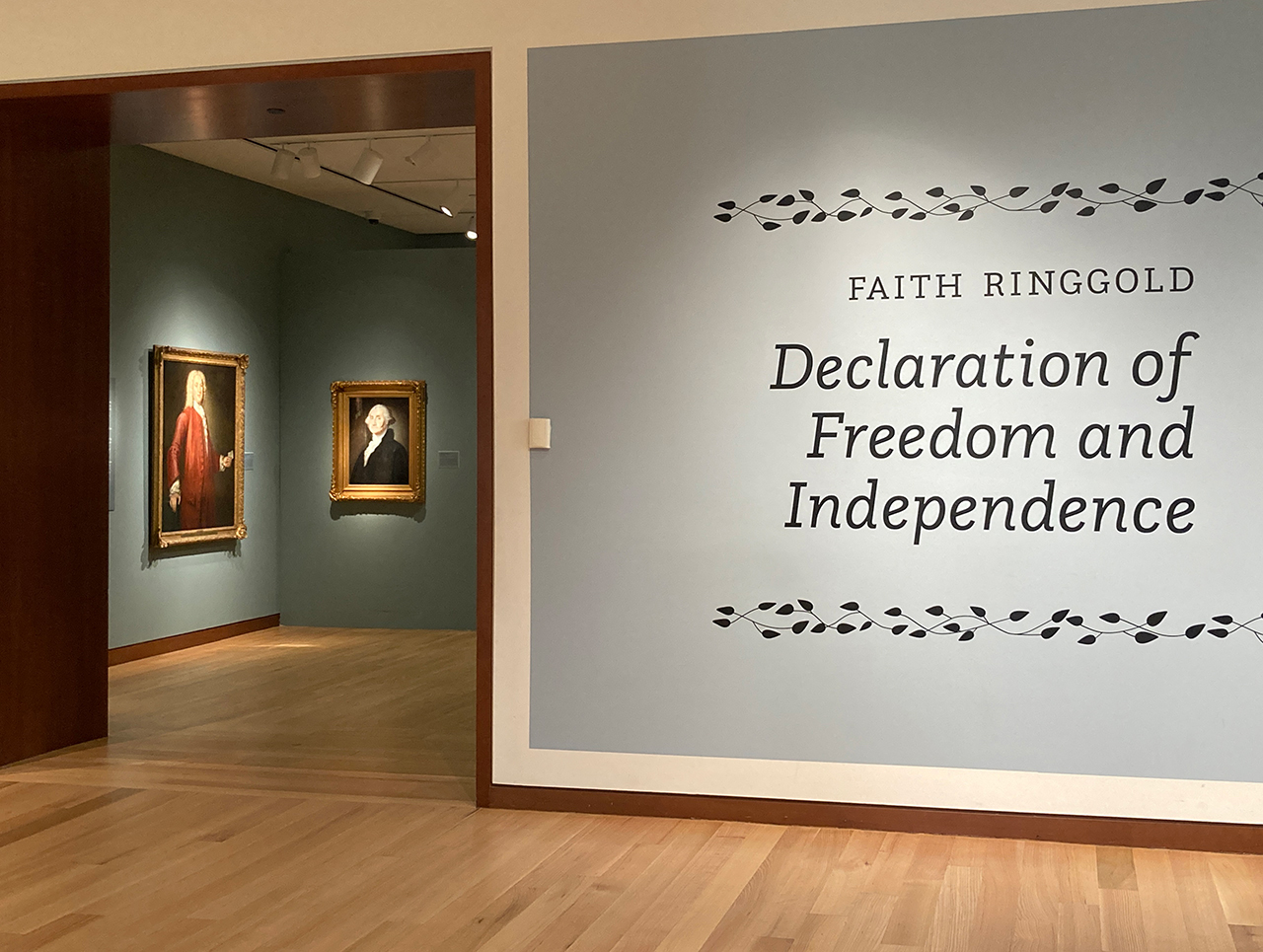
But the Faith Ringgold exhibit “Declaration of Freedom and Independence” juxtaposed to the Colonial portrait gallery featuring lots of old white guys was unsettling. The iconic George Washington portrait gave a constant side-eye to Ringgold’s print series that “considers the contradictions between America’s promises, exclusions, and ongoing efforts to achieve justice and equality for all.”
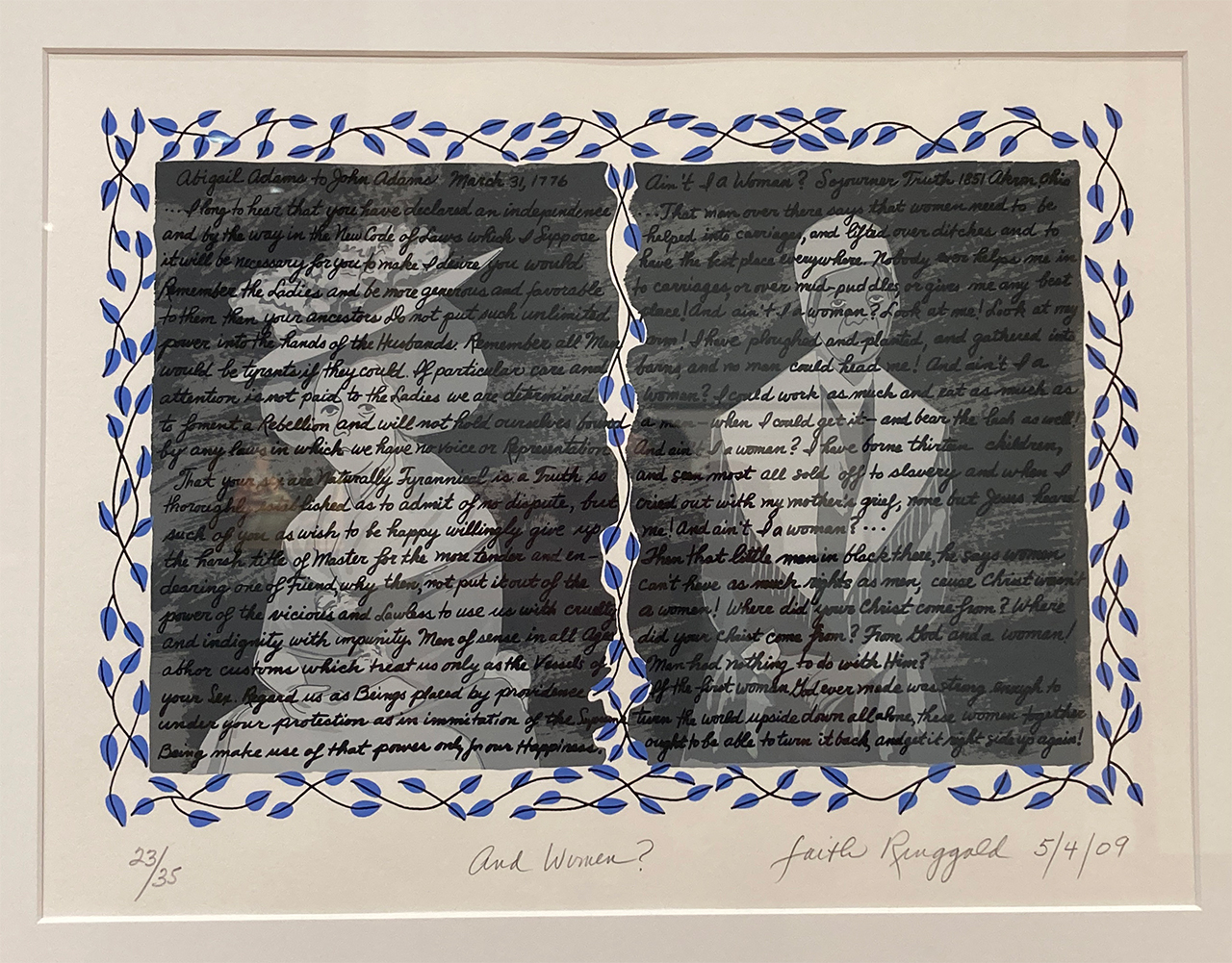
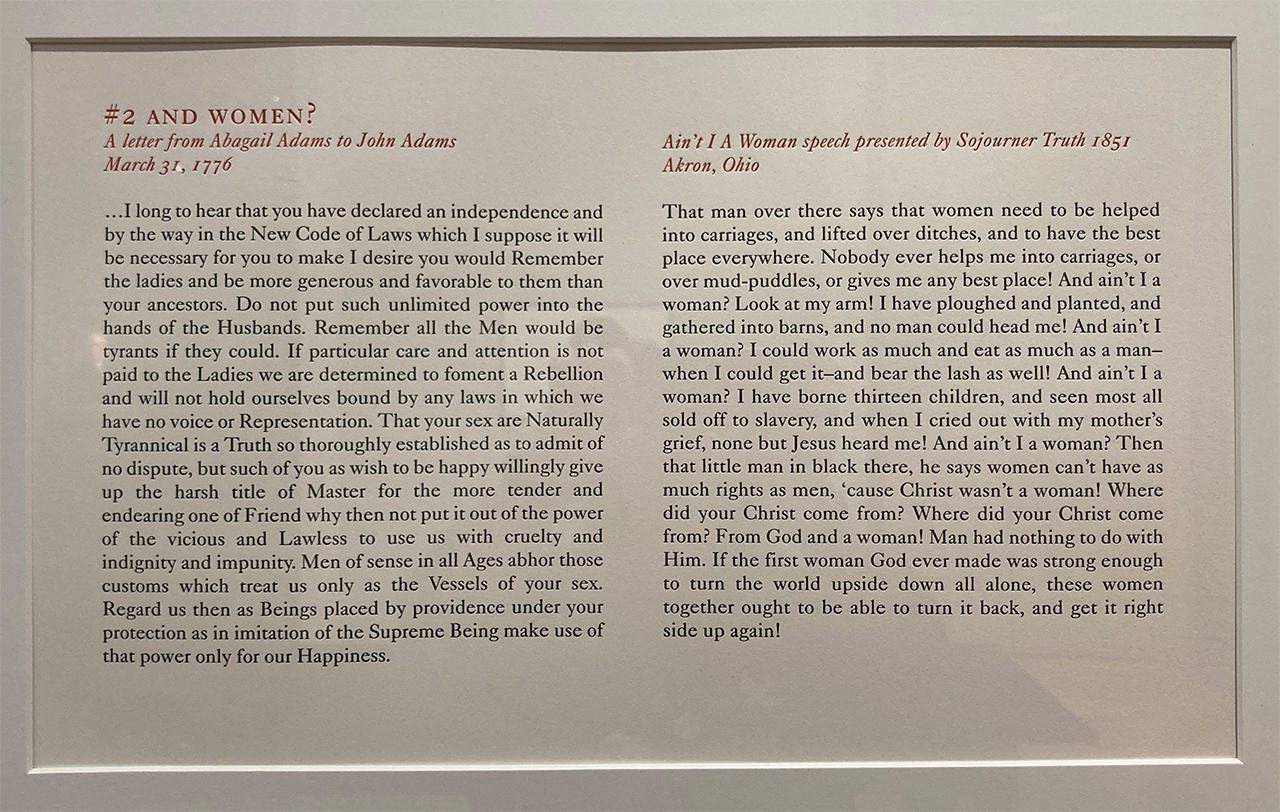
And Women?, Faith RinggoldAnd Women?, Faith Ringgold
Remember all the Men would be tyrants if they could. — Abagail Adams, 1776
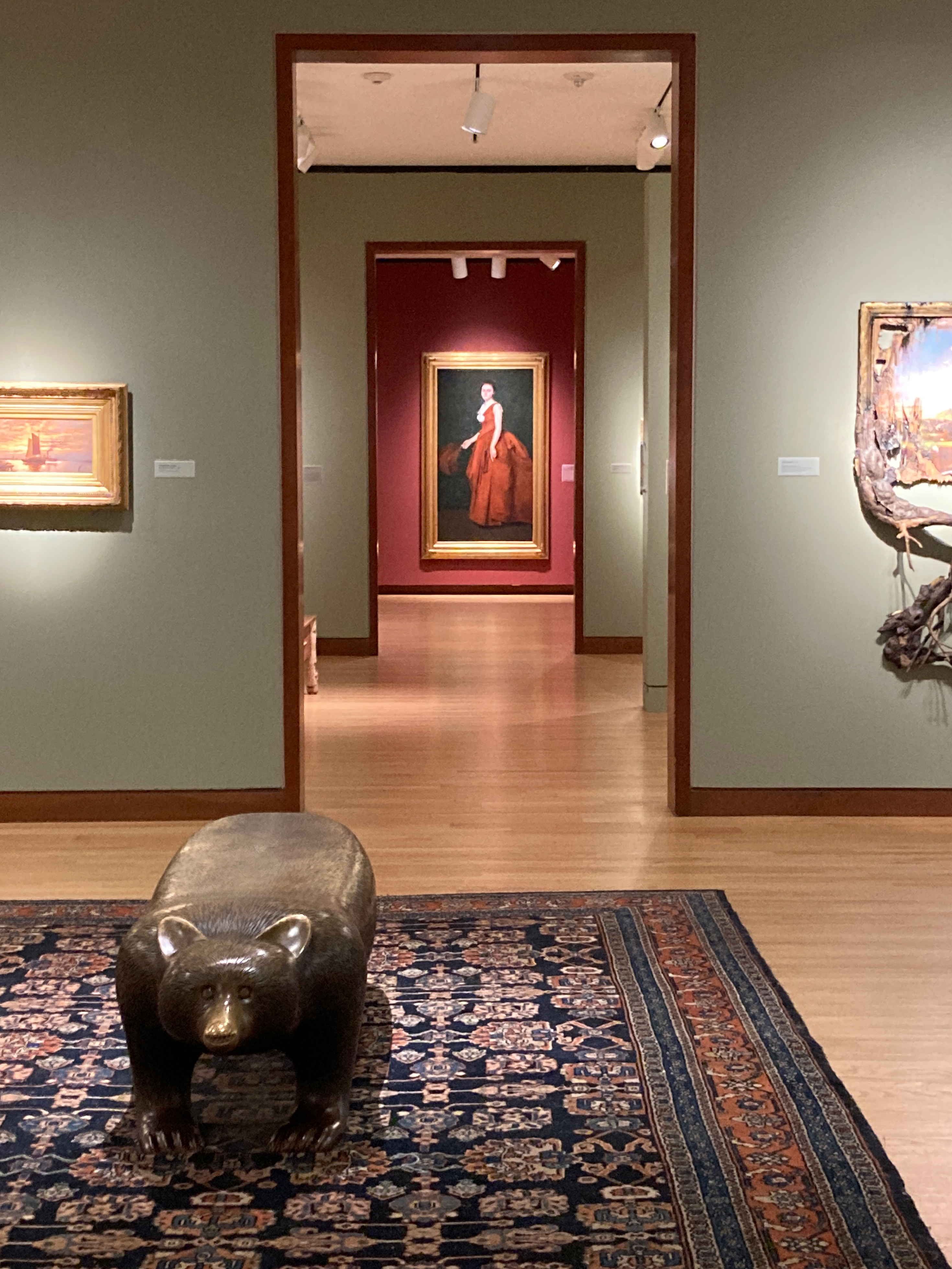
The coincidence of Portrait of Madame T in the gallery with the Grizzly Bear Bench seemed ironic, given the headlines of the day. Headlines which made Oscar Berger’s “Presidential Portraits” exhibit a non-starter for at least two museum patrons.
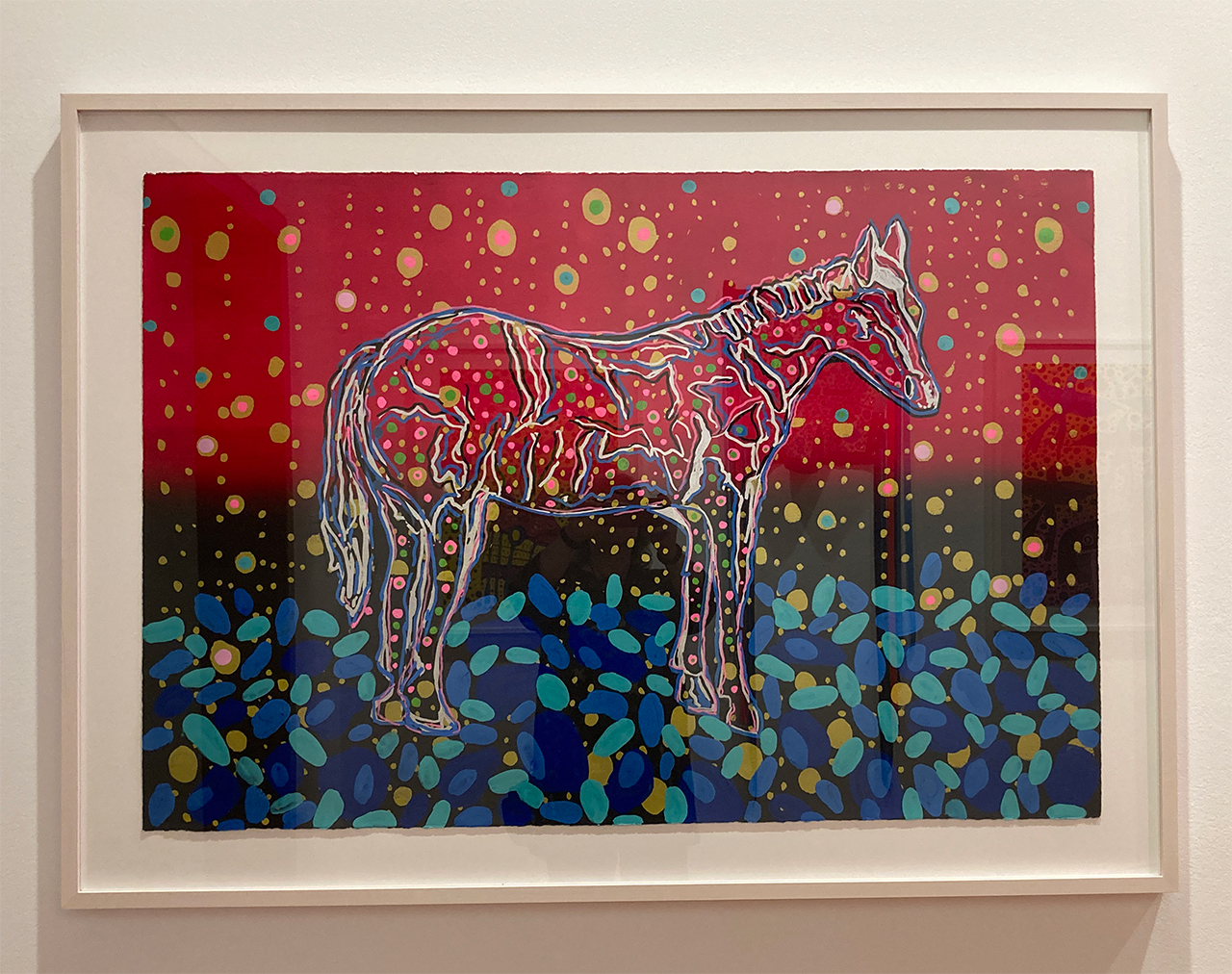
Hitchcock’s “Horse Songs” series called to mind the cruelty of the current president’s administration — from its desecration of public lands to the headlines about horse meat and horse slaughters, not to mention the hypocrisy of ostracizing immigrants while we’re all walking on Native American land.
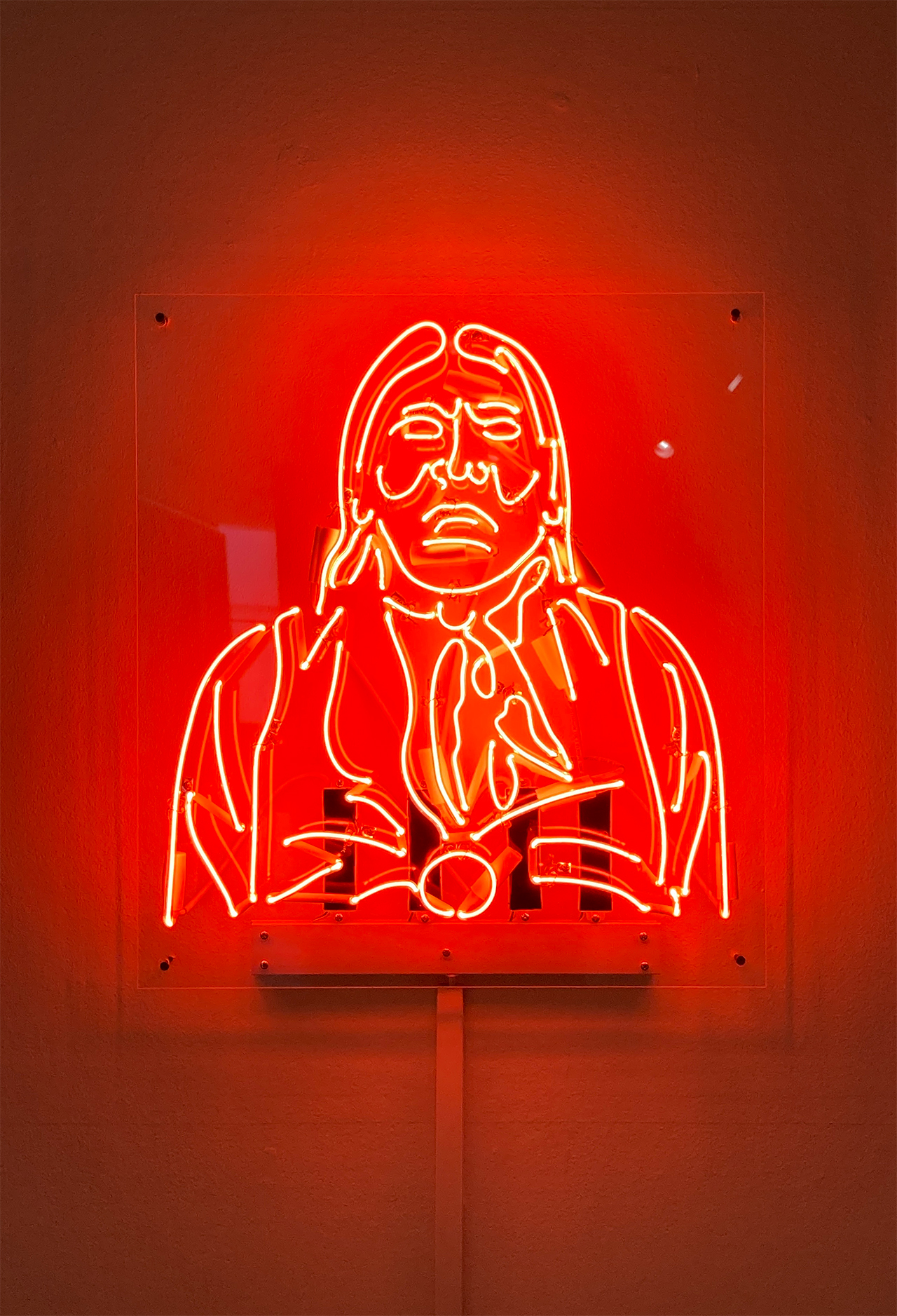
Song for Lone Wolf, John Hitchcock, 2023Kiowa Chief Set’tainte (White Bear), John Hitchcock, 2024
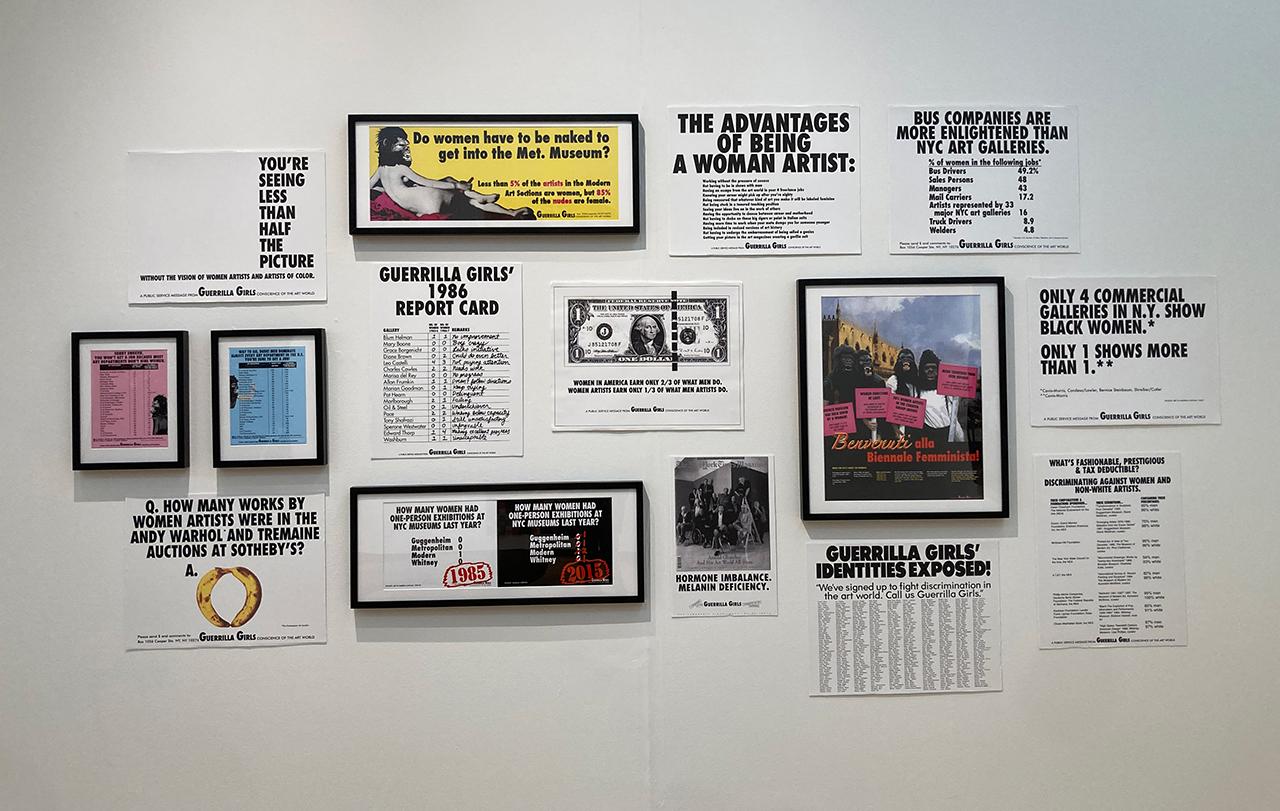
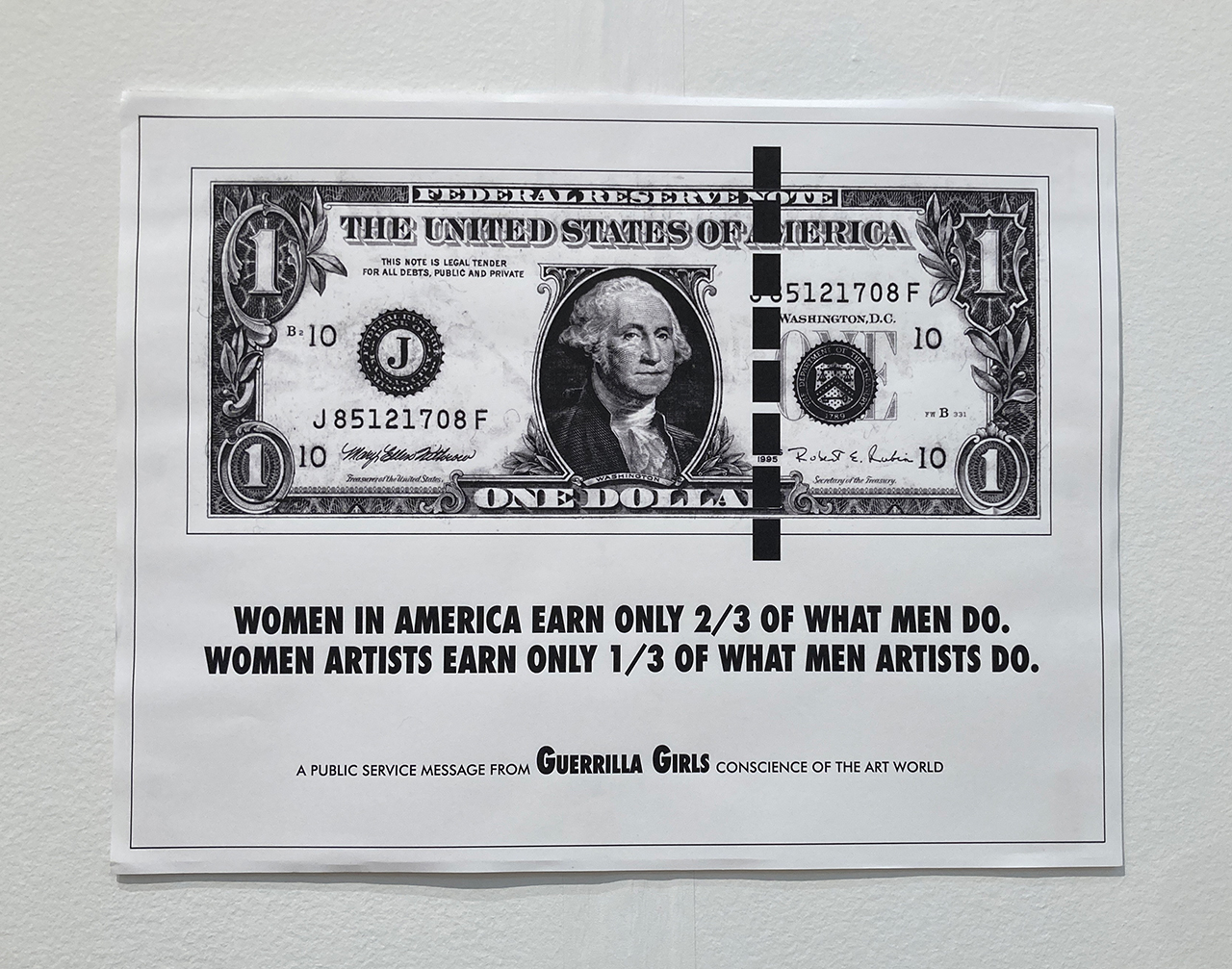
But it was the wall of Guerrilla Girls statistics from the 70s and 80s that brought me to literal tears. I remember Guerrilla Girls from my early zine-making days, when I was a twenty-something young woman making her way in a world that felt deceptively equal and evolved. A world that looks shockingly different here, now, where everything is splayed inside out, statistics for even more wrong reasons.
Guerrilla GirlsGuerrilla Girls
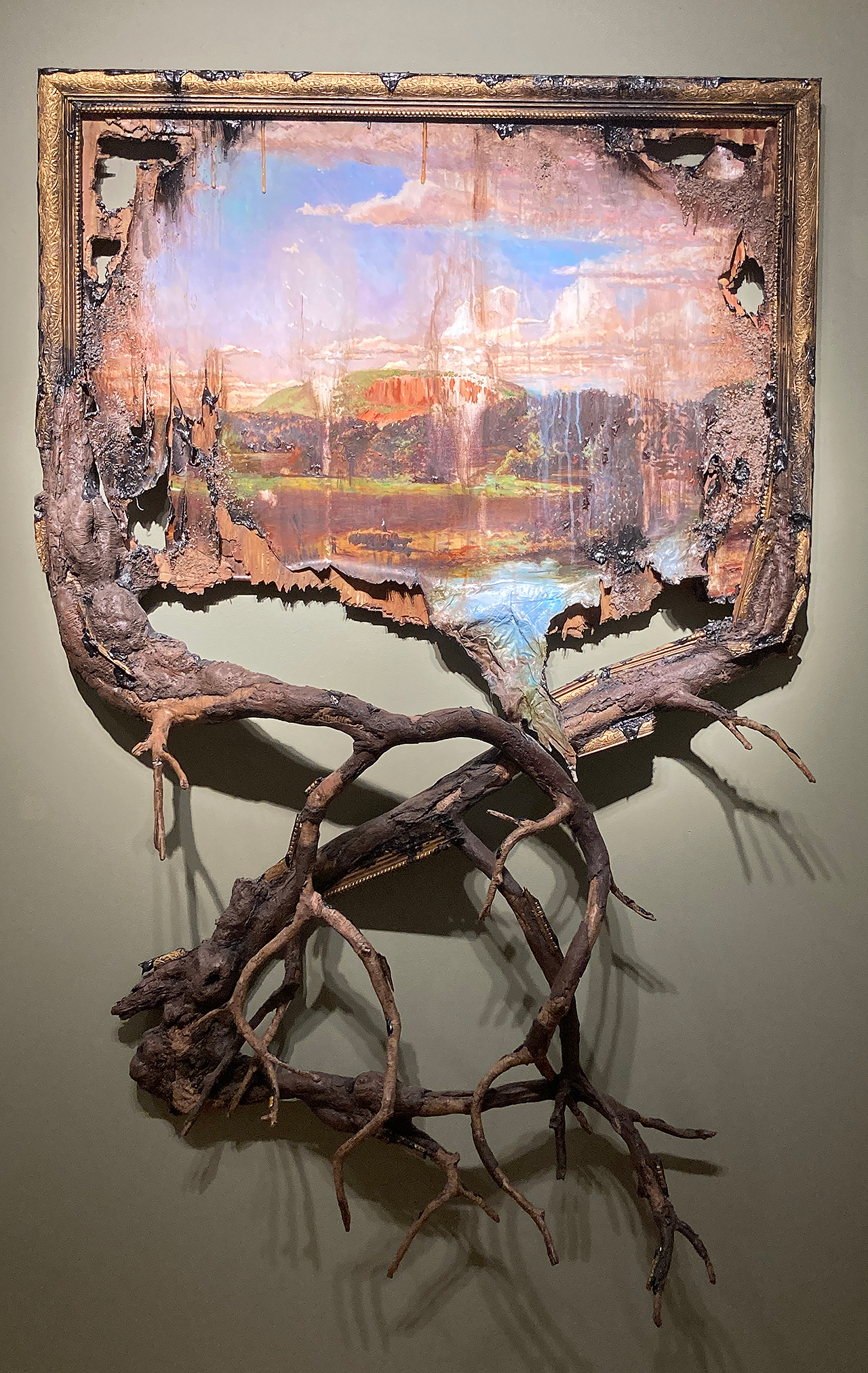
It’s not that any of this is new, really. These inequalities and injustices. They have been part of our history, here in America, since our founding days 250 years ago. It’s even written in to our beloved Constitution, and implied, perhaps in this shocking piece called West Rock with Branches by Valerie Hegarty which makes one ask: what are we? where do we come from? and what are we becoming?
The upcoming series of blog posts is in honor of ALL the women who can, who do, and who keep on doing – who persist – no matter what. They are part of “You Mean A Woman Can Open It,” MANIFEST (zine) #14.
You Mean A Woman Can Open It? 1953 Alcoa Aluminum advertisement.
Well, my boy, let’s get started, from “For me, the perfect hostess is the lady with the whip,” German Artist’s Book, 1960s.
Best Loved Nursery Rhymes Picture Book, circa 1950s.
Photos of Ryan Zinke from “Interior Secretary Orders Protester To ‘Be Nice’ During Visit To Bears Ears,” Huffington Post, May 2017.
Family group on a grave marker from Athens, National Archaeological Museum, Athens
“An American Girl in Italy,” (Ninalee Craig) by Ruth Orkin, 1951.
Mess of Fish, Paul Klee
The coat-stand (Porte manteau), by Man Ray, 1920.
Calliope, Augustin Pajou, 1763.
Vogue sewing pattern, 1980s.
“The history of the pussy bow blouse,” Bethany Armitage, CraftWorld, March 2019.
Atlas Was a Woman, by Céline (Melle-T), Deviant Art, 2007.
From the collection of Richard Freiherr von Krafft-Ebing (1840-1902) a German-Austrian psychiatrist + early sexologist, 1886.
“Nevertheless, she persisted” – an expression adopted by feminists, especially in the U.S. after the Senate voted to require Senator Elizabeth Warren to stop speaking during the confirmation of Jeff Sessions as U.S. Attorney General.
The upcoming series of blog posts is in honor of ALL the women who can, who do, and who keep on doing – who persist – no matter what. They are part of “You Mean A Woman Can Open It,” MANIFEST (zine) #14.
You Mean A Woman Can Open It? 1953 Alcoa Aluminum advertisement.
Well, my boy, let’s get started, from “For me, the perfect hostess is the lady with the whip,” German Artist’s Book, 1960s.
Best Loved Nursery Rhymes Picture Book, circa 1950s.
Photos of Ryan Zinke from “Interior Secretary Orders Protester To ‘Be Nice’ During Visit To Bears Ears,” Huffington Post, May 2017.
Family group on a grave marker from Athens, National Archaeological Museum, Athens
“An American Girl in Italy,” (Ninalee Craig) by Ruth Orkin, 1951.
Mess of Fish, Paul Klee
The coat-stand (Porte manteau), by Man Ray, 1920.
Calliope, Augustin Pajou, 1763.
Vogue sewing pattern, 1980s.
“The history of the pussy bow blouse,” Bethany Armitage, CraftWorld, March 2019.
Atlas Was a Woman, by Céline (Melle-T), Deviant Art, 2007.
From the collection of Richard Freiherr von Krafft-Ebing (1840-1902) a German-Austrian psychiatrist + early sexologist, 1886.
“Nevertheless, she persisted” – an expression adopted by feminists, especially in the U.S. after the Senate voted to require Senator Elizabeth Warren to stop speaking during the confirmation of Jeff Sessions as U.S. Attorney General.
You mean a woman can open it ? Easily — without a knife blade, a bottle opener, or even a husband! All it takes is a dainty grasp, an easy, two-finger twist-and the catsup is ready to pour.
IT BEARS REPEATING
The upcoming series of blog posts is in honor of ALL the women who can, who do, and who keep on doing – who persist – no matter what. They are part of “You Mean A Woman Can Open It,” MANIFEST (zine) #14.
You Mean A Woman Can Open It? 1953 Alcoa Aluminum advertisement.
Well, my boy, let’s get started, from “For me, the perfect hostess is the lady with the whip,” German Artist’s Book, 1960s.
Best Loved Nursery Rhymes Picture Book, circa 1950s.
Photos of Ryan Zinke from “Interior Secretary Orders Protester To ‘Be Nice’ During Visit To Bears Ears,” Huffington Post, May 2017.
Family group on a grave marker from Athens, National Archaeological Museum, Athens
“An American Girl in Italy,” (Ninalee Craig) by Ruth Orkin, 1951.
Mess of Fish, Paul Klee
The coat-stand (Porte manteau), by Man Ray, 1920.
Calliope, Augustin Pajou, 1763.
Vogue sewing pattern, 1980s.
“The history of the pussy bow blouse,” Bethany Armitage, CraftWorld, March 2019.
Atlas Was a Woman, by Céline (Melle-T), Deviant Art, 2007.
From the collection of Richard Freiherr von Krafft-Ebing (1840-1902) a German-Austrian psychiatrist + early sexologist, 1886.
“Nevertheless, she persisted” – an expression adopted by feminists, especially in the U.S. after the Senate voted to require Senator Elizabeth Warren to stop speaking during the confirmation of Jeff Sessions as U.S. Attorney General.
The upcoming series of blog posts is in honor of ALL the women who can, who do, and who keep on doing – who persist – no matter what. They are part of “You Mean A Woman Can Open It,” MANIFEST (zine) #14 from 2024.
Well, my boy, let’s get started, from “For me, the perfect hostess is the lady with the whip,” German Artist’s Book, 1960s.
“You bought yourself a job,” the 60-something male financial advisor said of my successful, 30-year-old business.
I didn’t think to explain the numerous companies I’d assisted over the years, the countless artists, editors, designers, and print shops I’d supported, or the millions of dollars I’d helped local nonprofits raise.
I didn’t think to ask if he would say the same about my male accountant and attorney – both of whom are sole proprietors like myself. No doubt they own “firms” or “practices.”
I didn’t think to say much, except curtly thank him for his time and leave.
For me, the financial planner was just one in a line of men for whom I’ve had NO COMMENT over the years – not the one who felt emasculated because I opened my own doors, the one who took credit for my success because he referred ONE client to me back in 1994, or the one who suggested my leadership abilities equated to a leather-and-whip fetish. I simply let my actions speak louder than any words I might conjure up in the moment of incredulity and outrage.
You see, my actions, always, have been based on the assumption that I can be whatever I want to be, and do whatever I want to do. It’s what my parents taught me. It’s what my role models in the 70s and 80s demonstrated for me – Mary Tyler Moore, Marlo Thomas, Judy Blume, Madeleine Blaise, Madonna, Jane Fonda. It’s what I aspired to, despite the cultural predictions for me in my birth-year horoscope.
And it’s how I’ve lived my life since I was old enough to make my own decisions about things – how I work and play, where I live and love, what I do and how. My own terms. My own expectations.
Of course, that doesn’t sit well with some folks. Mostly male folks of a certain genre. And there have always been attempts to keep me “in my place” – verbally, physically, financially, and so forth. But like so many countless women, I have persevered and succeeded, despite the obstacles and objections.
IT BEARS REPEATING
The upcoming series of blog posts is in honor of ALL the women who can, who do, and who keep on doing – who persist – no matter what. They are part of “You Mean A Woman Can Open It,” MANIFEST (zine) #14.
You Mean A Woman Can Open It? 1953 Alcoa Aluminum advertisement.
Well, my boy, let’s get started, from “For me, the perfect hostess is the lady with the whip,” German Artist’s Book, 1960s.
Best Loved Nursery Rhymes Picture Book, circa 1950s.
Photos of Ryan Zinke from “Interior Secretary Orders Protester To ‘Be Nice’ During Visit To Bears Ears,” Huffington Post, May 2017.
Family group on a grave marker from Athens, National Archaeological Museum, Athens
“An American Girl in Italy,” (Ninalee Craig) by Ruth Orkin, 1951.
Mess of Fish, Paul Klee
The coat-stand (Porte manteau), by Man Ray, 1920.
Calliope, Augustin Pajou, 1763.
Vogue sewing pattern, 1980s.
“The history of the pussy bow blouse,” Bethany Armitage, CraftWorld, March 2019.
Atlas Was a Woman, by Céline (Melle-T), Deviant Art, 2007.
From the collection of Richard Freiherr von Krafft-Ebing (1840-1902) a German-Austrian psychiatrist + early sexologist, 1886.
“Nevertheless, she persisted” – an expression adopted by feminists, especially in the U.S. after the Senate voted to require Senator Elizabeth Warren to stop speaking during the confirmation of Jeff Sessions as U.S. Attorney General.
I want to go unseen walk the streets strong and lean with younger knees shadow and mask a blade, unsheathed to make light work of beasts the alpha beasts to start then all the letters in between “eye for eye” Chi Phi and MAGA Epstein and ICE and all their vice one swift slice to cease and decenter the gender tip the axis defend Her.
It appears I have nothing left to say words come and go like stream water through a sieve and nothing golden to spare except a fire of burning words come up over the ridge that takes no shape but ghosts and ash upon which I choke in hot dream nights an endless running past any muse who dares fuel poetics in this wicked storm.
It was an escape of connections — meaning an escape to connections, about connections.
In Northampton, Massachusetts, I re-connected with my college roommate Melissa, mere miles from where we met in Amherst nearly 30 years ago.
Jen and Melissa
After a meal and the start of a conversation that would continue on until morning, we enjoyed an evening with Krishna Das at First Churches of Northampton, a stunning backdrop for a sacred concert of Sanskrit chanting.
Krishna Das, First Churches of Northampton
My breath rises within me, the breath of the heart. The sweet breath. The sacred breath leads me in.
Krishna Das
The next day, a visit with friends Judith and Frank Bruder, and the gift of a conversation that unfolded over six hours—food, books, writers, words (and silence), how we process…how we love. “To me the give-and-take of conversation is the breath of life,” Judith writes on her blog, Touch2Touch, which served as our introduction several years ago. How wonderful its tagline: “Only connect!” Amen.
Jen and Judith
Frank reading one of the first copies of LOOK UP!, Jen’s new book
By definition, an adventure is “an exciting or dangerous experience, an undertaking usually involving danger and unknown risks.” But I prefer the less foreboding interpretation: “an exciting or remarkable experience.”
With that in mind, I will tell you that one of my recent exploits involved many of the things one might expect to find on an adventure: exotic foods, beautiful scenery, interesting conversation, and a joyful sense of having been someplace new and exciting with good companions.
The place? Western Massachusetts. The adventure? A get-together with my friends Judith and Frank Bruder for dim sum…and then some!
When they heard I’d never had dim sum, they were quick to insist it be included on the iterinary, so off to Oriental Flavor in Amherst we went!
Plate after steaming plate arrived at our table — crystal shrimp dumplings, crispy shrimp balls, pork shu mai, steamed tofu crepes — while we enjoyed a lively conversation about languages, food styles, trying new things and chicken feet.
Thankfully, it was time for dessert! And we happily devoured two delicate egg tarts, and a pair of delicious omochi sticky rice balls filled with lotus paste and fried with seasame seeds.
A ride through beautiful late-spring farmlands on a phenomenal Kodachrome day found us at Flayvors of Cook Farm in Hadley for three scoops of farm fresh ice cream. Chocolate Almond Chip! Black Raspberry Chip! Hadley Grass! What’s Hadley Grass ice cream? A sweet, pale-green concoction made from local, profusely-growing asparagus.
Then it was back to Judith and Frank’s for continued conversations about good books and good writing, good food and good friends.
In her book You Learn by Living: Eleven Keys for a More Fulfilling Life, Eleanor Roosevelt wrote: “And the purpose of life, after all, is to live it, to taste experience to the utmost, to reach out eagerly and without fear for newer and richer experience. You can do that only if you have curiosity, an unquenchable spirit of adventure.”
It was with both curiosity and a spirit of adventure that we ended our day by attempting our first-ever group selfie—here, for your enjoyment!
(To read more about our day, please see Judith’s post “To Touch the Heart.”)
The blogosphere is a pretty amazing place. Consider this: on a regular basis, I open up WordPress, put down in words and pictures a conversation that is on my mind, and hit PUBLISH. Those very steps connect me instantaneously to all of you—my “Followers” and the greater blogging community.
Like that! I hit PUBLISH, and someone in Slovakia is reading about my trip to Cape Cod, and someone in Mongolia is taking a walk with me in the woods of Connecticut!
Like that! We are communicating—you and I and people from at least 100 other countries! Reading, commenting, sharing in the thoughts and ideas we exchange here.
Like that! I am sitting in an Italian pastry shop in Northampton, Massachusetts feasting on decadent, sugary treats with a fellow blogger I feel like I’ve known forever.
Judith and I meet and immediately pick up our conversation where we left off yesterday, although we haven’t seen or spoken with each other since last July. We do this easily, because our blogs are part of our conversation — almost daily.
An assortment of pastries sits on the table, alongside an assortment of topics: technology, writing, books, spirituality, photography, food. It’s no surprise — but a great surprise, at the same time — that she and I find common threads in our thoughts, our interests, and what we want to talk about today. By their very nature, blogs attract like-minded souls, and our tête-à-tête bears witness to that fact.
We immediately come to the agreement that the word “conversation” best fits this synergy that happens between bloggers, and joyfully continue with ours — animated and face-to-face.
We were driving along a road in Western Massachusetts on Sunday when she handed me a word.
“The first time you do something is so special,” she told me me, “the Japanese have a separate word for it…hajimete.”
Hajimete: for the first time.
I love that this word was part of Sunday’s conversation, because Sunday’s conversation was the first time she and I have ever spoken to each other, face to face.
She is the wise and worldly Judith Bruder, author of two wonderful blogs: A View from the Woods and Touch2Touch. We have been sharing words with each other since December 2010, as readers and writers, thinkers and travelers. But Sunday was our first opportunity to meet and continue the conversation in person.
And that we did, from the first open-the-door moment into a sunny, summer afternoon for lunch, a walk in the park, and a Sunday drive past inspiring views.
As the sentences and sidebars unfolded before us in real time, it felt as if we had been doing this forever — sharing our stories, finding similar paths, learning new things from each other. There was a sweet and marked familiarity to the day.
That is the beauty of word-sharing — whether it’s these blog posts or emails, letters or poems, prose or lyrics. Word-sharing does not require physical presence because it comes from the heart. What you share — what we share — connects our spirits wherever and in whatever form we happen to be.
That Judith and I found the opportunity to be live and in-person was a true gift — and a connection I hope will continue here and there.
[ Click here to read more about our visit on Judith’s blog Touch2Touch. ]
• • •
Photo courtesy of Judith’s husband, Frank Bruder, with whom additional, delightful words were shared.
We are “talking” about enlightenment this morning. It is barely 10:00 a.m., and our talk evolves as pieces of thought shared in a comment field of my friend Judith Bruder’s blog.
“Are we, every one of us, capable of extraordinary beauty, and wisdom, and kindness—if only we realized it?” she asks. “Is that, perhaps, what enlightenment ultimately is—realization of the oneness and infiniteness of everything, including ourselves?”
“I believe we are,” I say, “but there are so many distractions between here and “realized.” I suspect enlightenment needs great expanses of quiet, reflection and disconnection in order to take root and flourish.”
Another friend, this morning, is talking about Thoreau and our important and necessary connection with nature as a source of joy.
But a cicada interrupts my thoughts as I read her words, and I glance up and notice how the morning sun dapples the grass outside the window. I suspect I have not looked up from this whirring machine since the yard was shadowed in last night’s dreams.
This is not the disconnection to which I was referring.
Twenty minutes later, I am in the woods, walking a path I have not explored since summer set upon us with its mid-July ferocity.
When I left the house, I imagined immediate connection here—to pick up where we left off in June, with quiet observation and reflection.
But there are bugs. Lots of bugs.
I have visited with the metaphor of these bugs before—as pesky as my thoughts, as persistent as my worries, as distracting as life’s picayune interruptions.
With the incessant buzzing about my head, how I am ever to find that cherished space and quiet I was seeking?
“Fine,” I say out loud, in surrender to the swarm of gnats. And pay attention, instead, to the rhythm of my swatting—two hands at first in a ballet above my head, then alternating them, left and right.
I walk this way for close to an hour—hands like a windmill through a pine forest into a warm sunny meadow and up to the clearing where the woodpecker sings. At the footbridge, I watch two dragonflies dance, then walk carefully up the rocky slope and down to where the stream crosses the path.
I walk fast, in that way we do when we have a goal to obtain. Oblivious, eye on the prize. All the while swatting with noble attempts to ignore and tune out the…damn…bugs?
Where are the bugs?
Suddenly, they are gone.
I stop and breathe deeply to slow my pace. My arms rest at my sides, and I can feel a hint of coolness about my body. The path is quiet—except for a faint call of a Warbler off in the distance.
Just then, a wide band of sunlight pushes its way though the treecover and lights up the forest around me, until it sparkles and I weep.
“I think perhaps rooting and flourishing happens in cherishing the significant flash,” my friend responds on her blog. “In short — once my long blindness lifts, SEEING simply follows.”
My friend Judith Bruder and I met on the internet many years ago, back in the early days of blogging, when WordPress was coming of age, and Julie was cooking Julia. I had just started my blog, Random Acts of Writing, and Judith was posting at Touch 2 Touch/A View from the Woods with the E.M. Forster quote as her tagline: “Only Connect!” We liked each other’s posts, commented now and then, remarked on shared interests in writing, food, and France.
But it was her frequent photoblogs about Look Park in nearby Northampton, Massachusetts that sparked my curiosity one summer, and we agreed to meet in person. One visit begot another. There were long conversations at her dining room table. Visits to local museums and restaurants. Cooking lessons. Celebrations. Consolations. We weathered milestones, heartbreaks, and the entirety of the pandemic.
It was during the pandemic that Judith came up with the brilliant idea to start a podcast. As she explained it:
“I knew that for me, the physical danger was less than another danger, the death of the spark which is the beating heart of the life force. That’s what had kept me young and vital until 85, my age when the world stopped. I had to find something that could keep the me that really counted, my spirit, my life force, alive.”
Her podcasts, called From My Button Box, kept her, me, and her varied listeners engaged and thriving through the roller coaster months of 2020.
In 2023, I had the privilege of helping my friend turn those podcasts into her third published book, From My Button Box: Collected Essays in a Pandemic Time. Published by Three Chairs Publishing, it’s a collection of her favorite podcasts, presented in a unique hybrid format: read the essays or listen to the original podcasts using individual QR codes throughout the book.
It’s a collection I’ve turned to often in the past week since my dear friend passed away on August 26, 2026. Reading her wise words and hearing her voice brings me as much comfort in my grief today, as it has over the past 15 years of our friendship.
Judith was a writer, a lecturer, and a scholar; a graduate of Wellesley College who had been a campus minister at Fordham University in Manhattan. At home she was a wife then widow, mother, grandmother, and proud great grandmother. She considered herself a freelance philosopher and a modern-day anchoress. She was a wise and steadfast friend to many, and those of us who knew her were truly blessed.
She will be missed and remembered.
Please stayed tuned for a series of blog reposts from Judith and my early blog connections, reposting here in Random Acts of Writing in the coming week.
The guy in the red Jeep at my back bumper roars GO FASTER and I try, within the limits; arrive to the woods in fight-or-flight and breathe; on inhale, my jacket, on exhale, my phone; OUT OF THE WAY! a dude in a spit-shined Range Rover guns MOVE OVER so he can park HERE here where I’m breathing despite 8 other spaces HERE, HERE! another man yells to a bitch too far ahead, two men now and two dogs four times as loud COME HERE! STOP! I don’t know, don’t care don’t stay leave and park at another trailhead where an old Retriever waits sweet and ghostlike until an angry voice bellows, makes us startle GET THE FUCK OVER HERE! she bows her head greeting, prayer, or a mutual understand that the woods would be so much quieter if we could beat back the invasives just a bit.
Commonplace books are essentially scrapbooks filled with items of every kind: recipes, quotes, letters, poems, tables of weights and measures, proverbs, and prayers. Paper Prayers – A Commonplace Book is a collection of some favorite quotes, both old and new, from many years ago and ones I still reach for today for inspiration or solace, for guidance or reassurance. I hope you enjoy this issue of MANIFEST (zine) — maybe you will find something to copy into your own commonplace book!
This issue was inspired by my friend, author Judith Bruder.
INGREDIENTS: collaged elements, photocopies, digital art, ephemera, hand-drawn fonts, laser prints, photography, poetry, quotes, rubber stamp art, vintage artwork. With special thanks to Robert Graves, Antoine de Saint-Exupéry, Susan Page, Henry Stanley Haskins, Robert Fulghum, Robert Frost, Benjamin Hoff, Dale Carlson, May Sarton, Don Miguel Ruiz, Janet Mills, Elizabeth Gilbert, Walt Whitman, Ted Andrews, Henry David Thoreau, Richard Carlson, Osho, Henry Beston, Jiddu Krishnamurti, Emily Dickinson, Anne Lamott, Ram Dass, Daniel Goleman, Carl Sagan, Mary Oliver, Louise Hay, Brené Brown, Brian Tracy, Newton, Isaac Newton, Neale Donald Walsch, and Reinhold Niebuhr.
This issue has been printed and mailed thanks to the generous support of readers. I’m hoping to continue publishing MANIFEST (zine) through 2026, but could use your help. Please click here for more information.
You can pay through PayPal using a PayPal account or any standard credit card. If you prefer the old school approach, please send your check, made payable to Jen Payne, P.O. Box 453, Branford, CT 06405.
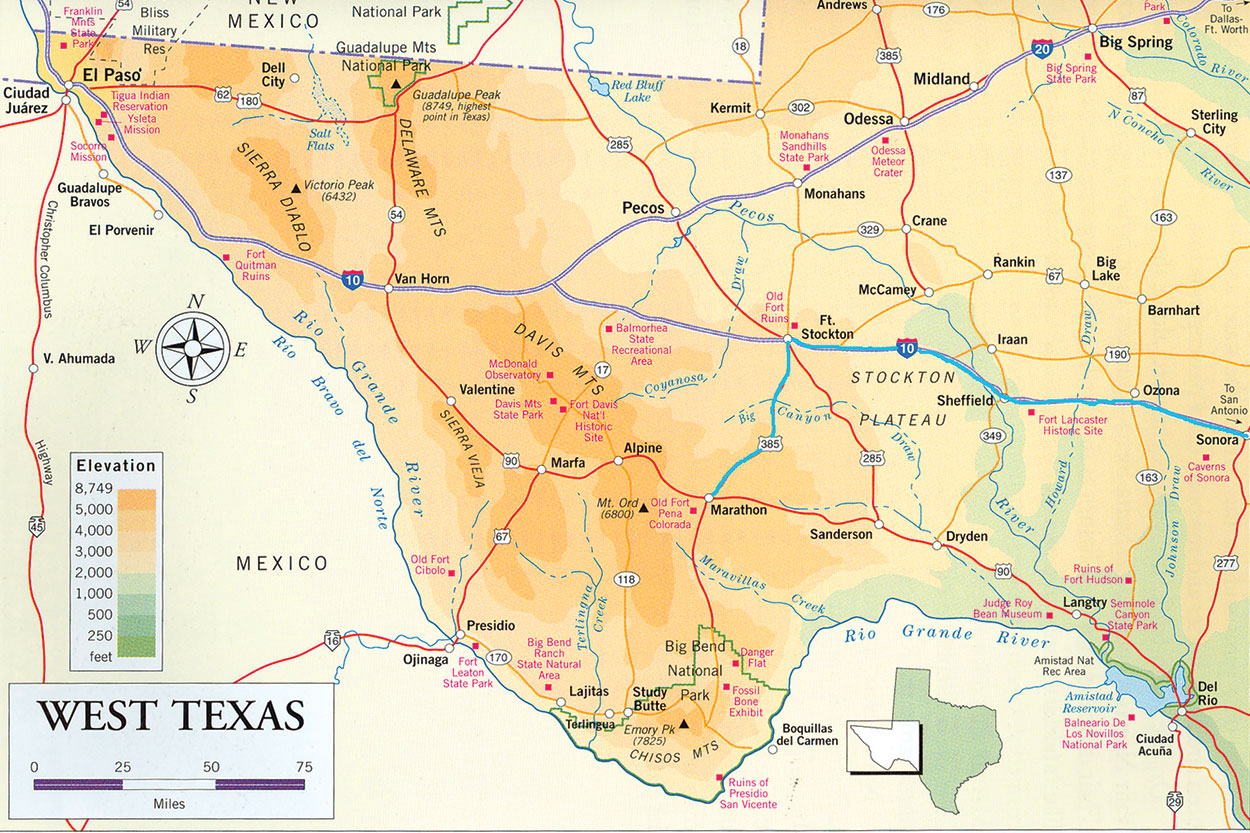
I’m reposting this series of blog posts because as I type, there are bulldozers in Big Bend National Park. There are scared, evil people building walls on sacred desert ground, while the wicked ones paint golden calves to worship.This series represents the collective experiences and thoughts of three women who set out on a 1,500 mile trek across West Texas in December 2003. Development, tourism, climate change and politics have altered the area a lot since then, but this was their unforgettable “Road Trip: Big Bend.”
Gulf Coast Highway
Gulf coast highway, he worked the rails
He worked the rice fields with their cold dark wells
He worked the oil rigs in the Gulf of Mexico
The only thing we’ve owned is this old house here by the road
And when he dies he says he’ll catch some blackbird’s wing
And we will fly away to heaven
Come some sweet blue bonnet spring
She walked through springtime when I was home
The days were sweet, our nights were warm
The seasons changed, the jobs would come
The flowers fade, and this old house felt so alone
When the work took me away
And when she dies she says she’ll catch some blackbird’s wing
And she will fly away to heaven
Come some sweet blue bonnet spring
Highway 90, the jobs are gone
We kept our garden, we set the sun
This is the only place on Earth blue bonnets grow
And once a year they come and go
At this old house here by the road
And when we die we say we’ll catch some blackbird’s wing
And we will fly away to heaven
Come some sweet blue bonnet spring
Yes when we die we say we’ll catch some blackbird’s wing
And we will fly away together
Come some sweet blue bonnet spring
Songwriters: Danny Flowers / James Brown / Nanci Griffith
I’m reposting this series of blog posts because as I type, there are bulldozers in Big Bend National Park. There are scared, evil people building walls on sacred desert ground, while the wicked ones paint golden calves to worship.This series represents the collective experiences and thoughts of three women who set out on a 1,500 mile trek across West Texas in December 2003. Development, tourism, climate change and politics have altered the area a lot since then, but this was their unforgettable “Road Trip: Big Bend.”
MONDAY
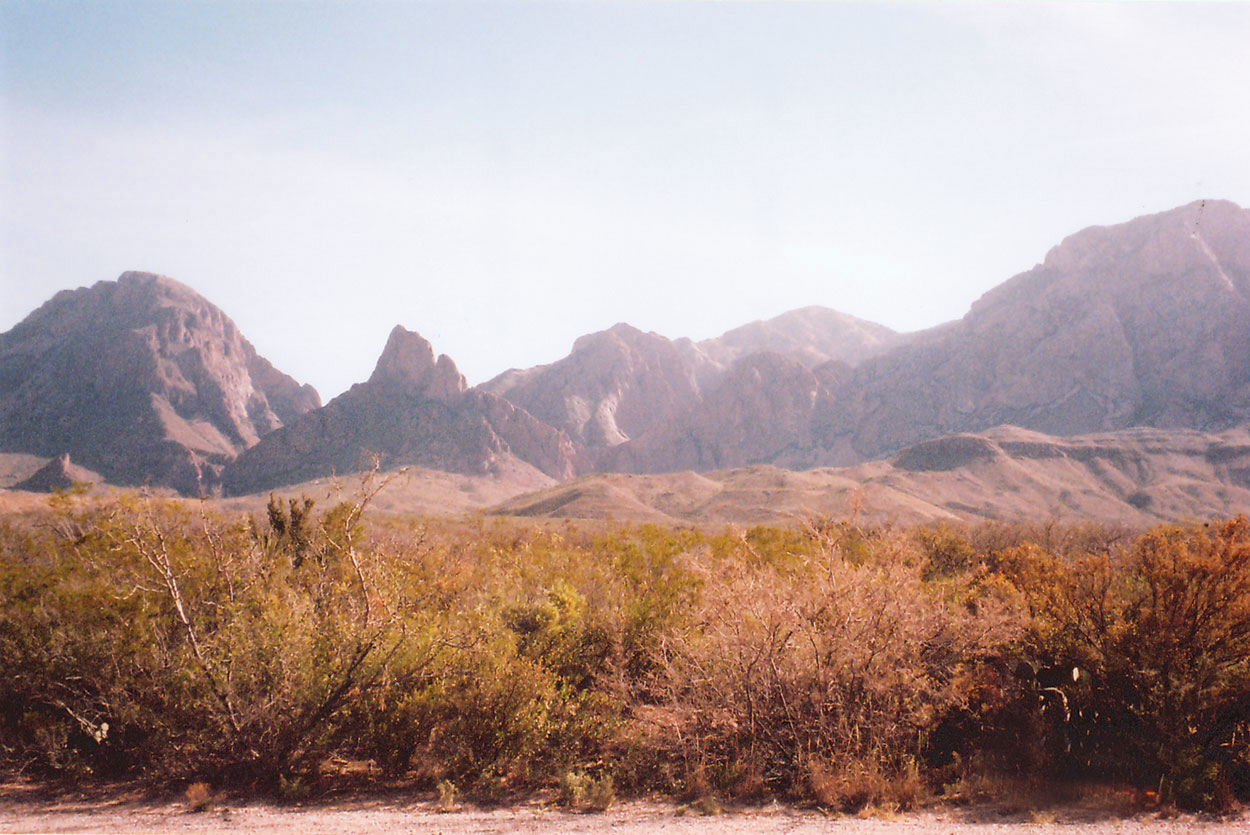
Up before dawn, we dressed and packed up the car in dark. A short stop for coffee and we were on our way to the looming Chisos Mountain range, the centerpiece of Big Bend National Park.
Desert sunrise
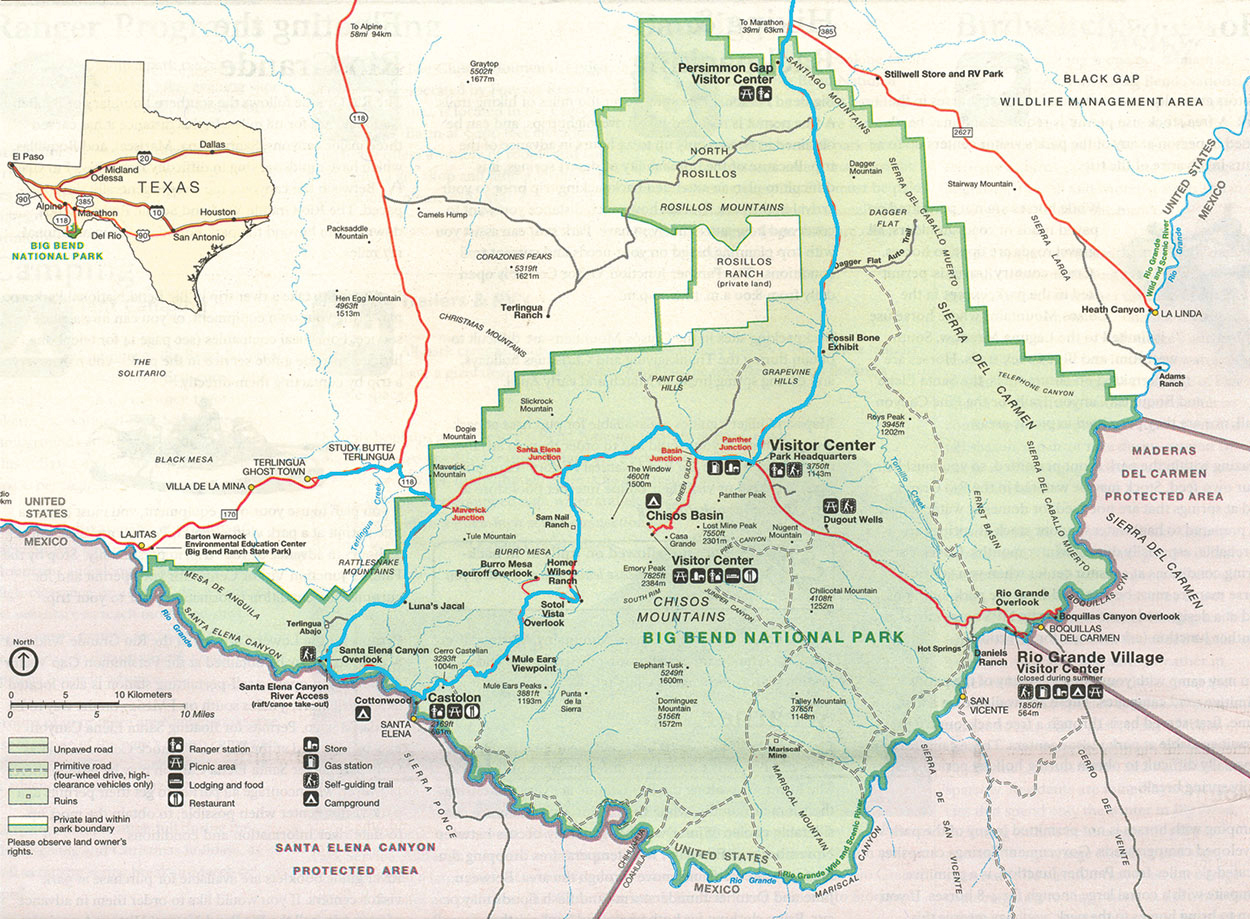
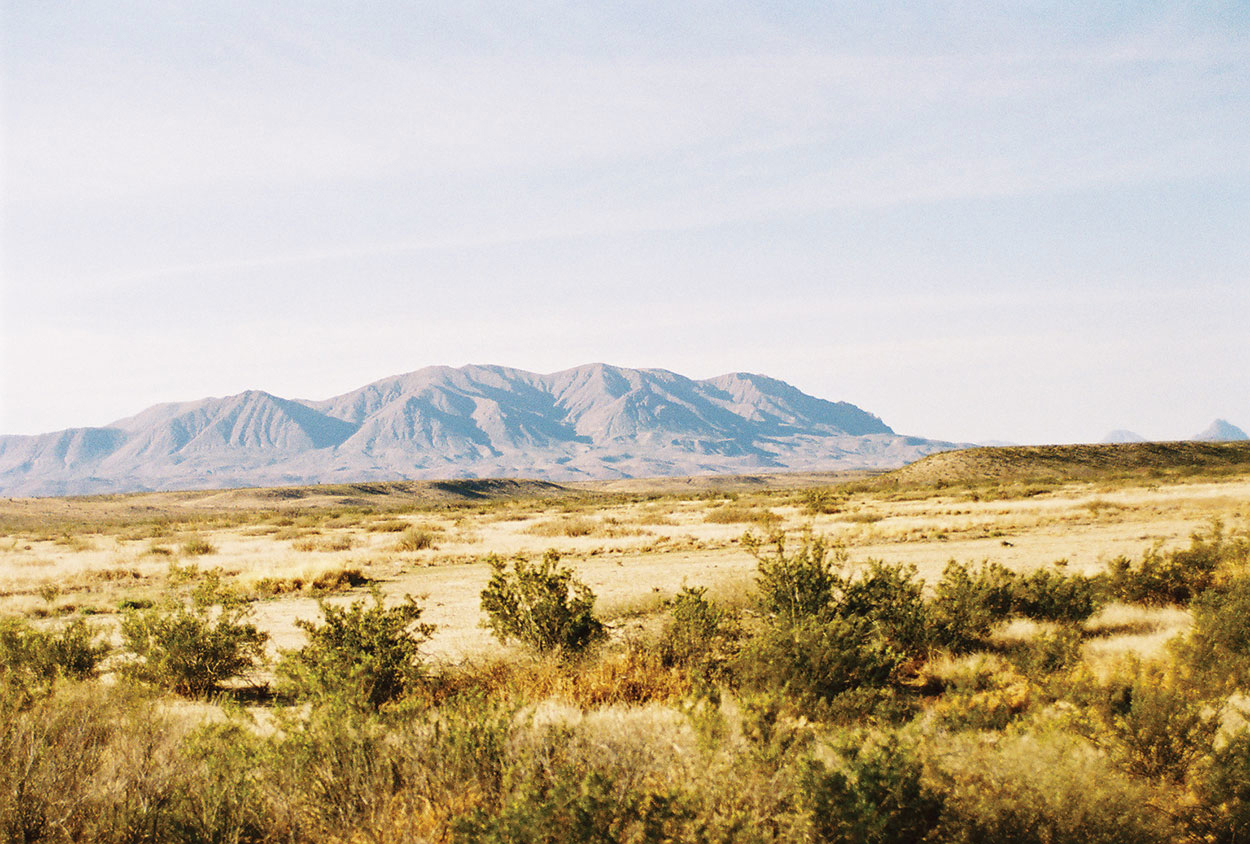
The Chisos Mountains are the heart of Big Bend National Park. They extend twenty miles from Punta de la Sierra in the southwest to Panther Junction in the northeast. It is the only mountain range totally contained within a single national park. Among the highest peaks in the range are Emory Peak (7,835 feet above sea level), Lost Mine Peak (7,535 feet), Toll Mountain (7,415 feet), and Casa Grande Peak (7,325 feet).
A 7-mile long paved road climbs into the Chisos Mountains Basin, a circular valley ringed by craggy peaks. In the Basin there is a developed National Park Service Campground and Park ranger stationed. Chisos Mountains Lodge operates the only hotel in the park and a dining room with the grandest view of any in Texas. The Chisos Mountains support vegetation that includes Douglas fir, Aspen, Arizona cypress, Maple, Ponderosa pine, and Madrone. Daytime highs in the summer rarely exceed 90 in the Basin, and there is plenty of shade.
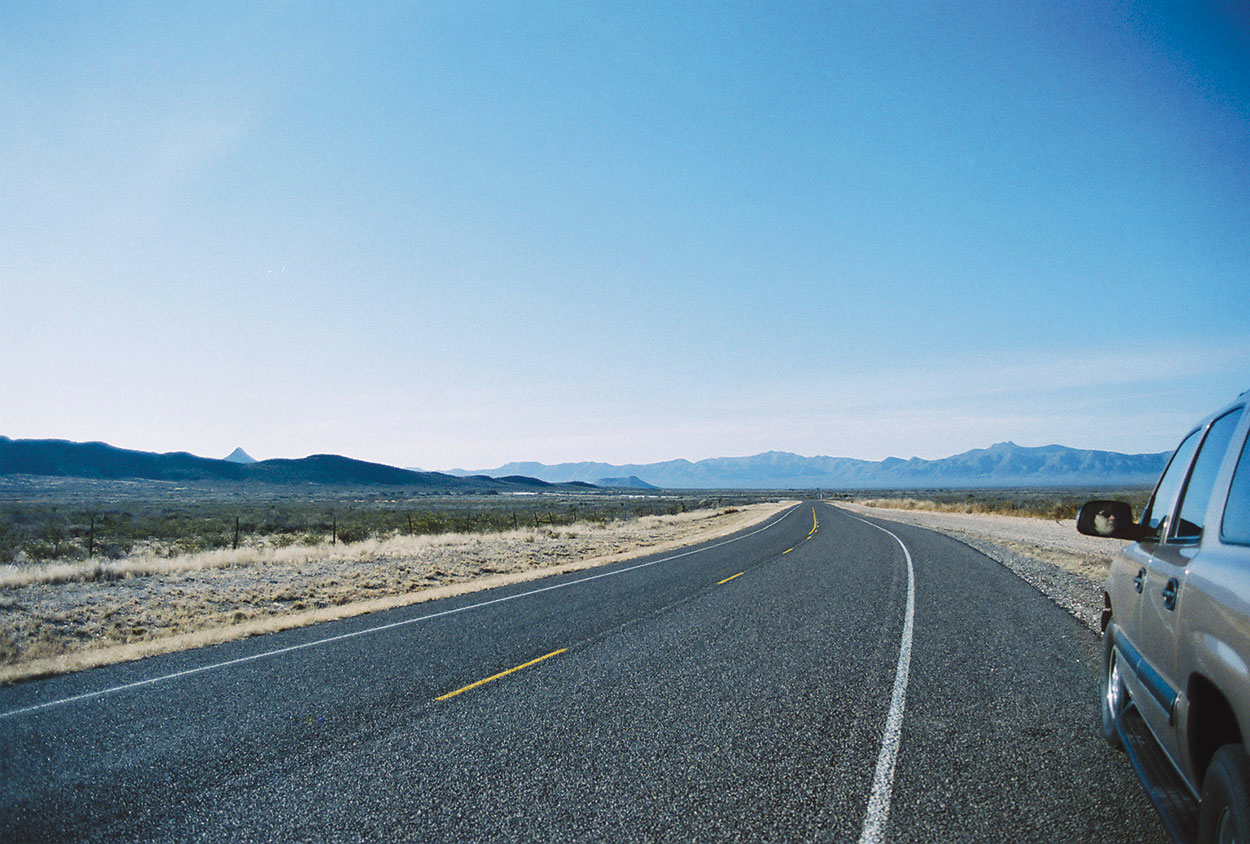
Driving in the dark was amazing. Beyond our headlights, there were no signs of life as far as the eye could see. DeLinda stopped the car, turned off the lights and engine, and we were at once blanketed in the softest, widest blanket of darkness. The air was cool and refreshing. Slowly, outlines of the mountains in front of us began to appear, and life sprang forth, including a jack rabbit that crossed in our path!
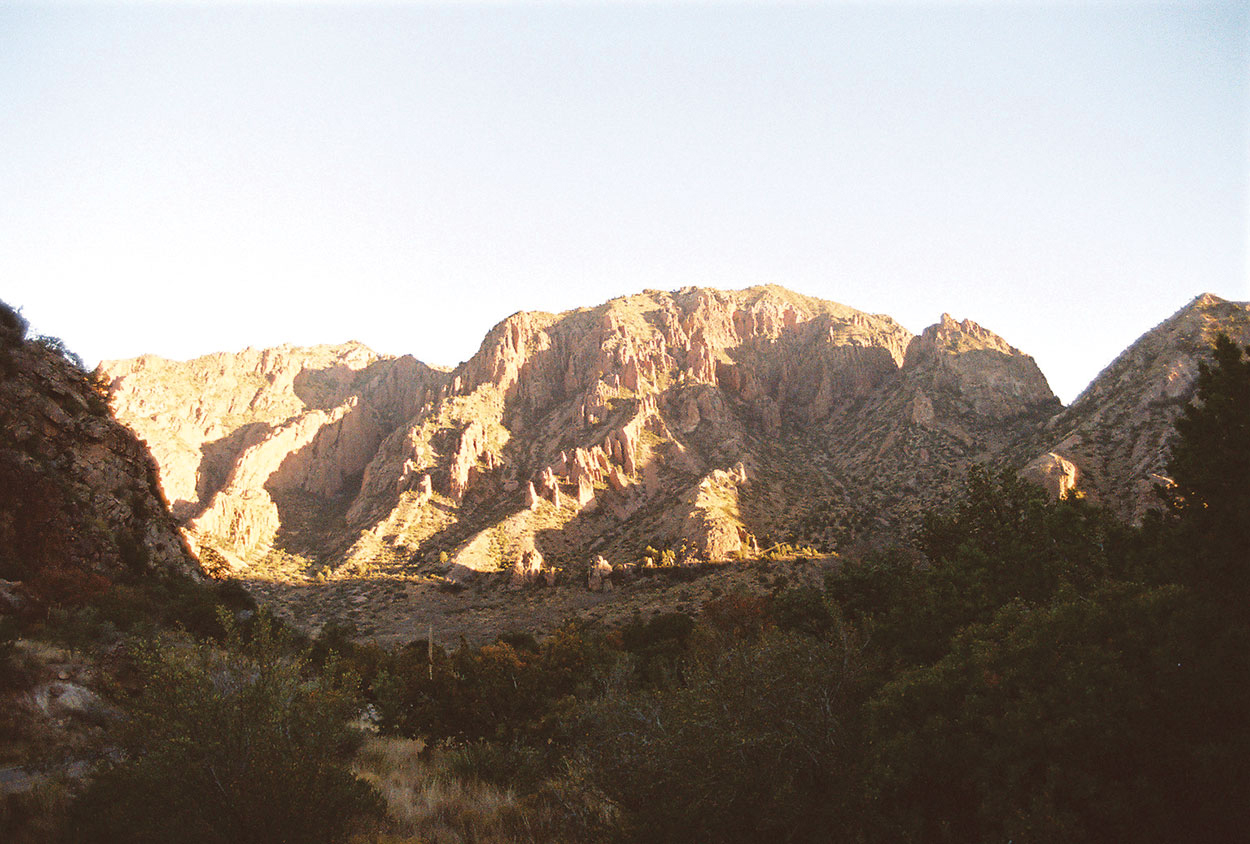
A right turn brought us to the mouth of the Chisos Basin road, a winding hilly drive that led us up along the side of the mountains, up over and down to the center of this crown-like mountain range. At the center and bottom sat a sprawling campground and the Chisos Mountain Lodge. Perched inside the Basin, cupped by giant mountain walls, the Lodge faces south over Big Bend. A natural opening called “The Window” afforded views of the park as the sun climbed higher in the morning sky.
An all-windowed dining room was the perfect amphitheater for the sunrise, and we had front row seats as we enjoyed a scrumptious buffet. We ate like we hadn’t in days, and devoured our filled plates of eggs, bacon, fruit, biscuits, grits and salsa.
Sunrise from the Chisos Basin
Some photos and souvenirs, and we were back on the road again, backtracking through Panther Junction, north up 385, 70 miles back into Marathon. Overhead, hawks and eagles watched our departure and the sun on our backs pushed us along out from Big Bend and east along Highway 90.
Nancy Griffith sings about Highways 90, the Gulf Coast Highway. She was just one of our eclectic selection of music on this trip, that included the Partridge Family, Paul Simon, Bare Naked Ladies, Willie Nelson, Indigo Girls, Steely Dan, Dixie Chicks, Robert Earl Keene, Randy Travis, Sting, Amy Mann, Suzy Bogus, Eagles, Sheryl Crow, Lyle Lovettt, Lilith Fair, Gypsy Kings, and Abba. Each of us sharing our favorites along the way.
Highway 90 took us six hours east through West Texas, past Sanderson and Dryden on into Langtry. Here, we stopped at the Judge Roy Bean Museum. This was a weary day, and you could see our enthusiasm wane just a bit as we made plans to stop for lunch and visit the exciting town of Del Rio.
The slick and glossy brochure for Del Rio said this was THE place to be—shopping, recreation, happy Mexican dancers. We drove down now-congested Highway 90 into a stretch of every fast food joint, gas station, and car dealer known.
In the first five minutes, we saw more people than we had in the past three days! It was quite a culture shock—the cars, the people, the noise! I was reminded of Gulliver returning from the land of the Houyhnhms where he lives among the majestic horse-creatures and the “Yahoos” or humans…
“I must freely confess the sight of them filled me only with hatred, and the more by reflecting on the near alliance I had to them,” wrote Jonathan Swift. “For although since my unfortunate exile from the Houyhnhm country, I had compelled my self to tolerate the sight of Yahoos…yet my memory and imagination were perpetually filled with the virtues and idea of those exalted Houyhnhm.”
We stopped in “historic” downtown Del Rio, wondering how this congestion of dollar stores and loan shops was “The Best of the Border”? We didn’t say much as we drove east out of Del Rio, rather quickly, and on into San Antonio, then north through Johnson City and back into Austin.
In an airplane, you are aloft at some 30,000 feet in a vast skyscape of blue and white, with only your fellow travelers as company. And then, as you make the approach to your destination, the world slowly reappears. You begin to make out cities and buildings, houses and backyards, cars and people. With one weighty tug you are back to earth, and back home.
In the same way, our world took shape again. Out from the expanses of vast desert and majestic mountains, out from the quiet and dark, back into this bustling hub of activity—for better or for worse.
By the time we reached Austin at 7:30 Monday night, we had charted more than 1,500 miles on our adventure. Our modern-day weariness happily replaced by a shared exhaustion, a feeling of accomplishment, and a heartfelt sense of camaraderie.
“There’s a pale sky in the east
all the stars are in the west
Oh, here’s to all the dreamers
may our open hearts find rest
The wing and the wheel are gonna carry us along
And we’ll have memories for company
long after the songs are gone.”
I’m reposting this series of blog posts because as I type, there are bulldozers in Big Bend National Park. There are scared, evil people building walls on sacred desert ground, while the wicked ones paint golden calves to worship.This series represents the collective experiences and thoughts of three women who set out on a 1,500 mile trek across West Texas in December 2003. Development, tourism, climate change and politics have altered the area a lot since then, but this was their unforgettable “Road Trip: Big Bend.”
SUNDAY
Presidio (pop 4,167) was the largest town we visited since Fort Stockton. The Mexican influence was obvious in this bordertown, and we drove through rather quickly intent on a visit to Mexico.
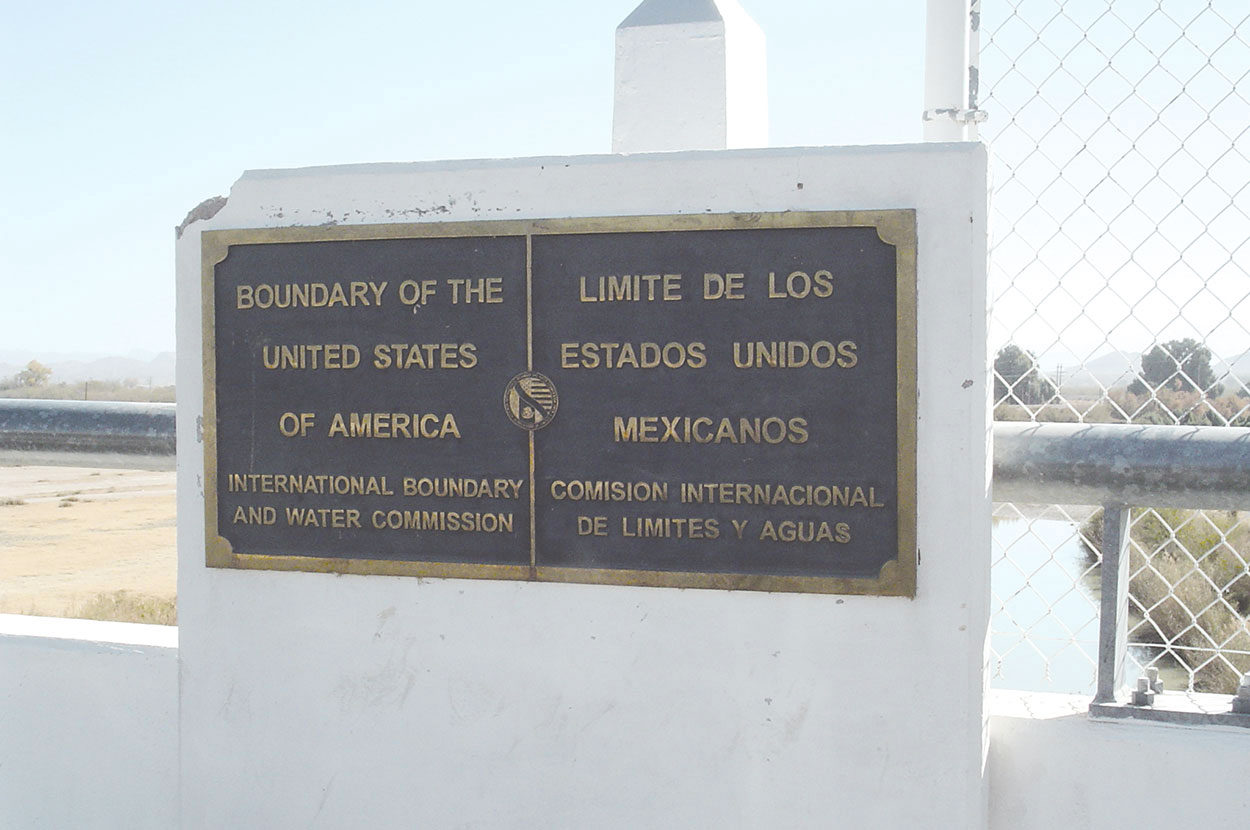
And so we drove, through Presido, through the border patrol, over the bridge and on into Ojinaga, Mexico. Encapsulated in our American SUV, we looked out the window into this dusty, congested town bustling with activity—car dealers, restaurant, pinata stores and street vendors.
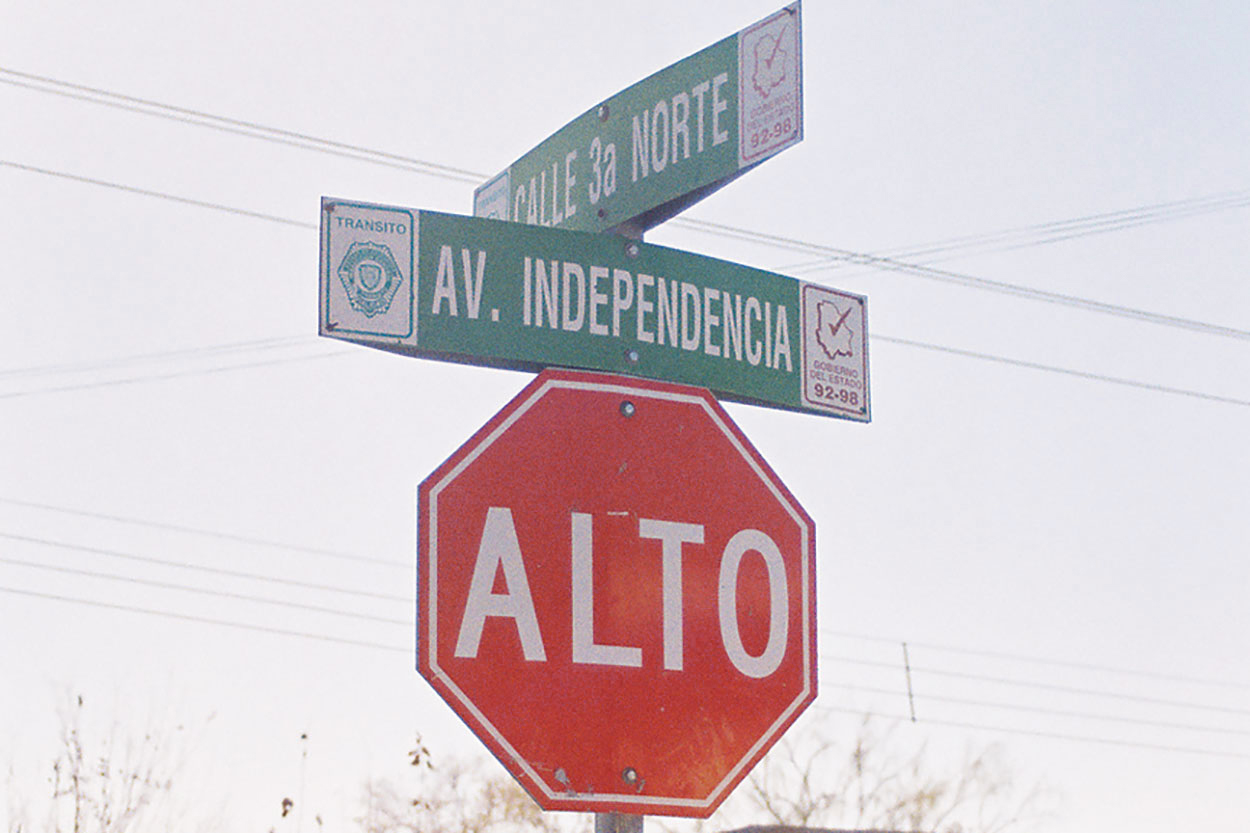
It was at the first intersection that I realized this was not what I expected. As we sat at a red light, ready to head right, the car behind us beeped its horn. I looked up to see if we could take a right on red and saw not one sign in English! Storefronts, street signs…all, of course, in Spanish!
There has been no easy transition from English to Spanish, from America to Mexico. We were on foreign soil, so foreign that even our adventurous souls agreed to turn around. And so we drove right and then left and then right back to the border crossing, where we spent more time waiting to get back into the U.S. than we did in Mexico!
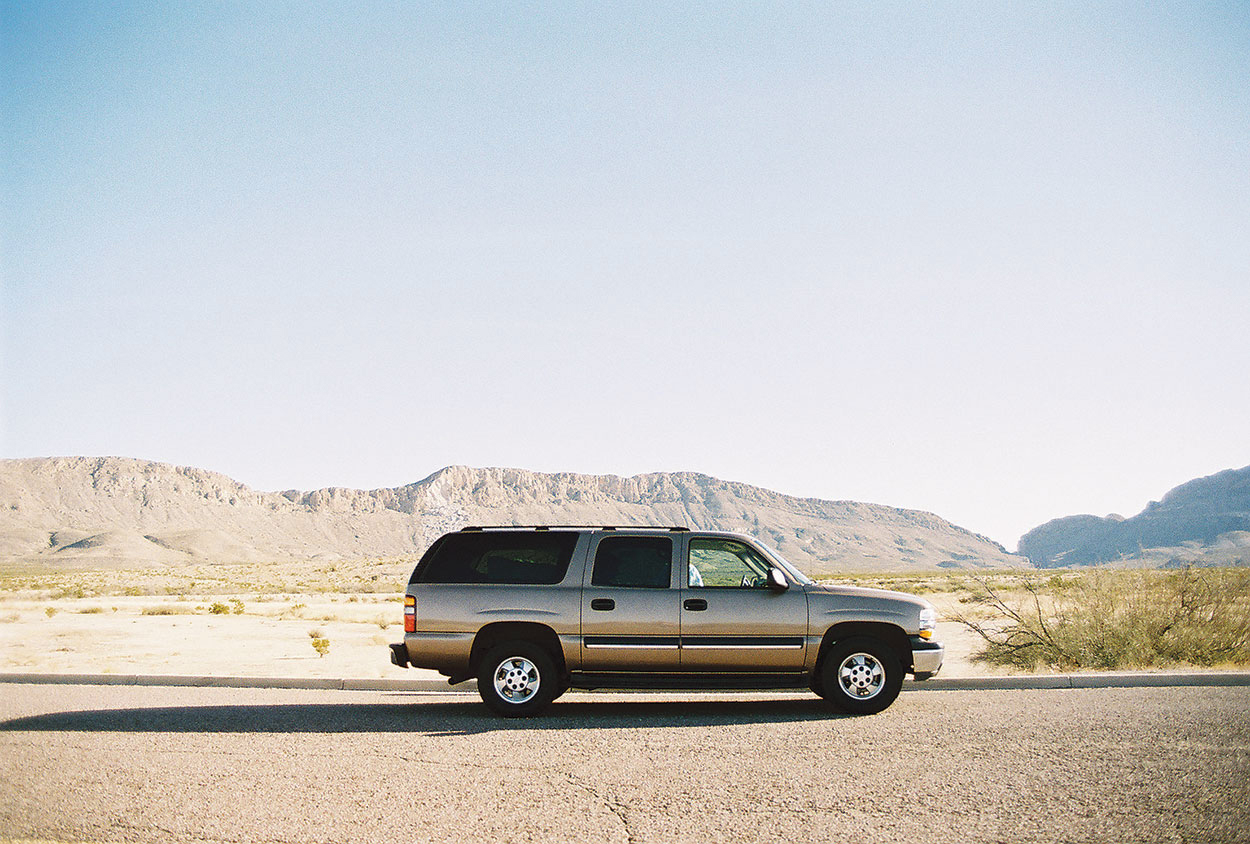
In our seats, we waited as patiently as we slowly approached the ominous border patrol. Forty-five minutes later, DeLinda rolled down the window and the border patrol officer asked if we were all U.S. citizens. In unison, without a word, the three of us held up our driver’s licenses and smiled. The officer almost laughed…these three pale white women in red bandannas with travel brochures and beef jerky strewn across the front seat. U.S. citizens indeed!
Mexico behind us, we appropriately stopped at a Presidio restaurant, El Alamo, and feasted on salsa and chips, tacos and burritos.
Driving back the River Road, we saw backwards where we had been, and stopped along the way to snap photos we had missed on our earlier journey. Weary, we camped out at the hotel for the night. Tomorrow, we drive home…
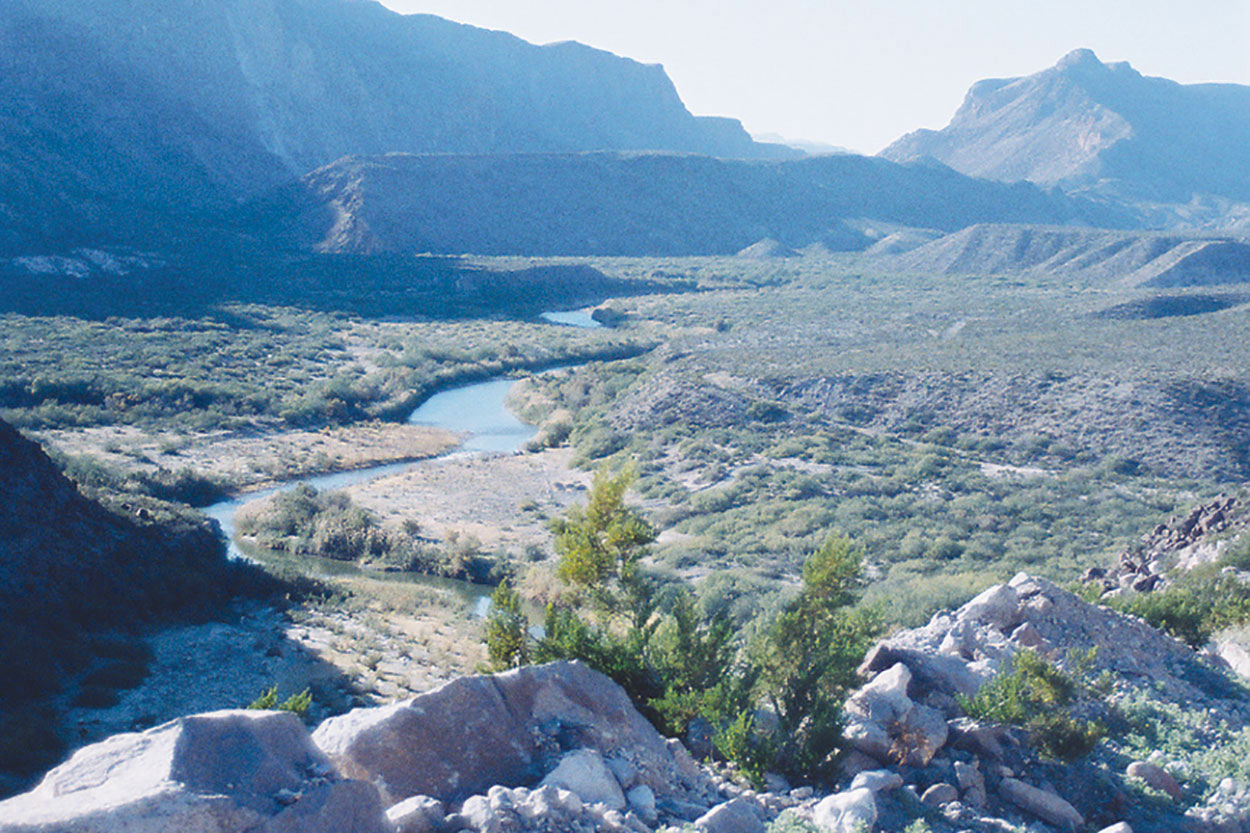
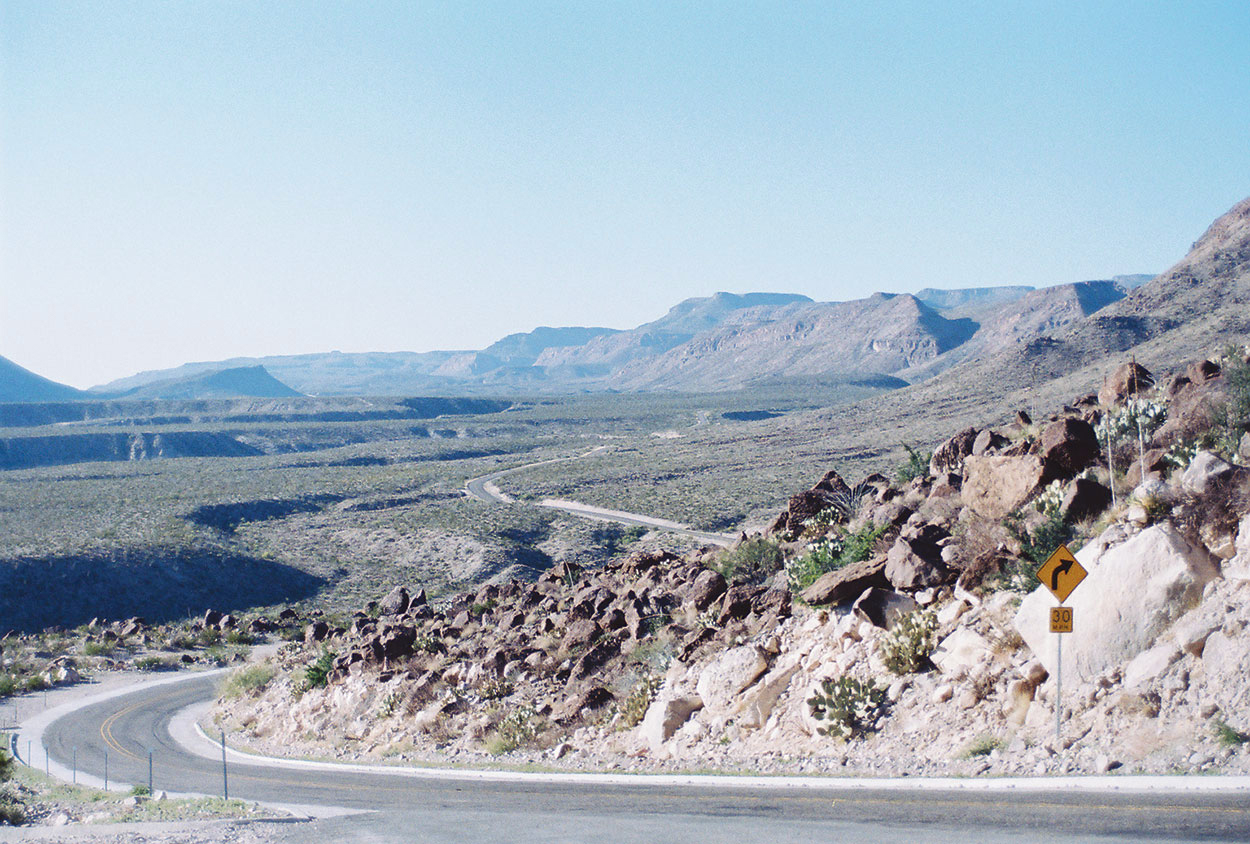
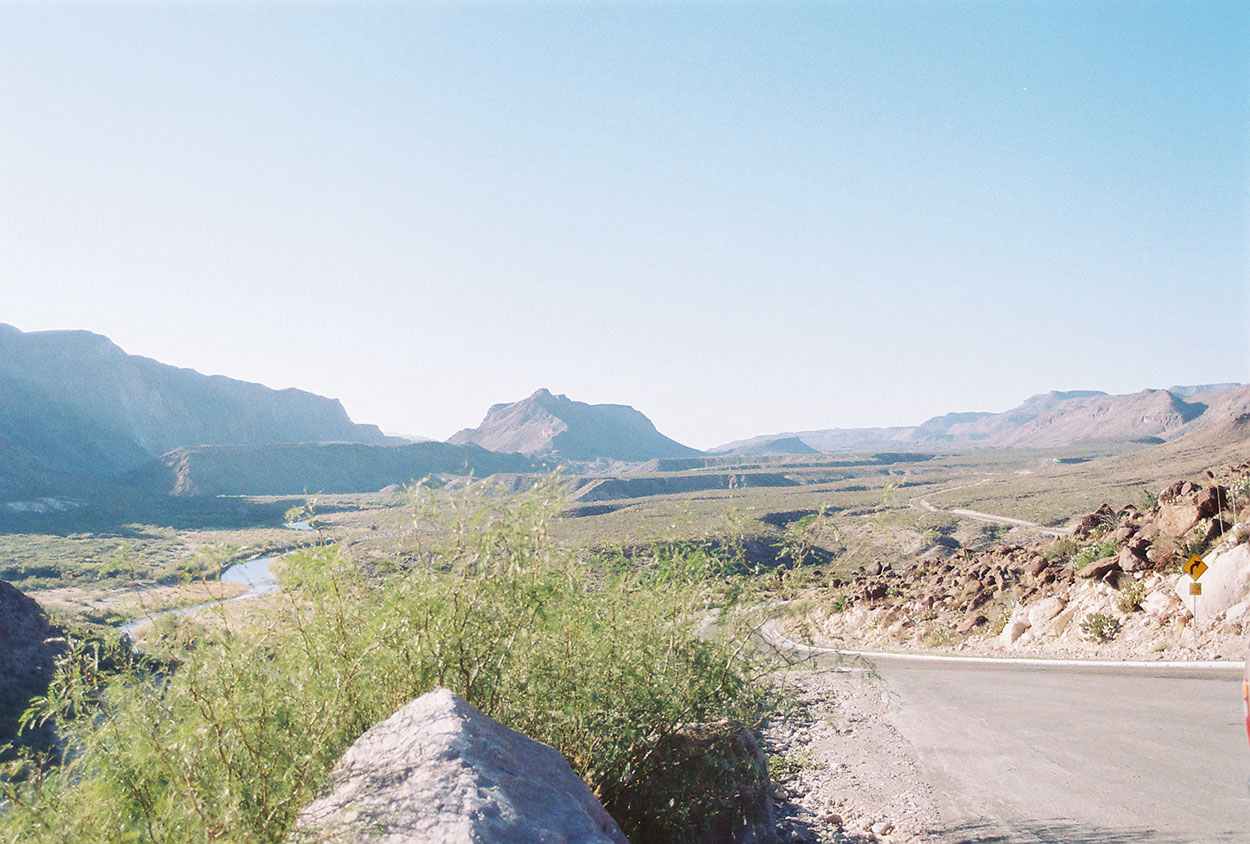
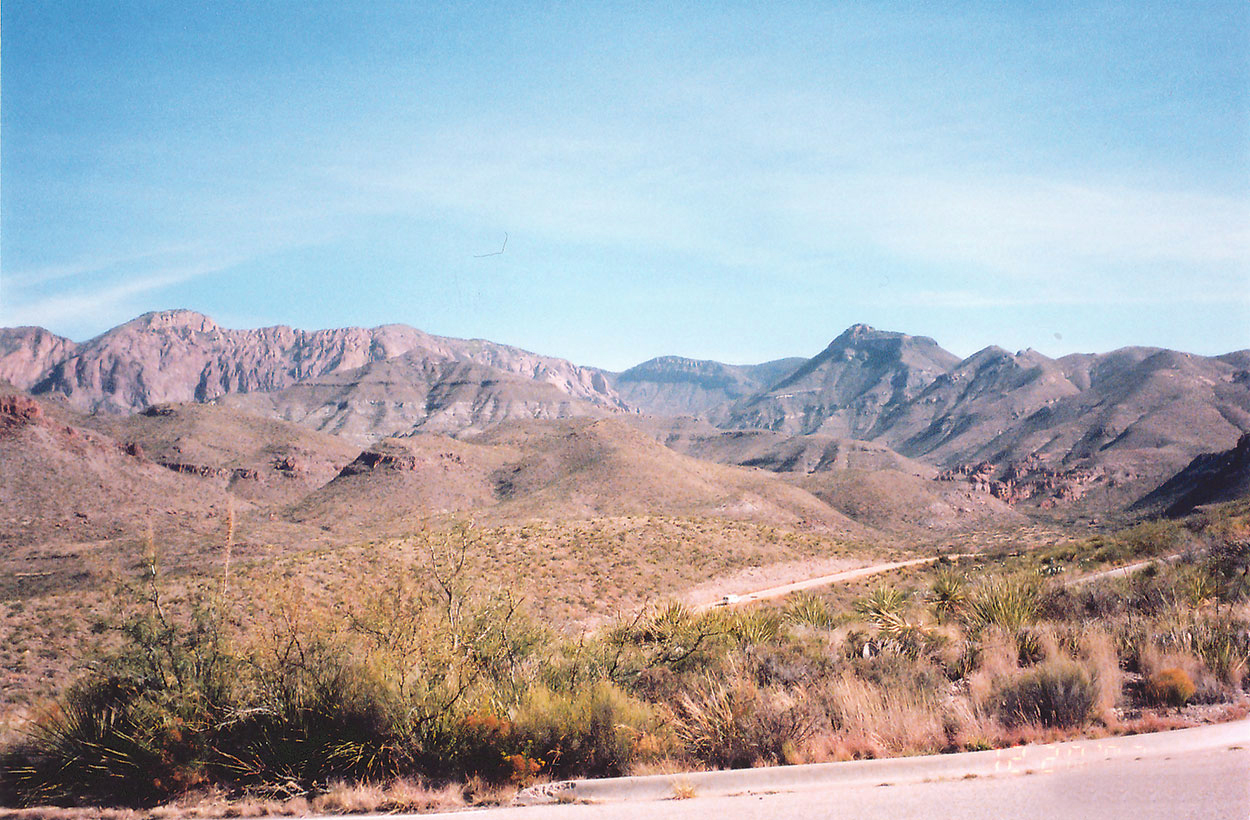
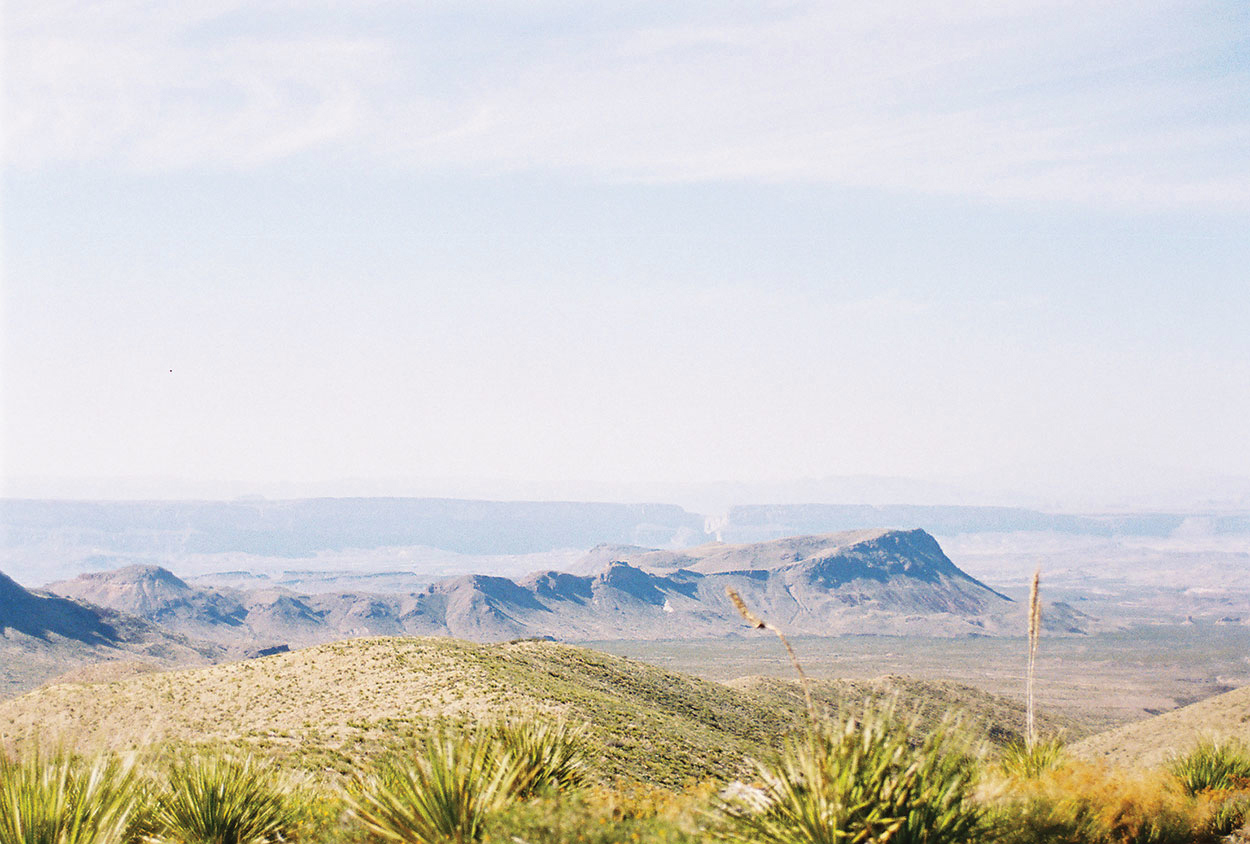
View of the rio grand, back towards Presidio, from the “big hill”Chisos Mountains from El Camino Del Rio
I’m reposting this series of blog posts because as I type, there are bulldozers in Big Bend National Park. There are scared, evil people building walls on sacred desert ground, while the wicked ones paint golden calves to worship.This series represents the collective experiences and thoughts of three women who set out on a 1,500 mile trek across West Texas in December 2003. Development, tourism, climate change and politics have altered the area a lot since then, but this was their unforgettable “Road Trip: Big Bend.”
SUNDAY
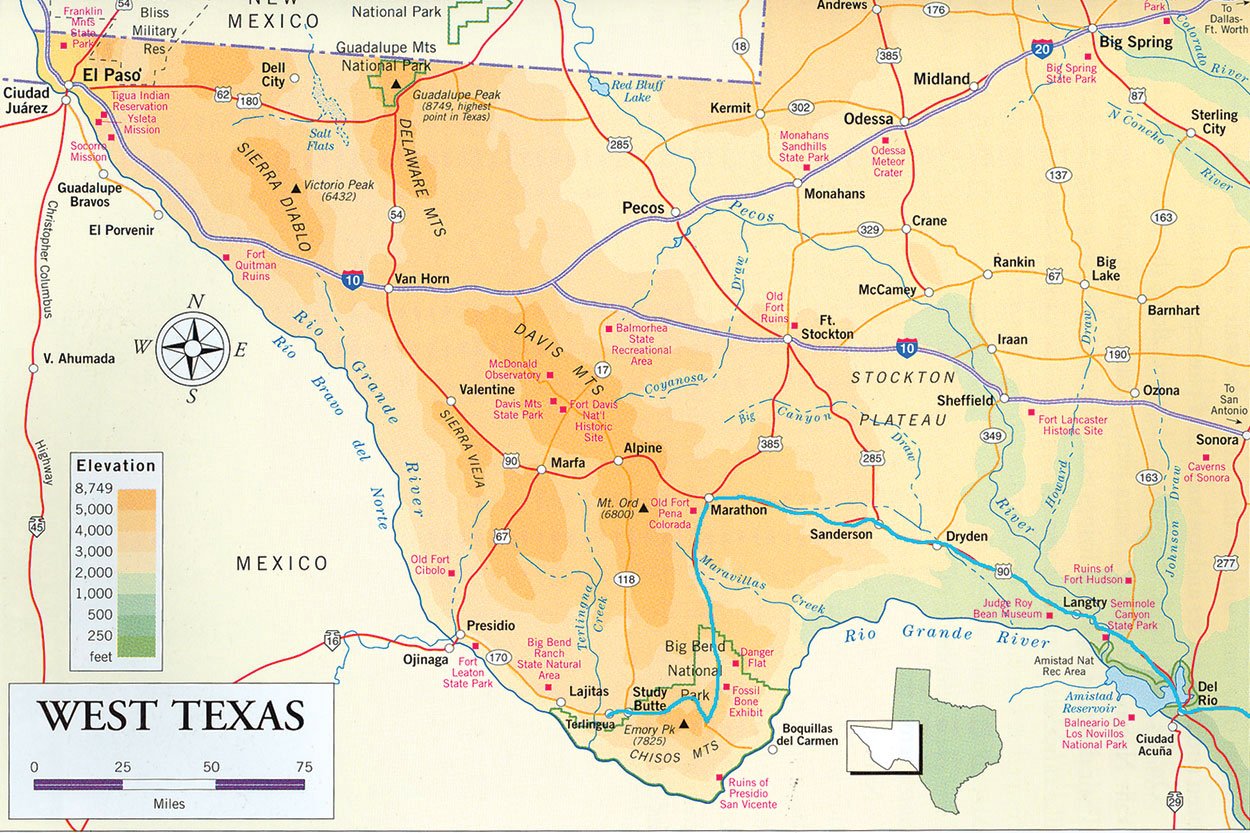
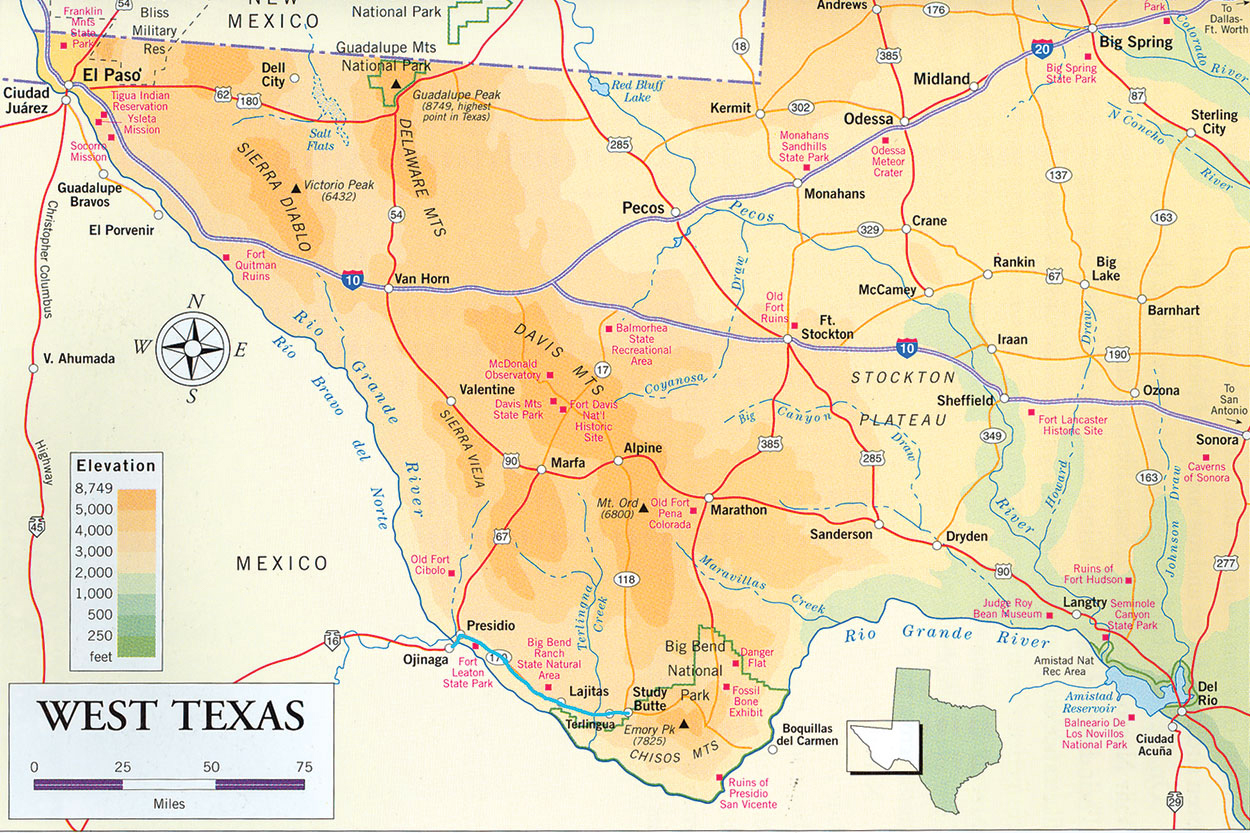
EI Camino del Rio extends more than 50 miles from Lajitas to Presidio on Farm-to-Market 170. Considered one of the most spectacular routes in the whole of Texas, El Camino del Rio—the River Road—plunges over mountains and into steep canyons as it follows the sinuous Rio Grande through the desolate but wildly beautiful Chihuahuan Deserted [and] the Big Bend Ranch State Natural Area, a 420-square-mile preserve encompassing the River Road.
The town of Lajitas (la-HEE-tahs) [was] established in 1915 as an Army post to protect settlers from Pancho Villa, the famed Mexican renegade. Route 170 begins its roller-coaster course before you even leave the town, following the Rio Grande west.
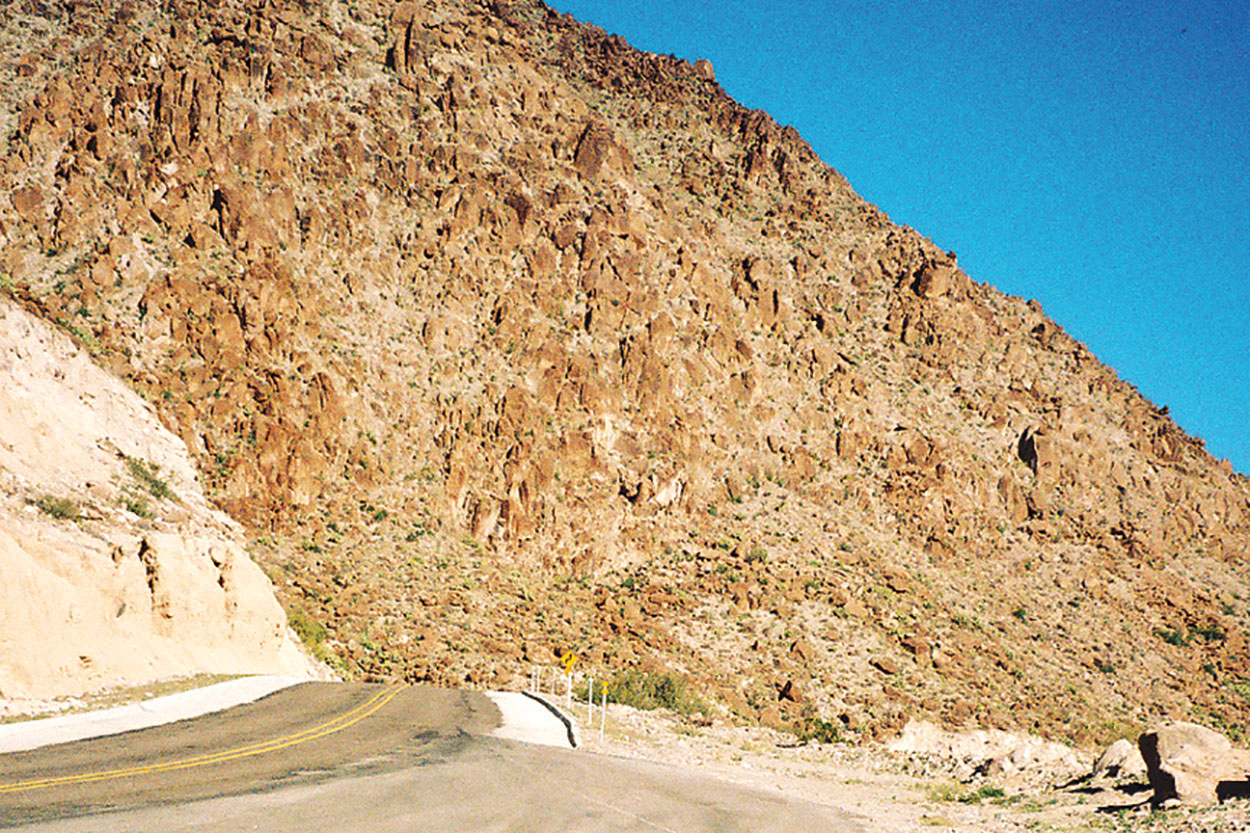
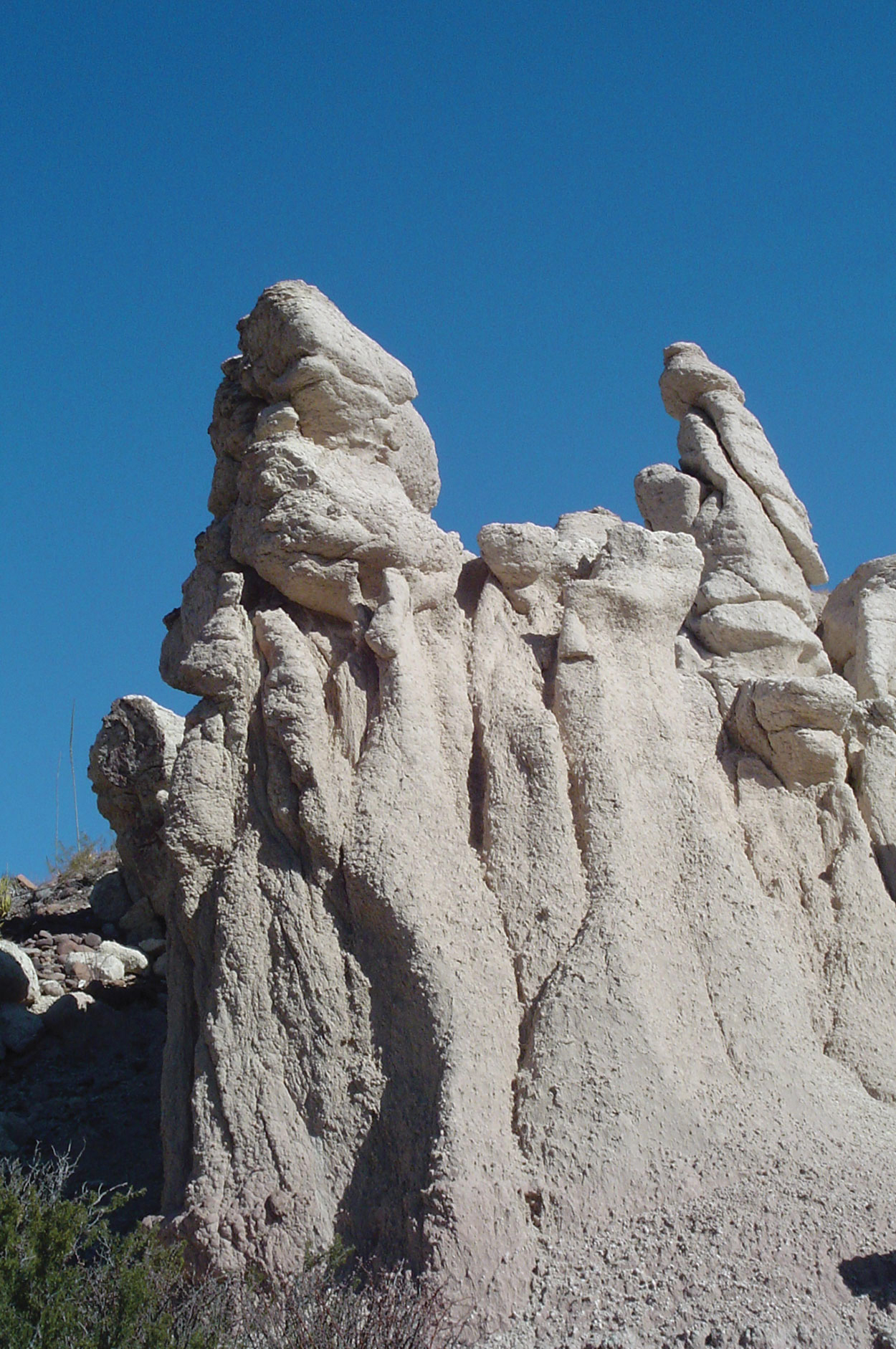
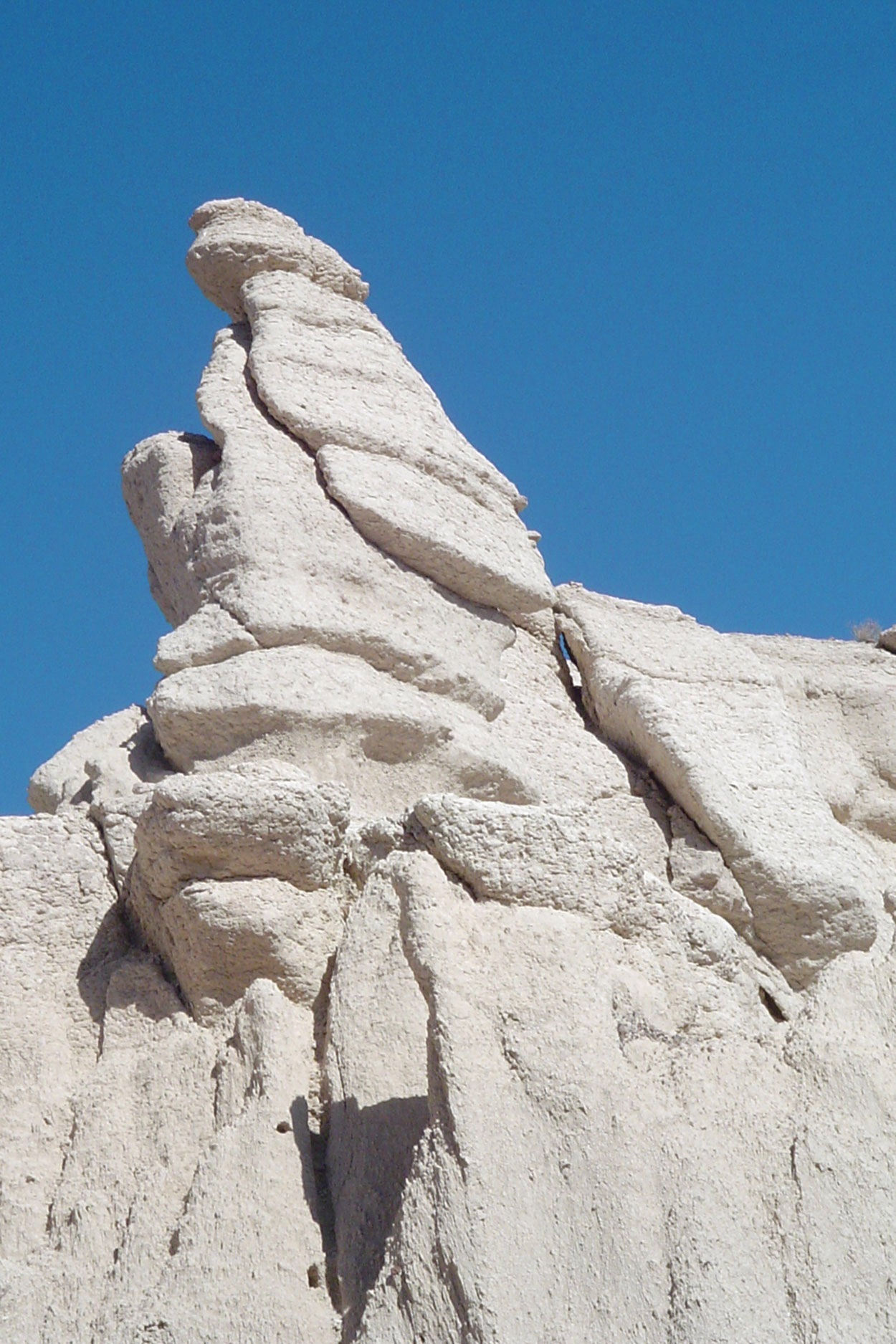
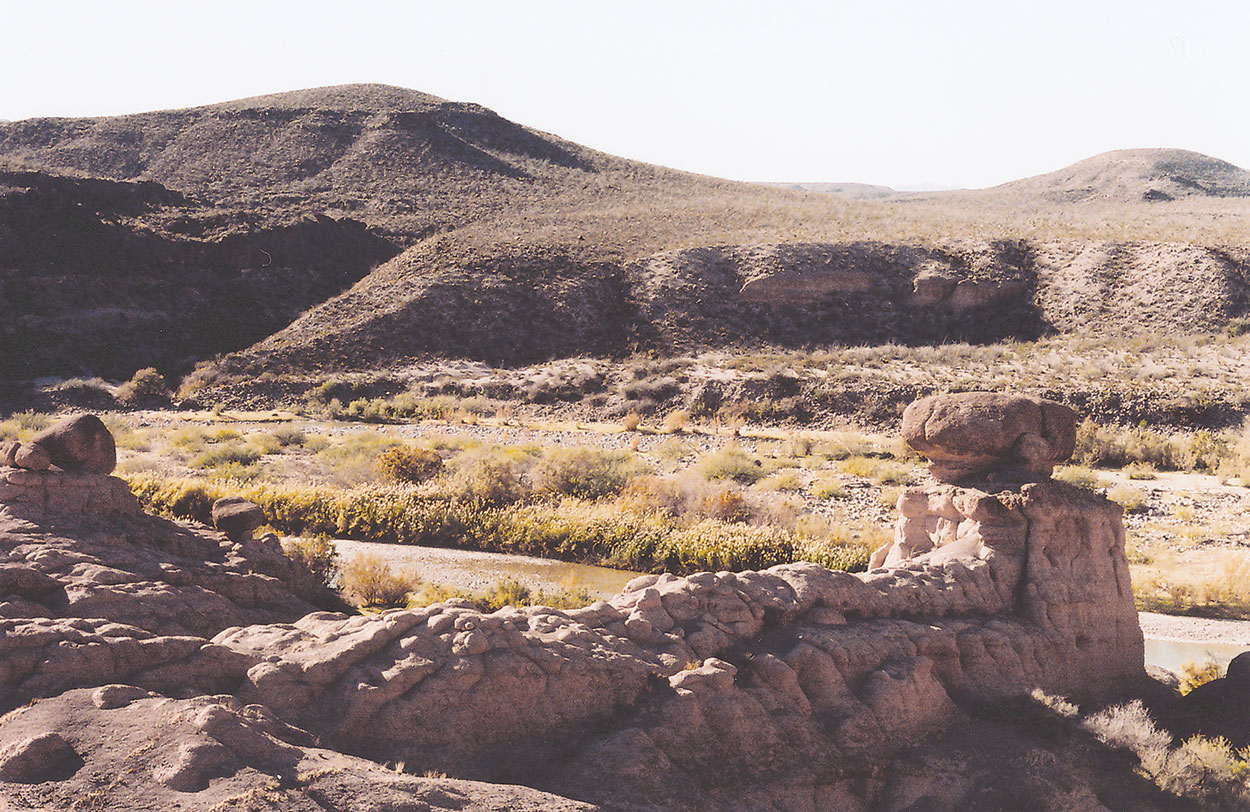
The road swings away from the river [and back]….After 2 to 3 miles you’ll see a cluster of weathered volcanic ash formations called hoodoos along the river….The drive then starts a steady, 5-mile climb up the “big hill” of Santana Mesa. A major engineering feat, this portion of the road ascends at a 15% grade. At the summit, an overlook affords superlative views of the canyon below and the rugged, forbidding volcanic landscape that sweeps to the horizon.
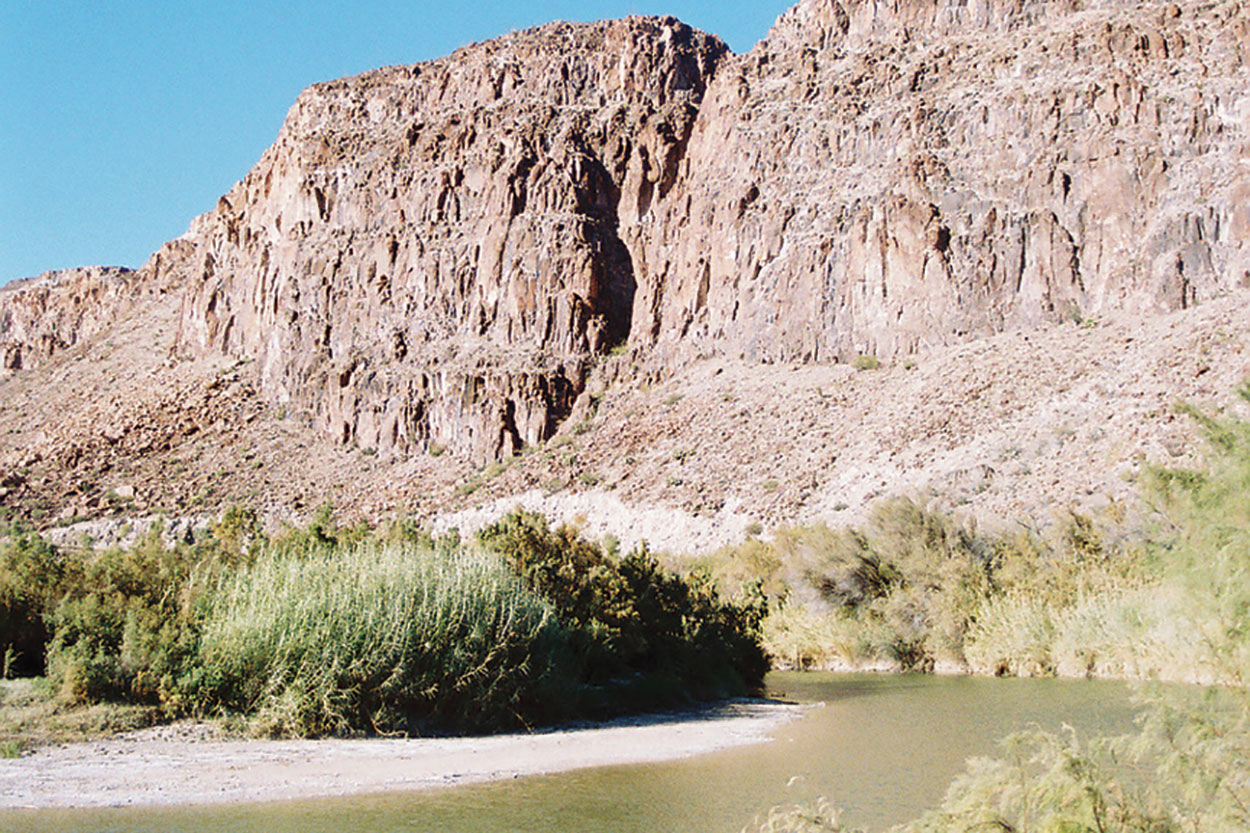
As you make your serpentine descent off the mesa, the Rio Grande winds below, a green path through the wild Chihuahuan Desert. The Rio Grande Valley continues to widen, filled with a sculptural array of eroded lava hills and mesas. You cross Panther Creek then pass a narrow fissure known as Closed Canyon, the first in a series of canyons along this undulating stretch. Continuing on, you have expansive scenes of the arid valley below.
About 10 miles farther on, the drive enters windblown Redford, an old farming community. Pressing on through open range, the road finds the river again and passes through a couple of refreshingly green oases before entering Presidio.
National Geographic Guide to Scenic Highways and Byways
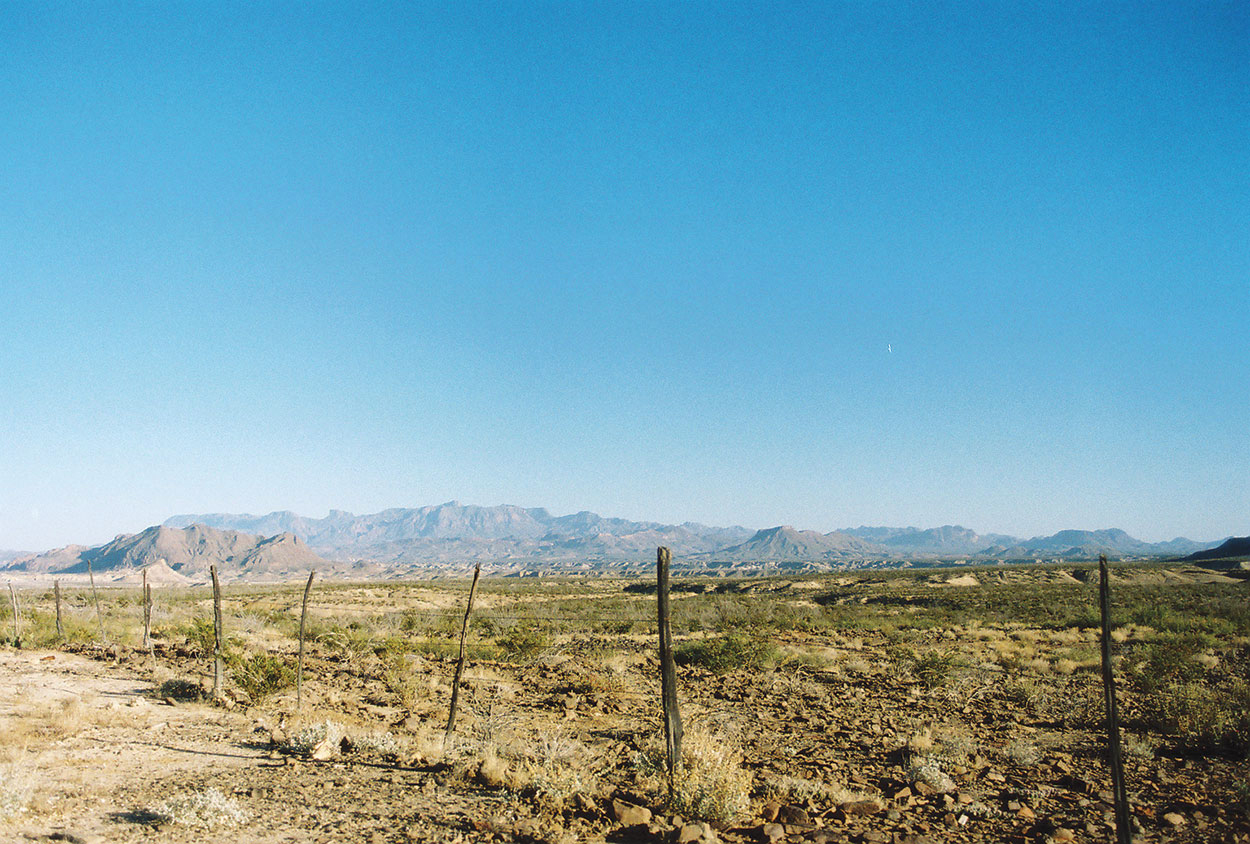
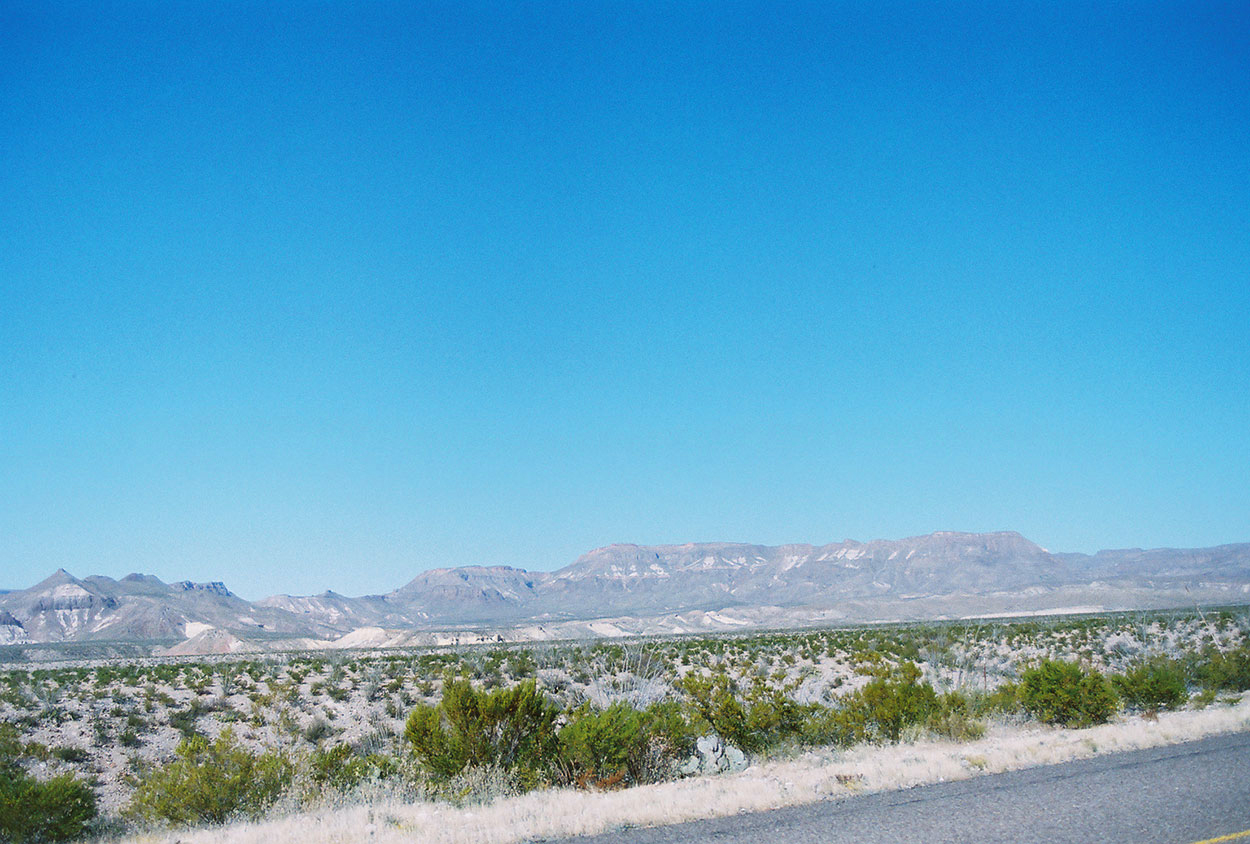
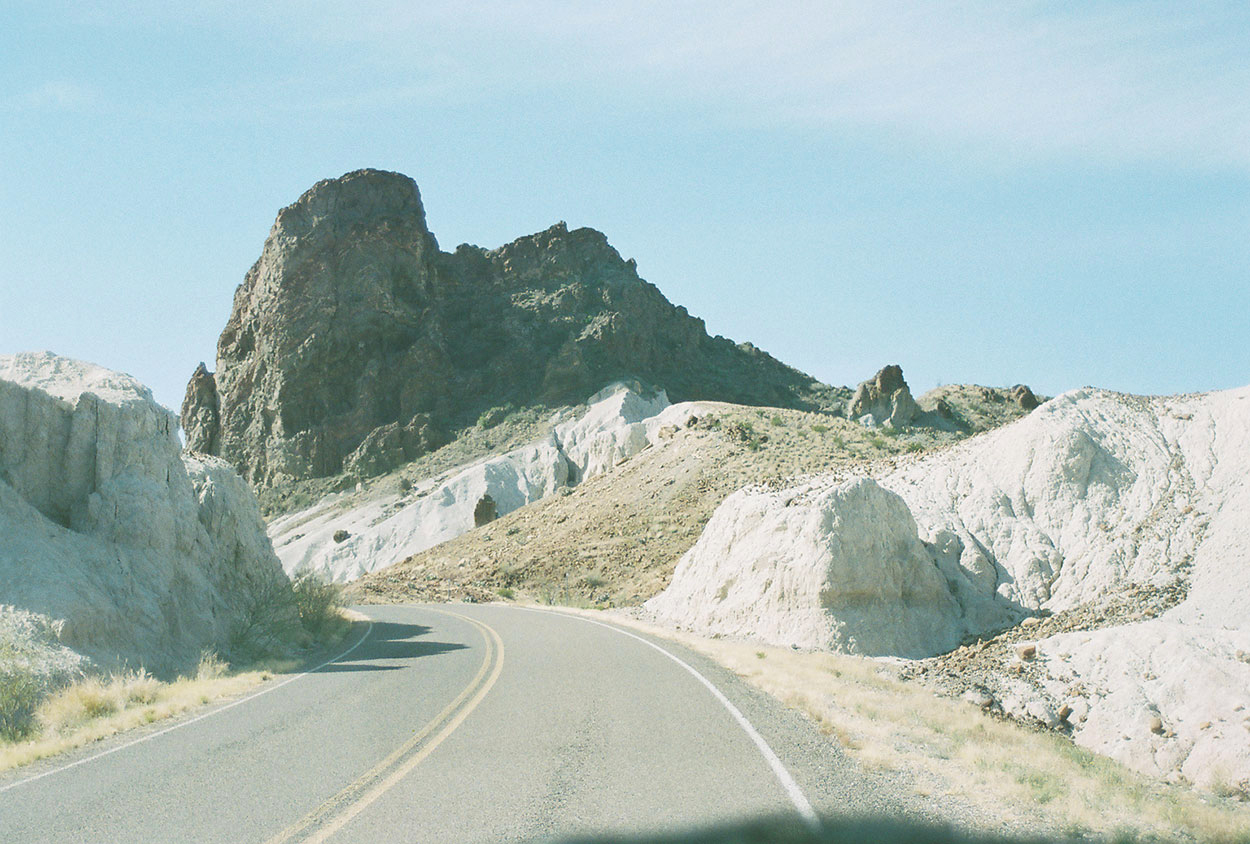
El Camino Del Rio presented the most varying scenery of this trip—vast expanses of now-familiar desert, huge terra-cotta stone mesas towering above, white volcanic ash mountains and sculptures called “hoodoos.”
In the Valley—sometimes below, sometimes alongside—lush tall grasses and trees grow. You can almost imagine them deciding to congregate here along side the winding Rio Grand—low grumbling voices in agreement, like the Ents in “Lord of the Rings.”
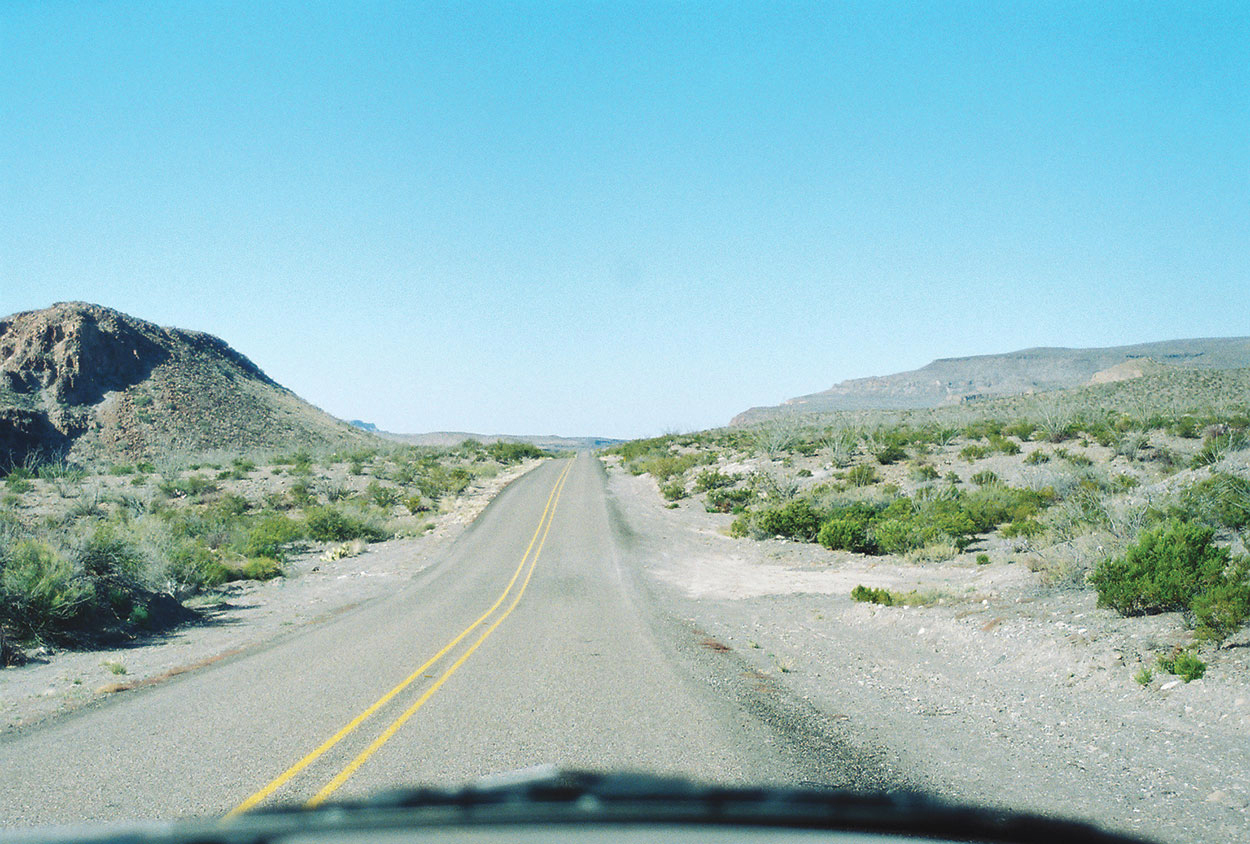
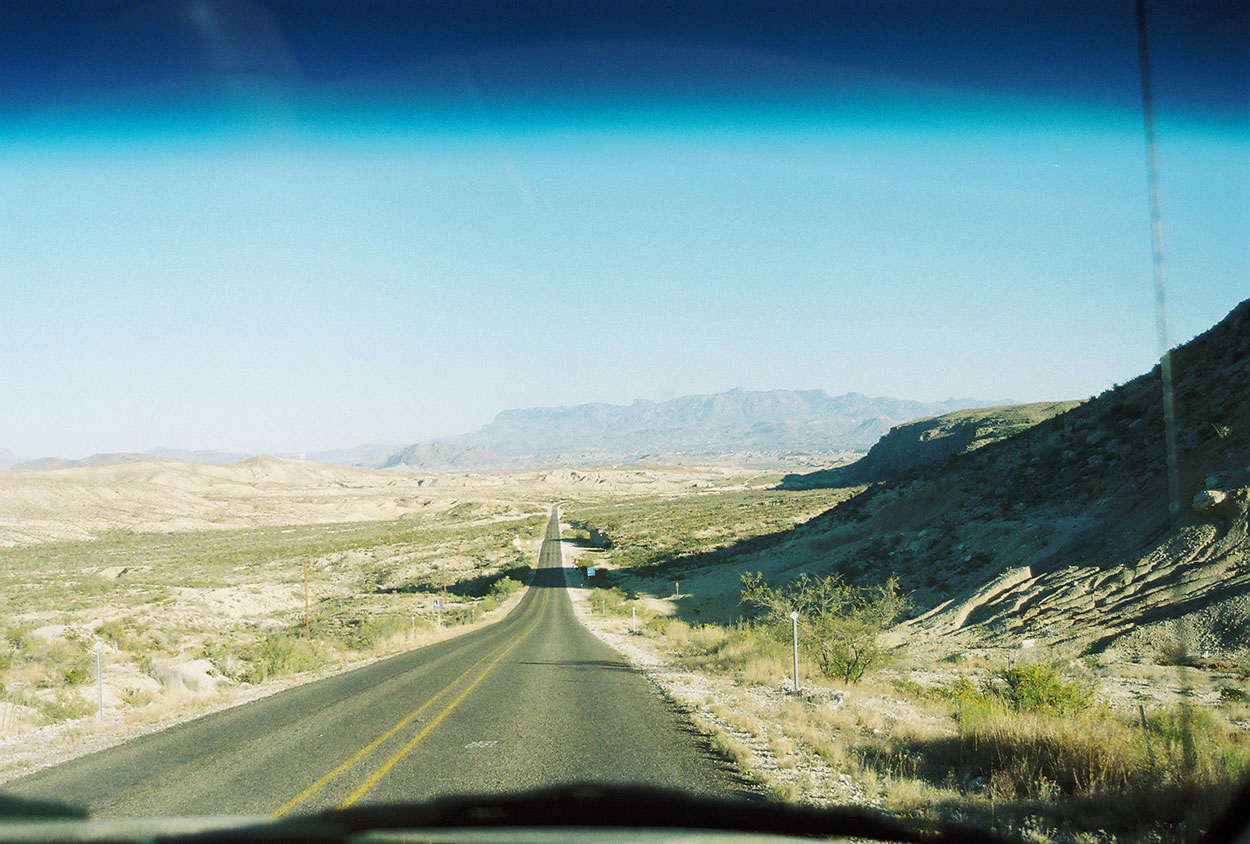
The curvaceous road takes us up from the river. Winding! Twisting! Throwing us up! the sides of mountains and down! beneath huge walls of rock and then up! again. Then flat road for miles…surprised by smaller hills, like bunny-hops on a roller coaster.
This road was at once exciting and frightening, showing us unimagined sights and then disappearing below the hill in front of us—will it curve right? left? We hold our breaths and wait for the road to materialize before us.
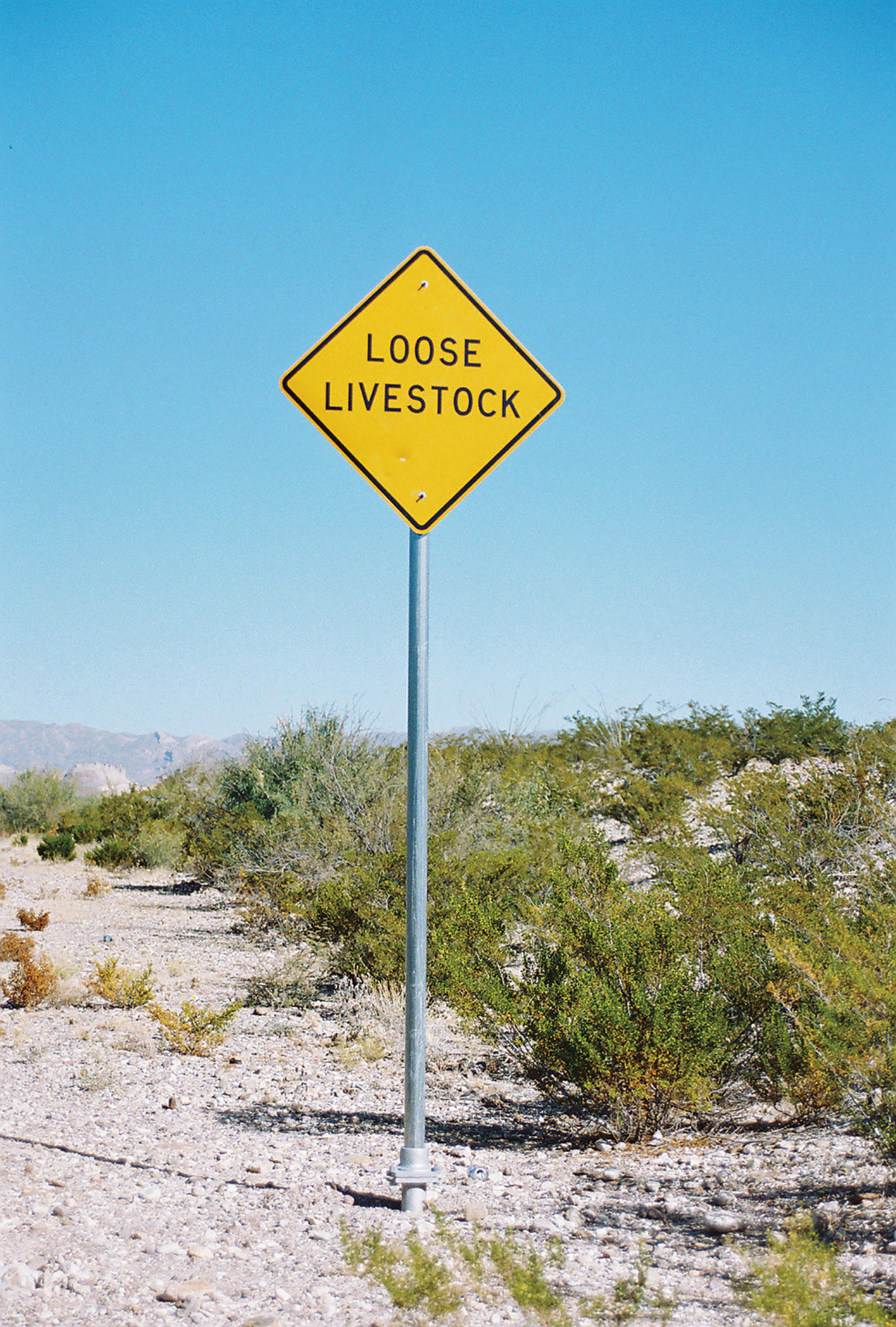
“Loose Livestock” signs make us laugh at the image of risque cattle along the side of the road, catcalling to us as we fly by at 50, now 70, now 15 miles an hour. Ahead, the towns of Lajitas, Redford and Presidio, and then Ojinaga, Mexico.
We had talked about staying at Lajitas—a $200 a night resort dropped down here by some “forward thinking” developer who obviously felt this fabulous, natural wilderness needed an exclusive, high priced spa/resort complete with lighted tennis course, golf course and western-themed shopping plaza.
We drove past without stopping, grateful for our cooler full of snacks and beef jerky. Westward.
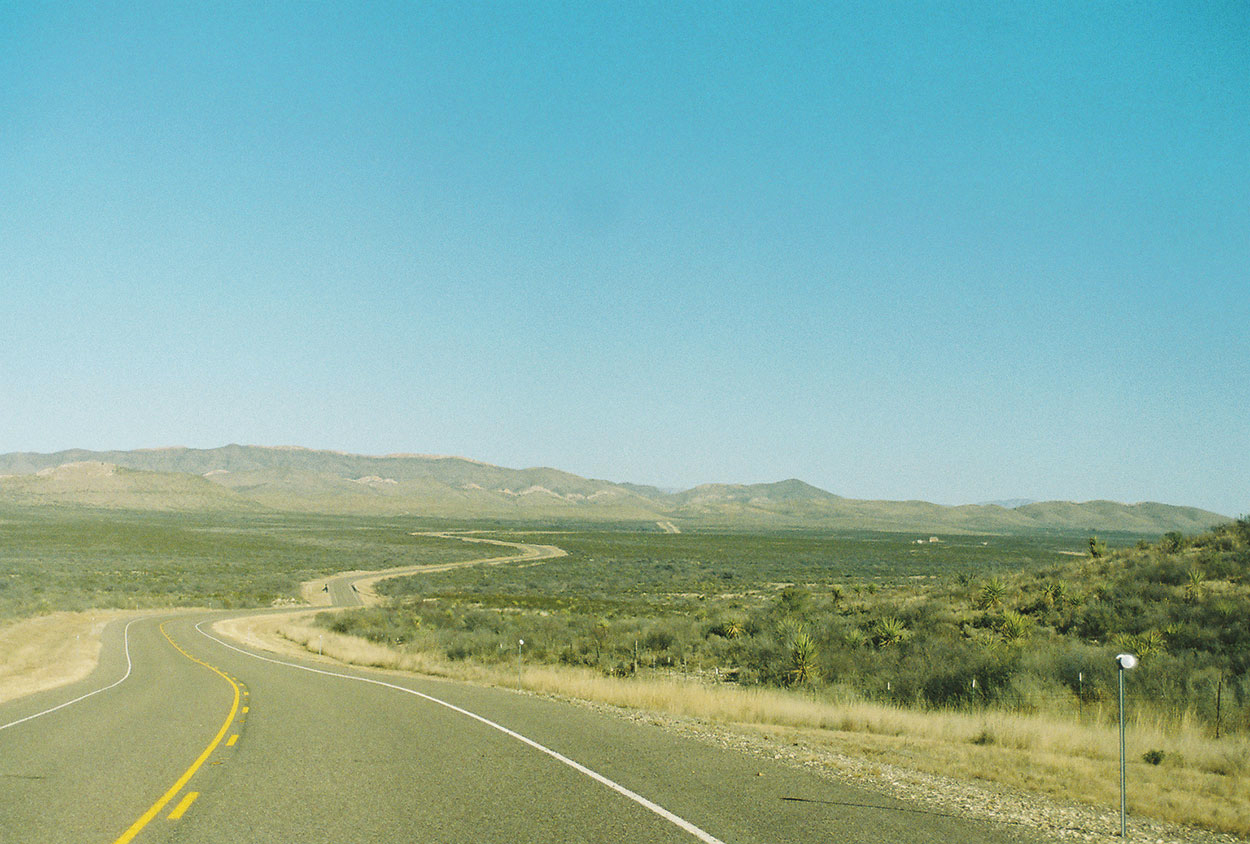
This part of the region is called Big Bend Ranch State Park and encompasses 287,000 acres of wilderness. They call it “some of the most remote and rugged terrain in the southwest.”
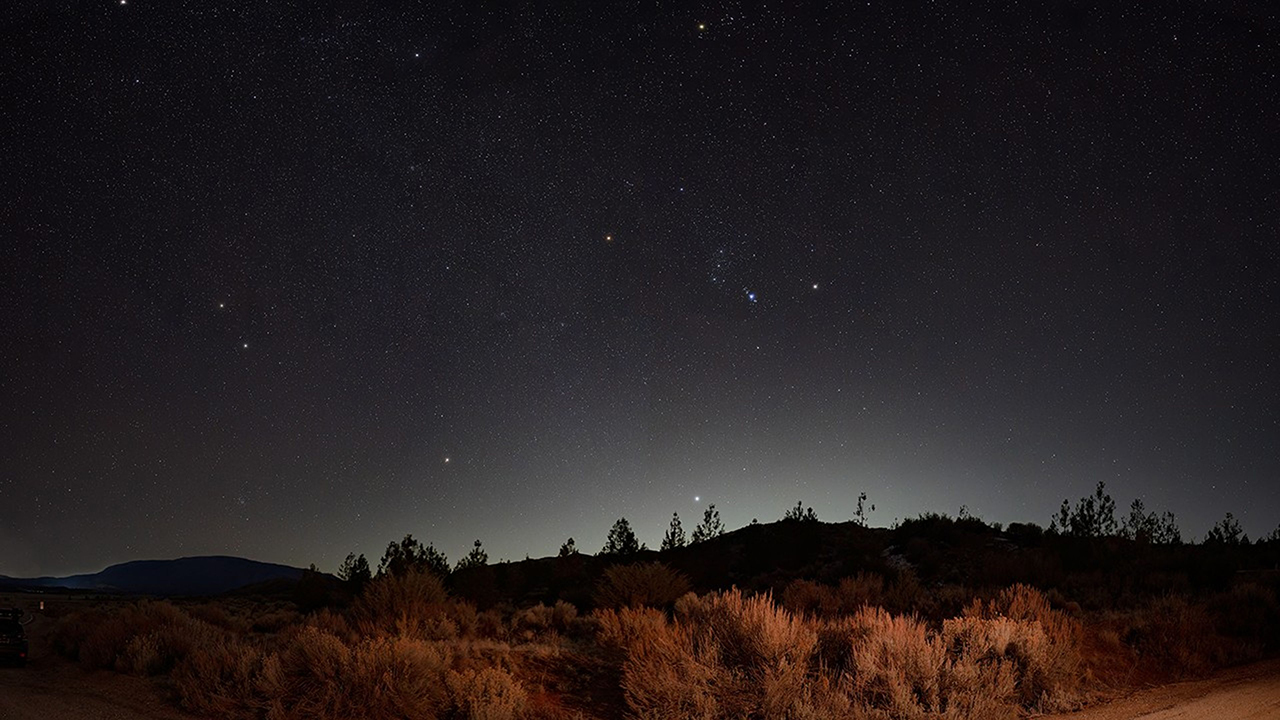
If you look at a map of electrical light across the U.S., this is the place where it stops. The northeast is cluttered with light, but the farther west you drive, the more dark it becomes. Here, there are no street lights, no glaring disturbances of light or hum of electricity. It is so dark here that the McDonald Observatory, north near Alpine, claims one of the best skies for star observation in the country.
El Camino Del Rio, looking toward Presidio, from the “big hill”Along El Camino Del RioHoodoosHoodoosThe EntsRoller CoasterTowards MexicoDesert colors along El Camino Del RioBy the hand of God
I’m reposting this series of blog posts because as I type, there are bulldozers in Big Bend National Park. There are scared, evil people building walls on sacred desert ground, while the wicked ones paint golden calves to worship.This series represents the collective experiences and thoughts of three women who set out on a 1,500 mile trek across West Texas in December 2003. Development, tourism, climate change and politics have altered the area a lot since then, but this was their unforgettable “Road Trip: Big Bend.”
SUNDAY
Sunday morning found us well-rested and ready for our journey down “El Camino Del Rio,” the River Road. “For over 30 miles, El Camino del Rio twists and winds with the Rio Grande, crossing arroyos, climbing mountains, and hugging canyon walls. The “Big Hill” has one of the steepest grades on a highway in Texas, and at the top, the view looks east to the Chisos Mountains 75 miles, and west into Colorado Canyon and mountain ranges deep into Mexico.”
We awoke early enough to catch the sun rising over the mountains, and all agreed that it would be great to see the sun rise in the park the next morning.
Our first stop, after coffee and a photo opp outside the hotel, was the Terlingua Ghostown, an old mining camp, now partially deserted and left in ruins. An elaborate gift shop—incredibly out of place—kept us occupied for nearly an hour, as we scouted out the first truly commercial establishment since we left Austin.
Historic Terlingua…often referred to as the “Ghostown”…was home of the Chisos Mine, which extracted cinnabar, or Mercury ore. The Chisos was the largest of almost a dozen cinnabar mines in what was once know as the Terlingua Mining District….During the boom days of 1913-1918, the population of Chisos Mine and Historic Terlingua was over 2000.
Several structures have been restored or stabilized. The main building once housed the largest retail store between Del Rio and El Paso. It now houses shops and a restaurant. Many of the stone miners’ cabins have been restored by a new generation of inhabitants. The massive adobe walls of the original owners mansion still stand, and demonstrate how quickly boom goes to bust. Although Historic Terlingua is all private property, much of it is open to the public.
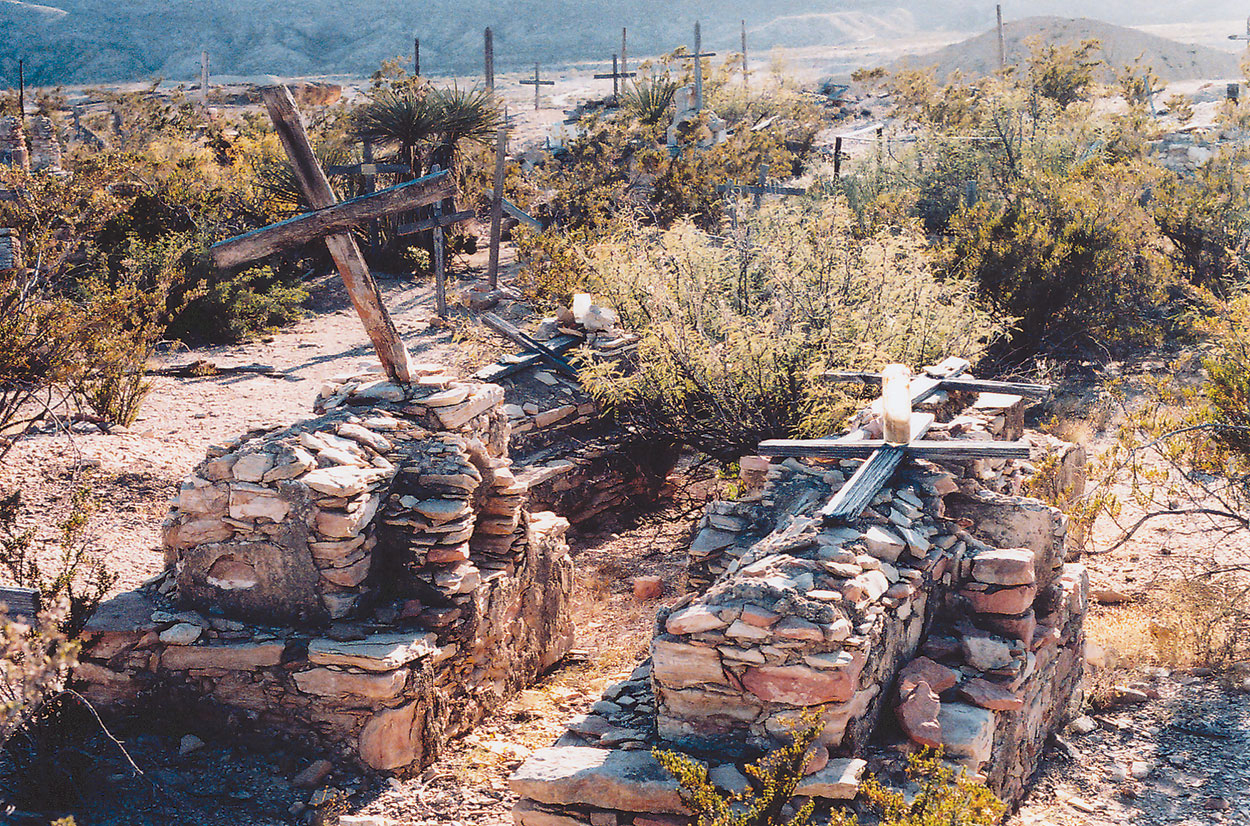
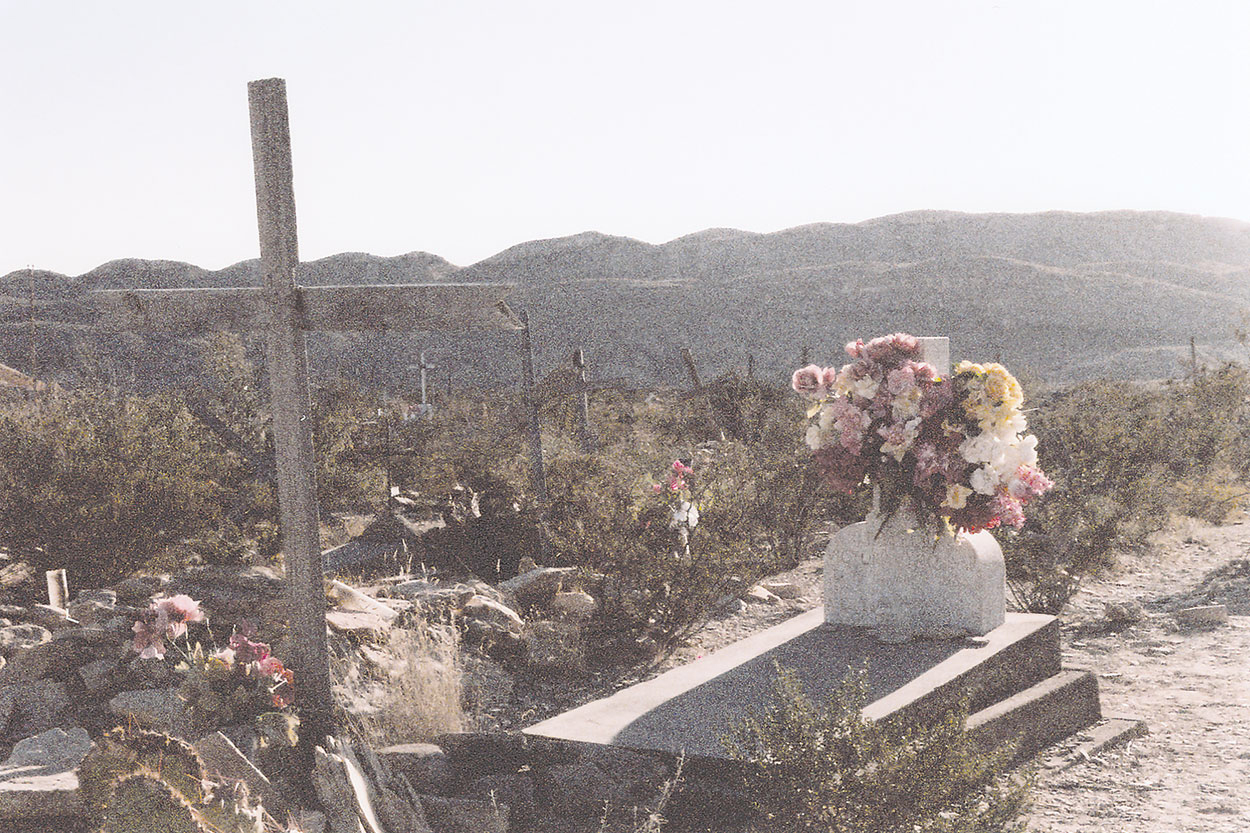
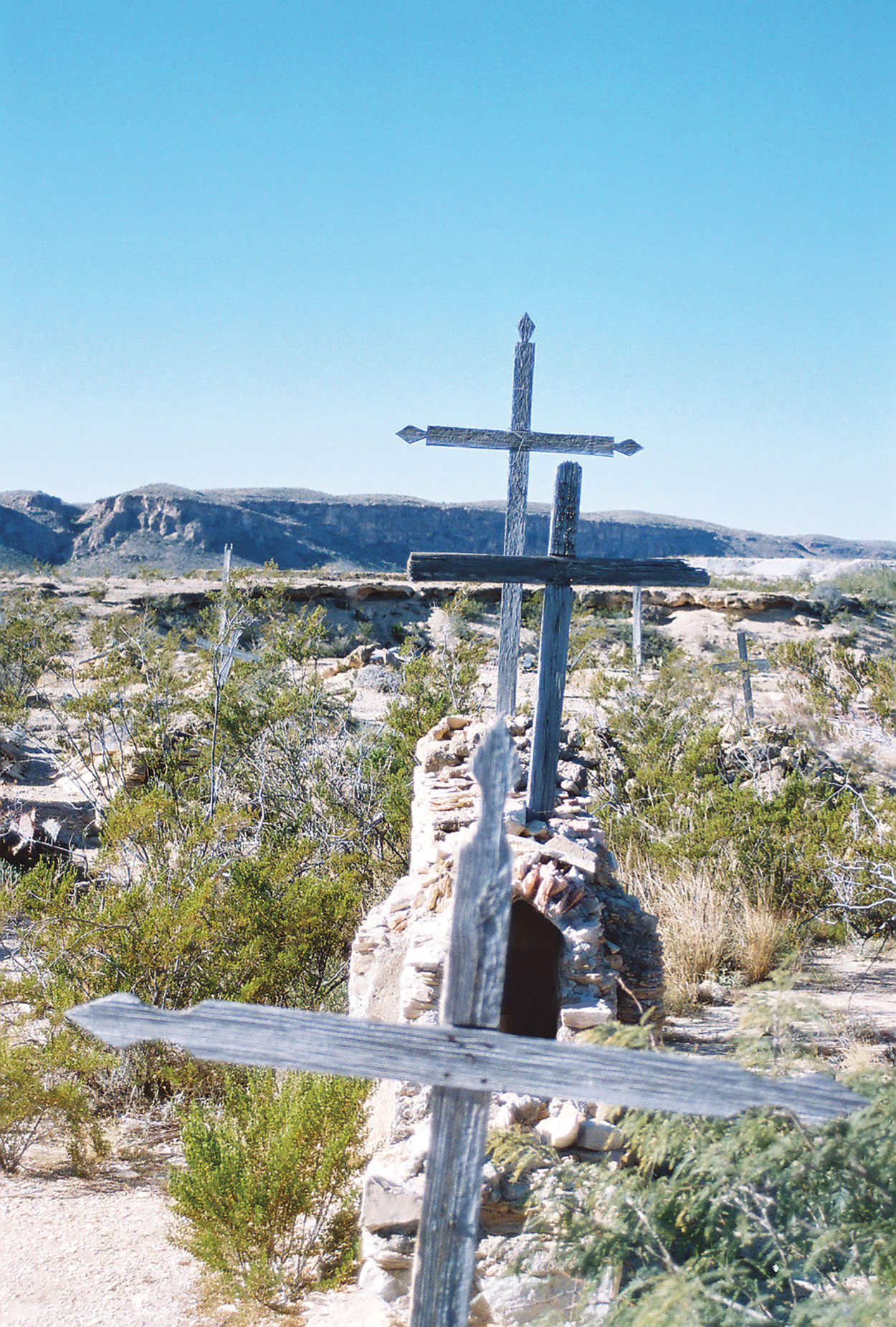
The $1 walking tour brochure led us around the town and ruins, but we opted to skip numbers 6 through 15 and headed to the hauntingly attractive Ghostown Cemetery. Here, we discovered old and new graves adorned with rugged crosses of wood and iron. Candles and monuments dotted the small stone mountains standing in memory of the people who once occupied this town.
Today, people still live in the Ghostown, in makeshift houses created from the ruins. New roofs and walls attach to golden adobe brick skeletons. They call this home and we drive off toward Presidio in our SUV with our newly purchased chachki.
I’m reposting this series of blog posts because as I type, there are bulldozers in Big Bend National Park. There are scared, evil people building walls on sacred desert ground, while the wicked ones paint golden calves to worship.This series represents the collective experiences and thoughts of three women who set out on a 1,500 mile trek across West Texas in December 2003. Development, tourism, climate change and politics have altered the area a lot since then, but this was their unforgettable “Road Trip: Big Bend.”
SATURDAY
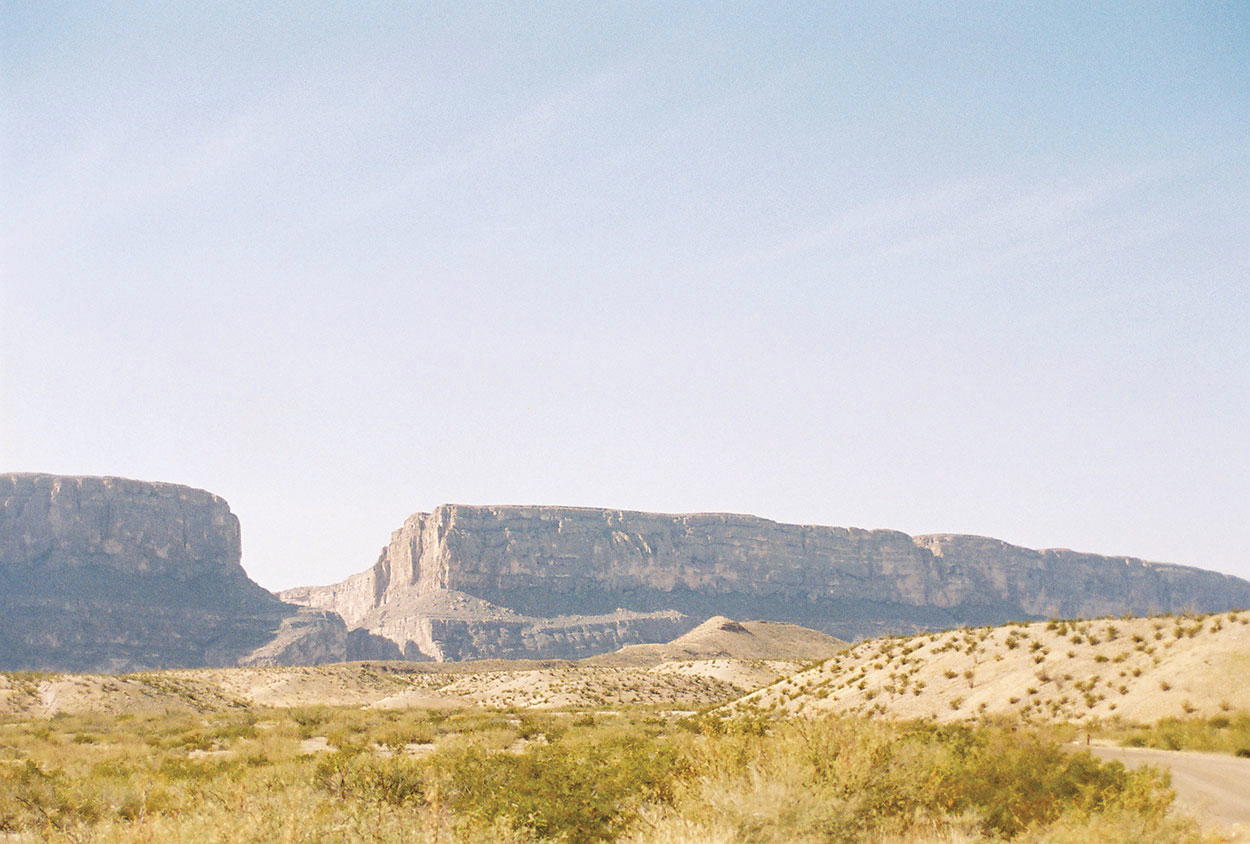
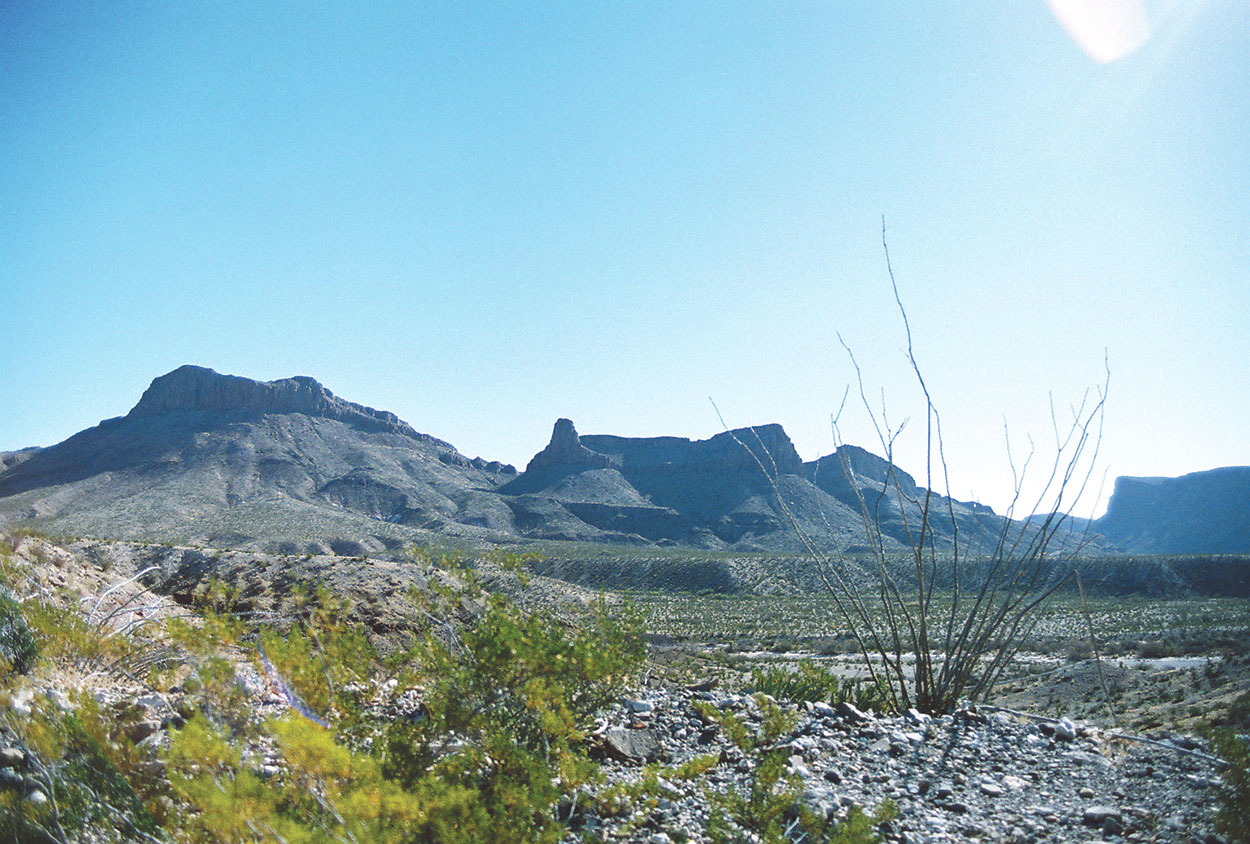
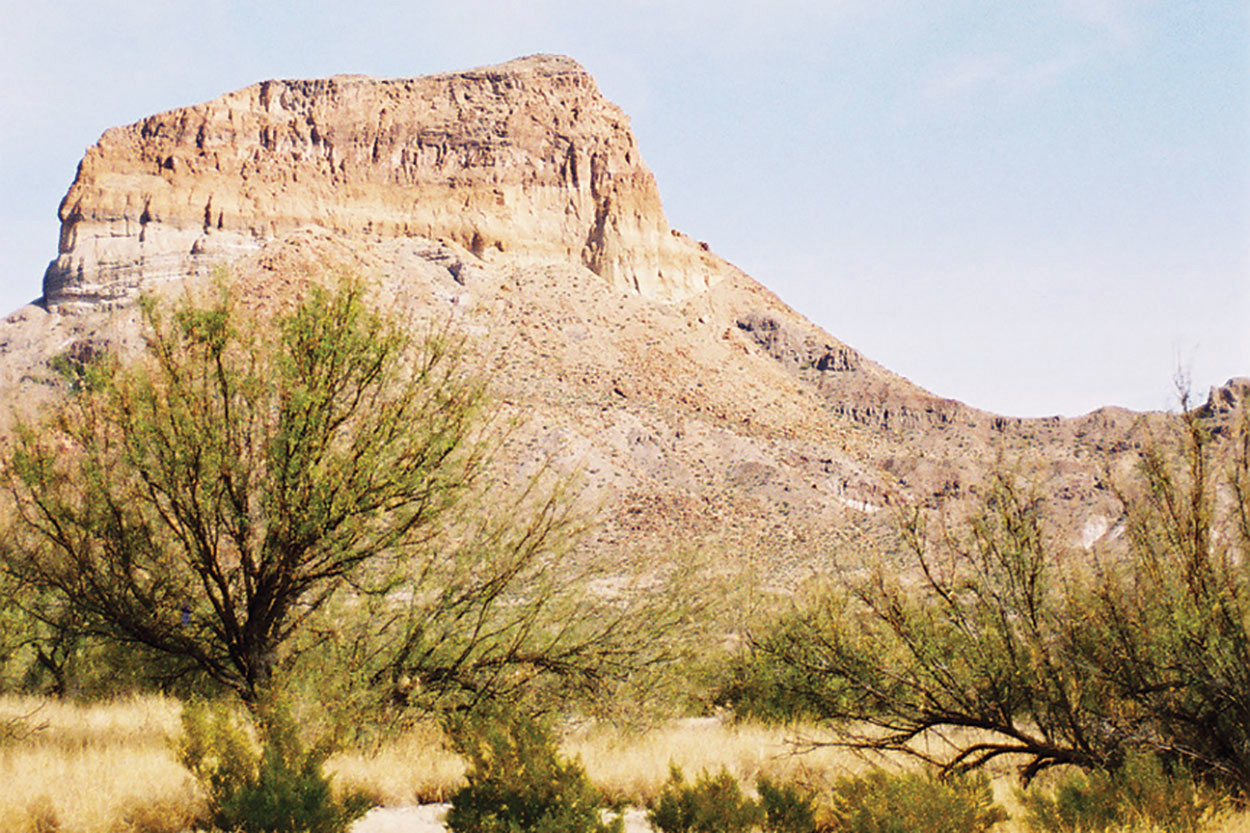
Leaving Castolon, we drove through the Rio Grand flood plain, dry and dusty, with trails of old river and flood obvious in the hallowed-out ground. Rocks and sand covered the road and spit up clouds of dust that made our mouths pasty and our lips parched. We stopped for a moment at the grand Santa Elena Canyon — a massive wall of rock standing tall along the Texas and Mexico border. Beyond, Mexico. There.
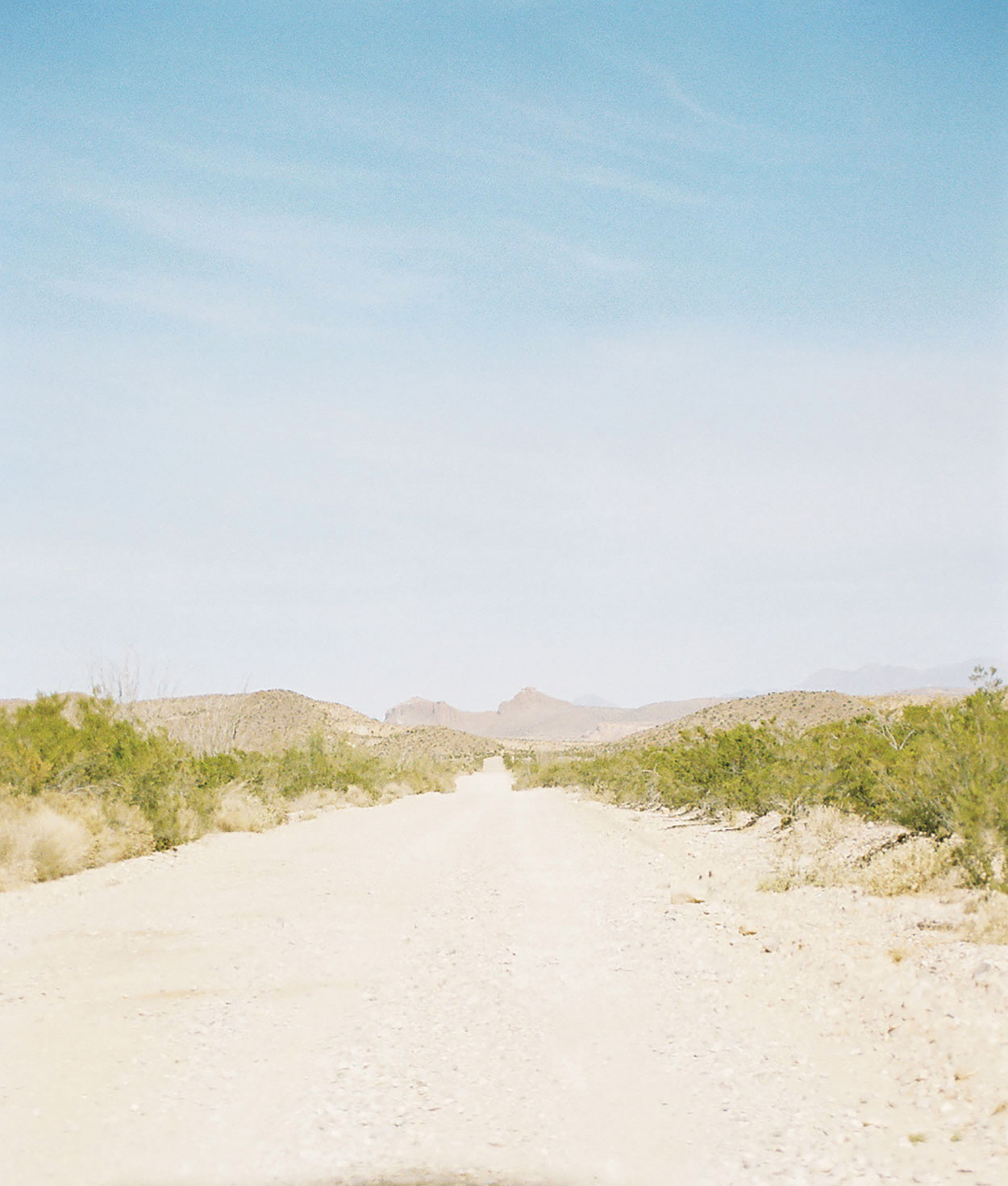
We turned north, along Old Maverick Road—a well-worn, dirt road leading 13 miles north toward Terlingua and Study Butte (pronounced “stewdy by-oot”).
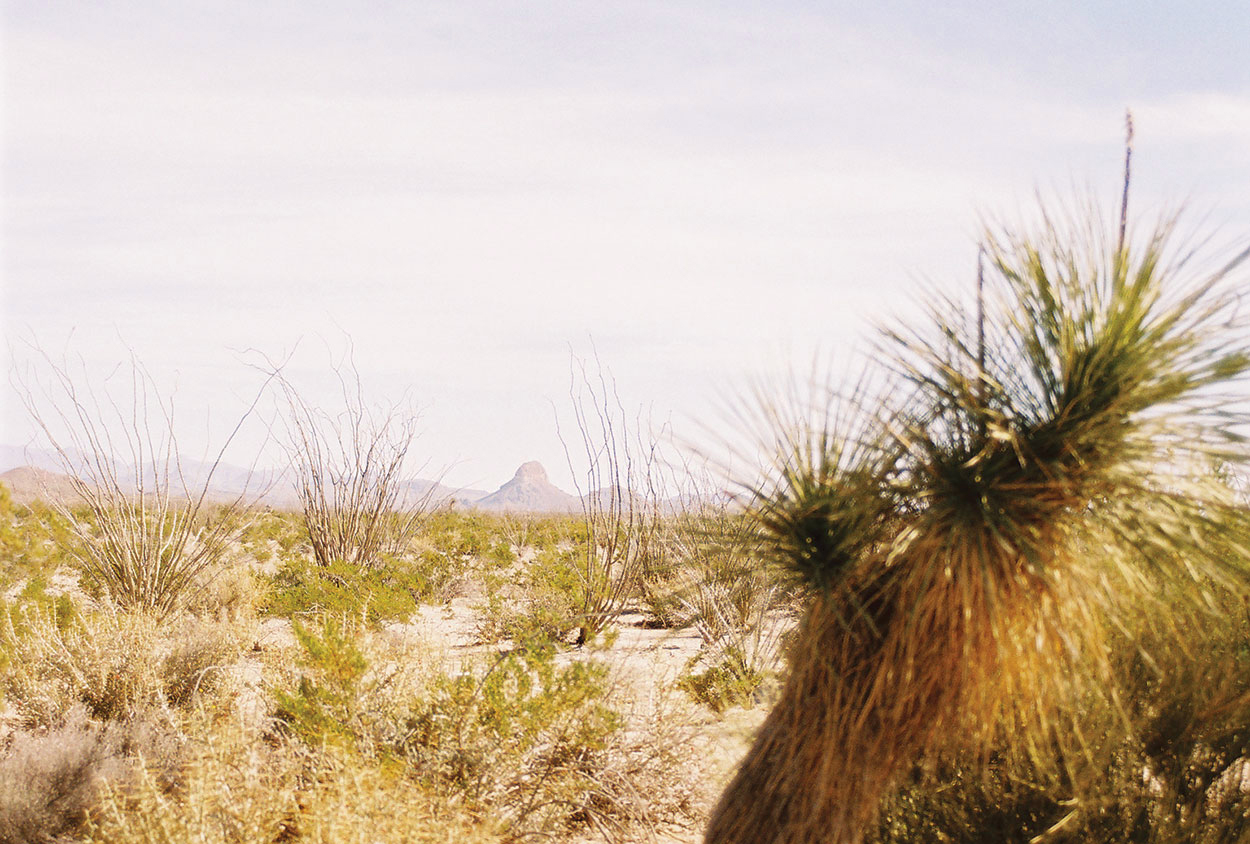
Driving this isolated road, we felt part of everything. Alone, it was easy to imagine the early visitors here, stunned by the awesomeness of this flat landscape, surrounded by these massive, prehistoric stone mountains.
Santa Elena CanyonAlong the base of Santa Elena CanyonWhere the pavement ends…Old Maverick RoadAlong Old Maverick RoadSeussian landscape
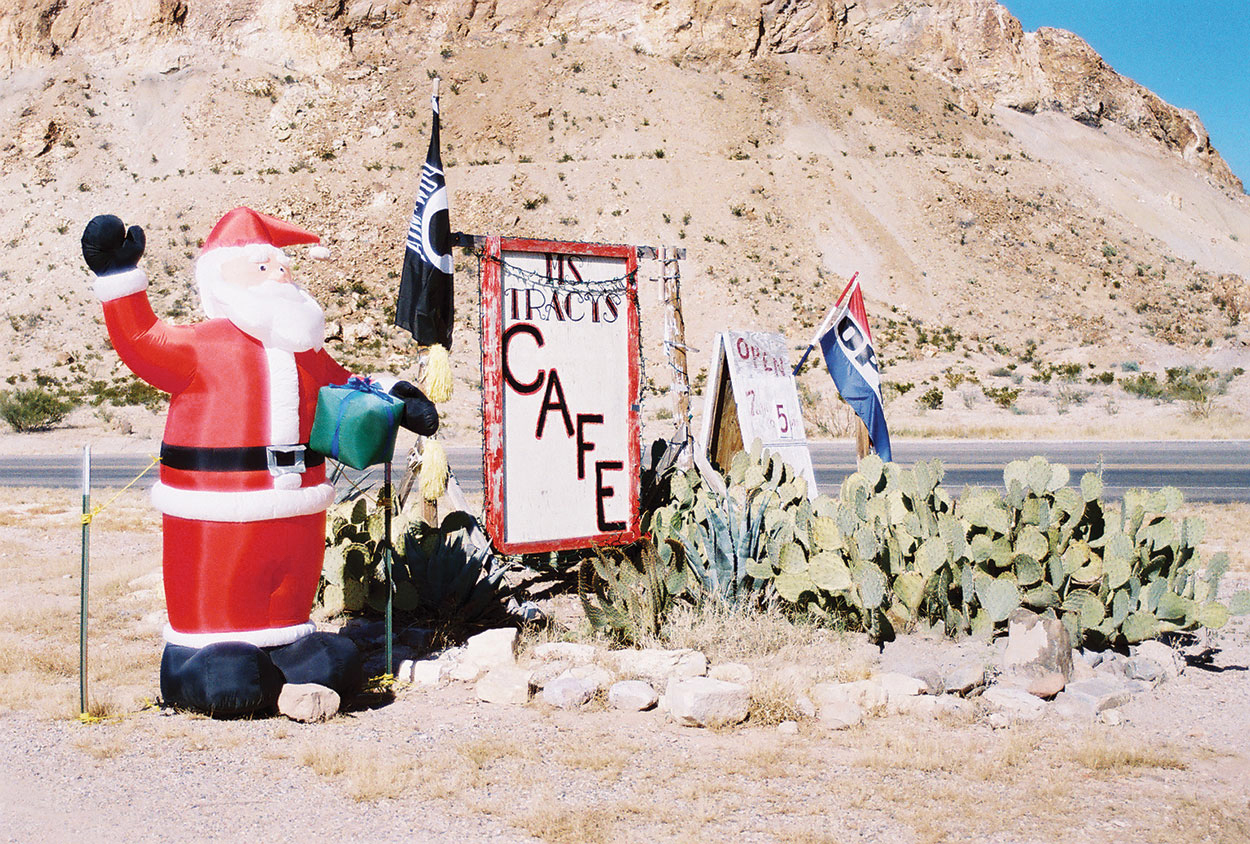
North, at Maverick Junction, we headed northwest up Route 118 into Study Butte and Terlingua. We lunched at Ms. Tracy’s, an eclectic looking cafe with an open porch out front and a blow-up Santa next to the road sign—easy to forget it was only five days until Christmas!
My sister wanted to eat inside. “I’ve had enough of the outdoors today!” And so we sat inside, a room that felt like Ms. Tracy’s dining room, while she prepared our lunch in the kitchen next to us in this “come as you are home cooking emporium.” The three of us enjoyed the stillness of not traveling as we ate our homemade Mexican lunch: salsa, picadillo, burrittos, migas.
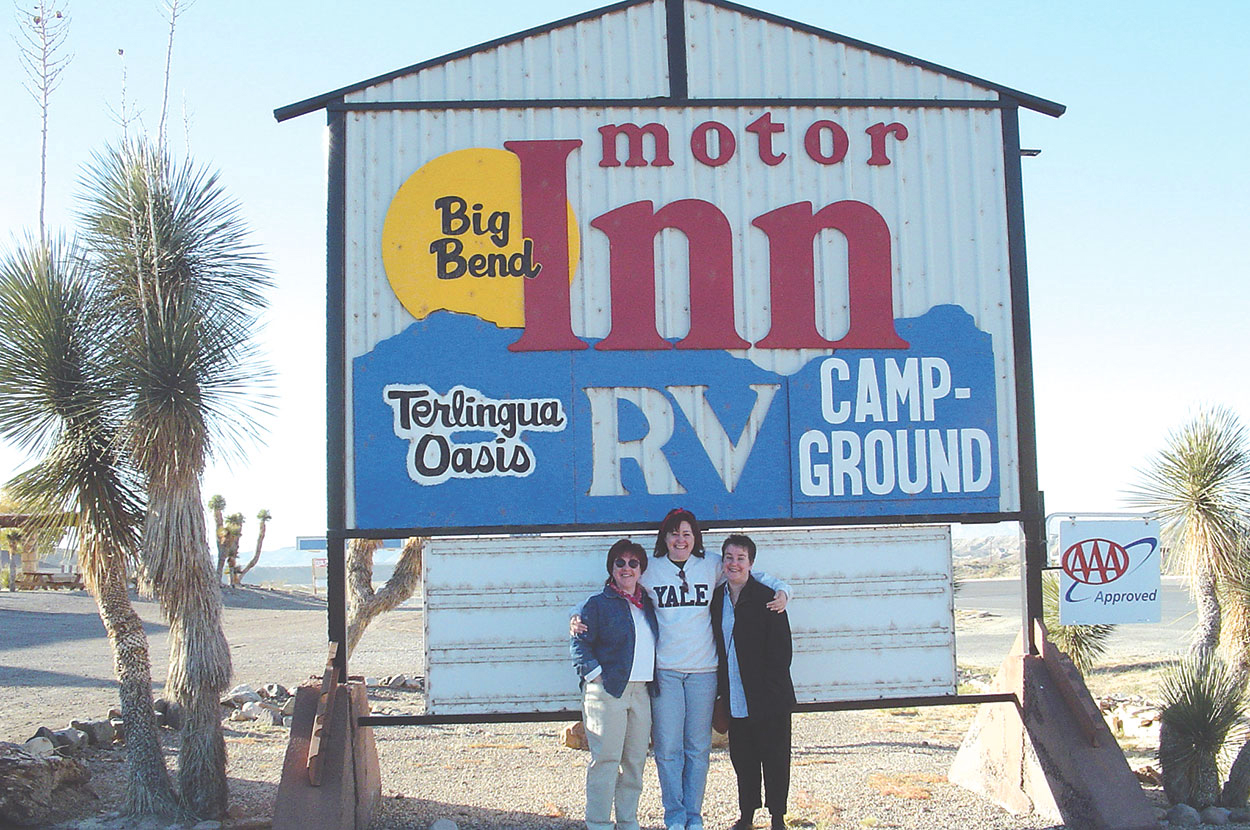
After lunch, we made our way to the Big Bend Motor Inn, a 1950s style strip motel planted next to an RV park at the base of stone peaks. From the front of the hotel, you could look back to the vast stone park we had just left.
My sister napped while DeLinda and I took off into town, stopping for wine and snacks. Full from lunch, we opted for snacks in the room before heading to La Kiva for drinks.
Driving along the winding road in the jet black night, we found our way to this local bar recommended by DeLinda’s hairdresser Anne Monique. La Kiva is a “a unique structure of massive sandstone boulders, cut into a terrace overlooking Terlingua Creek.” Just as unique were the patrons inside…
We followed DeLinda down the narrow stone passageway, through ominous doors into a room filled with locals—a skinny woman in overalls with long braided pigtails serving drinks, an urban-looking cowboy, 50ish, seated at the bar, a bawdy woman twisting her cropped bleach blond hair and flirting with the woman next to her, a biker with a long Amish beard leaning against a far wall, and the bass player in funky white sunglasses…
We drank, acutely aware of these strangers and not feeling very welcomed. We were tourists, doing our best to act like we belonged when clearly, we did not. The funny thing is, each of us, in our own way, were as odd as the people in that bar. Our life experiences, our quirks, our eccentricities gave us membership, even if the locals did not.
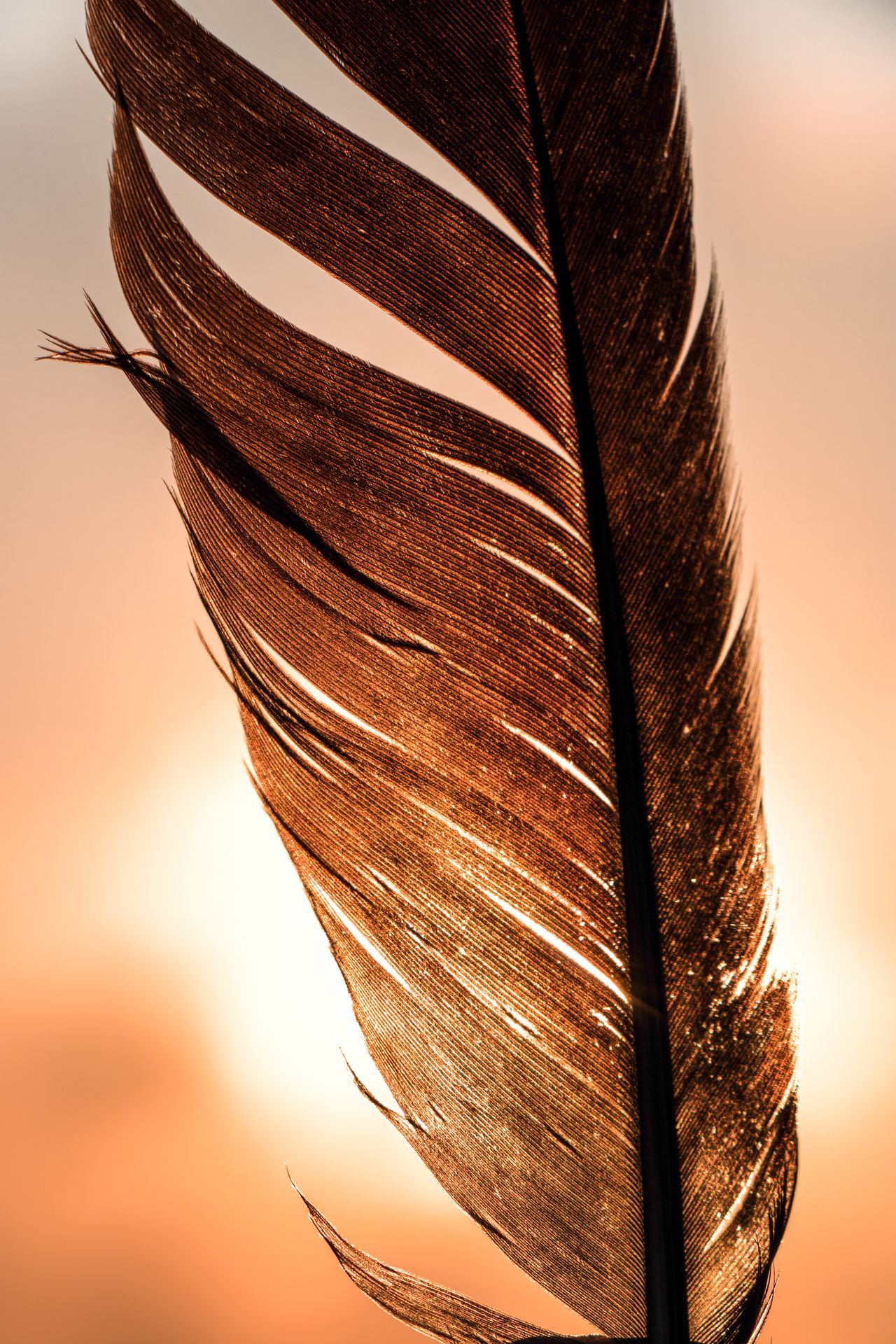
The turkey its wings fanned like pages in a book left open spine cracked a hundred stories prostrate in the the road as we passed one lone feather floating silent asking to be told.
I’m reposting this series of blog posts because as I type, there are bulldozers in Big Bend National Park. There are scared, evil people building walls on sacred desert ground, while the wicked ones paint golden calves to worship.This series represents the collective experiences and thoughts of three women who set out on a 1,500 mile trek across West Texas in December 2003. Development, tourism, climate change and politics have altered the area a lot since then, but this was their unforgettable “Road Trip: Big Bend.”
SATURDAY
In Castolon, the southernmost point of this drive, we stop to rest. DeLinda and I get out of the car to stretch our legs; I look to my sister in the back seat to ask if she will join us. She sits, knitting, with the most peaceful and contemplative smile on her face. I close the door quietly and catch up with DeLinda.
We came South today with the idea that we will cross into Mexico, near the Santa Elena Canyon. The travel books tell of river crossings where small boats take visitors across to Mexican villages for lunch and shopping, and we are excited. But, a stop at the Castolon Historic District alerts us to a post 9/11 change that makes such crossings illegal and attached to a $5,000 fine and jail time!
It was only by chance that we saw the sign on our way into a small sundries shop in this former border outpost. Inside a woman transplanted here, from Cape Cod of all places, agrees with our decision to not visit Mexico today!
We met a number of such transplanted women on our trip. They were concession hosts in the park, restaurant owners like Ms. Tracy in Study Butte, and shop owners. It seems this is the place for disenchanted but strong women to remake themselves.
At the same time, almost every story of men moving to the area spoke of their love for a woman who would not join them. It seems nothing they did—not the Terlingua mining man who built a theater, or Judge Roy Bean who named a saloon after his love—would entice them to come.
It must take a very special kind of woman to call this desert home. Most we saw or met were independent and capable; strong willed and, I imagine, strong in temperament. Their eyes were bright and steadfast, their faces aged . Were we meeting them all at the same times in their lives? Or does the very personality of this place etch itself into all faces, branding them as belonging here, and no where else.
They were not friendly to us three outsiders. We were visitors, spending our disposable income in their impoverished home town. We were on vacation, they were living. The things we take for granted too numerous to list became glaringly obvious at almost every stop along this trip—in Terlingua and Study Butte, in Presido, in Ojinanga, certainly, and Del Rio.
A cookbook I bought featured the annual Terlingua Chili Cook-off. The original proceeds of the book financed the building of a Big Bend High School. Previously, kids were up at 4:30 a.m. and bussed 160 miles round trip to Alpine each day!
These small towns were so unexpected to the eye, appearing in the middle of nowhere. “We’re not nowhere,” DeLinda would say, “We’re in Terlingua!”
What we expected—what I expected—with the mention of the word “town” was some commercial strip of shops. A New England Main Street complete with stores and people and houses. What we saw, instead, was a mismatched mix of small shacks, trailers transformed into shops and homes, old structures makeshifted into a town of similarly mismatched people, making there way in this barren and rough outpost of America.
Big Bend Pictures It takes a long time to get to know the Big Bend. And to get acquainted with the independent, self-contained, slightly quirky people who call this place home …well, that can take a lifetime. James Evans understands that. Recalling his decision to make the Big Bend his artistic muse and photographic subject, he says, “I moved here in 1988 to dedicate my life to the Big Bend and its people. I don’t shoot pictures and leave and make a book. This work is a slow accumulation of years of being here. The mountains are familiar friends and the people my heroes. I am one of them.”
I’m reposting this series of blog posts because as I type, there are bulldozers in Big Bend National Park. There are scared, evil people building walls on sacred desert ground, while the wicked ones paint golden calves to worship.This series represents the collective experiences and thoughts of three women who set out on a 1,500 mile trek across West Texas in December 2003. Development, tourism, climate change and politics have altered the area a lot since then, but this was their unforgettable “Road Trip: Big Bend.”
SATURDAY
We enter the park at Persimmon Gap, some 40 miles south of Marathon. Almost immediately, the landscape becomes Seussian—small tufts of trees, green and purple cacti, and ocotillo — tall, finger-like plans that grow from a center base and reach upward in random direction. In the spring, they are green with red flowers, but in winter, they are ashen and dry, like fingers of an old man reaching up for something more.
And as we drive, each of us imagines this place in early days, remembers the Indians, the cowboys and ranchers, the horse and cattle that once enjoyed this vast and remote wilderness.
We spy a family of javalina (do not call them pigs!) on our way to Panther Junction. On this trip we will see javalina, deer, jack rabbits, hawks, road runners, cattle, goats, sheep and golden eagles.
After a stop at the Panther Junction Visitor’s Center, we head east to the Ross Maxwell Scenic Drive.
We drive for nearly two hours along this curving road, stopping along the way to visit the abandoned Sam Neil Ranch, to enjoy the view from Sotol Vista.
[The] Ross Maxwell Scenic Drive [extends 32 miles south from ] Santa Elena Junction to Santa Elena Canyon overlook in Big Bend National Park .
Wedged within the big bend of the Rio Grande, which forms the U.S. border with Mexico, the 801,163-acre Big Bend National Park contains deserts, canyons, mesas, and mountains. The drive—designed by Ross Maxwell, a geologist and the national park’s first superintendent—gives you a look at Big Bend’s remarkably varied terrain. From Santa Elena Junction in Big Bend National Park, the drive heads south. Mountains command the left view, with Burro Mesa on the right. After about 2 miles, you can make out angular and domed formations in the mountain rock that indicate ancient volcanism. Fortress—like outcroppings called dikes—are also common here. For the next few miles you ascend steadily past boulder strewn slopes. Sotol Vista, one of the best views in the park, offers a stunning perspective on Santa Elena Canyon and the floodplain of the Rio Grande. From here, the drive descends through a series of switchbacks, past views of the unmistakable Mule Ears Peaks formal icon: Tuff Canyon, named for its gray, volcanic ash rock and Cerro Castollan, a pile of volcanic rock that towers 1,000 feet. As you continue curving down, the Chihuahuan Desert benchland suddenly opens before you.
Don’t bypass the old Army compound of Castolon, a frontier trading post still open for business. Paralleling the Rio Grande, the road crosses a fertile floodplain. The scattered remains of old adobe buildings along this stretch mark former farms. About 8 miles from Castolon, the Santa Elena Canyon Overlook offers a view down on the narrow Rio Grande flowing through a chasm with 1,500-foot limestone walls, The road ends half a mile farther, where a 1.5-mile trail leads into the mouth of the canyon.
National Geographic Guide to Scenic Highways and Byways
Javalina in the foregroundOcotilloView from the Ross Maxwell Scenic DriveView from the Ross Maxwell Scenic DriveMule Ears PeaksLooking north from Soltol Vista, where we’ve been…South from Soltol Vista, into Santa Elena Canyon, where we go.
I’m reposting this series of blog posts because as I type, there are bulldozers in Big Bend National Park. There are scared, evil people building walls on sacred desert ground, while the wicked ones paint golden calves to worship.This series represents the collective experiences and thoughts of three women who set out on a 1,500 mile trek across West Texas in December 2003. Development, tourism, climate change and politics have altered the area a lot since then, but this was their unforgettable “Road Trip: Big Bend.”
SATURDAY
Was it the utter silence that kept us awake all night? Perhaps the Southern Pacific railroad that passed in front of the hotel at least three times between midnight and five? Or maybe our weary brains were filled with the thoughts of the adventure ahead? Despite it all, we awoke in the morning full of conversation and excited!
It was cold outside, maybe 35 degrees, but steaming showers in the luxurious bathroom warmed us. With breakfast snacks of fruit and bagels and coffee, we were packed and back on the road by eight.
Route 385 leaves Marathon in the distance behind us, and we make our way south into Big Bend National Park — an 801,000 acres park that fills the southwestern section of Texas and borders the Rio Grand and Mexico. One guidebook compares Big Bend to the size of the state of Rhode Island!
As we drive south toward the park, we pass a large buck along the side of the road. He grandly jumps the fence as we pass, no doubt startled by the ferocity of our mighty engine roaring across the morning desert.
That desert stretches out before us with bold mesas standing wait ahead—this is where we will travel today—to Panther Junction, east to Santa Elena Junction past the Chisos Mountains to our left, then southwest down the Ross Maxwell Scenic Drive which “skirts the western slopes of the Chisos Mountains, climbing up to one the park’s most outstanding views at Sotol Vista, then winding down to parallel the Rio Grande at Castolon Historic District and winding up at Santa Elena Canyon trailhead, where the pavement ends.”
Heading South from MarathonOn the road to Big BendHow we travelSantiago Peak, Route 385South on 385 from MarathonChisos Mountain Range near Panther Junction
I’m reposting this series of blog posts because as I type, there are bulldozers in Big Bend National Park. There are scared, evil people building walls on sacred desert ground, while the wicked ones paint golden calves to worship.This series represents the collective experiences and thoughts of three women who set out on a 1,500 mile trek across West Texas in December 2003. Development, tourism, climate change and politics have altered the area a lot since then, but this was their unforgettable “Road Trip: Big Bend.”
FRIDAY
As we drove Route 385, we followed old electrical poles—short well-worn wooden stakes, in no particular shape or conformity. Some still wore glass transformers, now perched in sad and telltale disemploy.
This place is a time capsule. In New England, we make treasure of artifacts and architectures from our colonial past now hundreds of years gone. Here, the past is not so distance—a mere century, slightly more. Much of what they consider recent—houses, shops, utilities—would have been bulldozed eons ago back home, where everyone seems to strive for better and more and now!
The Gage Hotel
The Gage Hotel sits like an oasis in the vast, flat-out landscape. As I flew into Austin (was that just the day before?), we passed north of Houston. The pilot announced it on the intercom and I bravely looked, expecting to see a great metropolis below, as if peering down from a skyscraper. I strained to see for several minutes before I saw it…a small remark on the ground below, like a chess piece on a giant game board.
In the same way, Marathon and The Gage sat in play in this desert.
Our bodies tired and dry from the eight and a half hour drive, we stepped into the lobby and were greeted by a warmth one imagines greeted weary cowboys in from the ranch—deep, soft leather sofas, rocking chairs, and a great buffalo head above a dancing fire. Outside, the 50 degree afternoon seemed an odd backdrop to the evergreen boughs and poinsettia.
Our room was one of the last along a long courtyard next to the main hotel. The doors, made from old mesquite, barely closed and were decorated by a red chile wreath. Inside, two iron beds with soft mattresses, down comforters, wool western blankets, and soft coffee-colored linens invited us in to rest. Clay tiles the color of terra-cotta pots lined the floors, and western decor—chaps, cowboy photos, a cowskin rug—set the mood.
The bathroom was divine with Mexican tile, wooden doors with wrought iron handles, and a linen shower curtain embroidered with colored flowers. Spa bath products of sage and rosemary and welcoming white robes bid us to stay a while and enjoy.
Welcome to Los Portales, “The Porches”, at the Gage Hotel. We hope that you enjoy your stay with us. We would like to share with you some of the more unique aspects of the architecture, the furnishing and the artifacts of the room in which you are staying. All the building materials and decor of Los Portales, and the Gage, are representative of the Mexican, Indian and Anglo cultures of the Big Bend area. They are configured around a courtyard, or “placita”, which historically provided a protected open space and often was the location of the community well. Our “well” is a fountain made in Mexico out of soft volcanic stone called “canterra”. It offers relief from the desert sun with the sound of trickling water and the cooling effect of evaporation.
The adobe bricks, a sun dried mixture of this caliche soil, straw and water, were made on the lot just north of Los Portales. Some 80,000 were used in constructing these buildings. The exterior of the buildings are plastered with three coats of cement stucco while the interior of the rooms are plastered with three coats of gypsum plaster and then finished with a coat of wax. The adobes in the patios and pool area are stabilized and have been left exposed.
One of the first things you might notice at Los Portales are the entry doors to the rooms. These doors, no two of which are the same, are very old mesquite doors salvaged from abandoned buildings in Mexico. Most of these doors are handmade and are well over 100 years old. Please be patient with them if they do not open or close easily.
The ceilings on the porches, “los portales,” and the ceilings in your room are also of an indigenous architectural style. The log beams are called “vigas” while the sticks in between the logs are called “latillas”. The “vigas” are ponderosa pine which can be found north of here in the Fort Davis Mountains. The “latillas” are made from the flower stalk of a local plant called sotol. All the sotol latillas, some 35,000, were collected from a ranch south of here near the entrance to Big Bend Park. Historically a layer of river cane would have laid over the latillas and then plastered with mud to provide a primitive roof system.
The brick on the porches, clay floor tiles and painted bathroom tiles are all from Mexico. The manufacturing processes have changed little from the way they were first made. The clay floor tiles are called “Saltillo” tiles and come from Saltillo, Mexico. The tiles are formed and laid out to dry in the sun before being fired in kilns. You may note that some of the locals dogs were out for their evening stroll before the tiles were quite dry enough. The bathroom tiles are called “Talavera” tile, and along with the sinks are hand made and painted in Dolores Hidalgo in Mexico.
Old mesquite doors The verandaOur room at The GageEmbroidery & Mexican tileVigas and latillas
After naps—who wouldn’t—we changed and made our way to Cafe Cenizo for dinner: “creative regional cuisine with influences from Mexico’s interior, and West Texas cowboy flair.” Chilled by the surprisingly crisp night air, we welcomed the warmth of this gourmet oasis, and were thankful for the fire crackling happily beside our table.
Our newly discovered favorite, Yellow Tail Shiraz, was our wine of choice, and we dined on melt-in-your mouth beef tenderloin, bold T-bone, and perfect rib-eye , each accompanied by salad, vegetables, and luscious horseradish mashed potatoes. For dessert, peach cobbler, blackberry cobbler and a Frangelica for my sister.
Dinner at Cafe Cenizo
Warmed by dinner, a guilty pleasure here in this remote desert town—we headed back to the room…
Quiet.
A quiet I have never heard before. It was…liberating.
No traffic. No hum of electricity. No people moving about.
Quiet.
Not cricket or bird or bug.
Standing alone outside The Gage, I looked up and saw the clearest, darkest sky sparkling with stars—Orion, the Big Dipper, the Milky Way and thousands and thousands I have never seen before.
A slow, steady whooosh—like wind approaching across a marsh—a lone car approached, then faded off into the night beyond.
I’m reposting this series of blog posts because as I type, there are bulldozers in Big Bend National Park. There are scared, evil people building walls on sacred desert ground, while the wicked ones paint golden calves to worship.This series represents the collective experiences and thoughts of three women who set out on a 1,500 mile trek across West Texas in December 2003. Development, tourism, climate change and politics have altered the area a lot since then, but this was their unforgettable “Road Trip: Big Bend.”
FRIDAY
Seven hours along Interstate 10 led us to Fort Stockton, the northern most point of our journey. Here, we stopped for lunch next to the famed Pisano Pete roadrunner statue, then made our way to Route 385 south to Big Bend National Park and Marathon, Texas.
Jen with Pisano Pete, Fort Stockton
Our trip to Marathon led us closer and closer to Big Bend country with high, looming mesas and arid deserts as far as you could see. Wire fences noted ranches and homes along the road.
Signs of approaching Marathon encouraged familiar images: shops, restaurants, people bustling about for last minute holiday gifts. Instead, we crested a small hill and looked down into town—a two block expanse with a gas station, two gift shops, a bank, coffee shop and The Gage Hotel.
It is difficult to describe exactly how foreign this place is. My hometown of Branford is a growing town of 29,000; Austin explodes at 500,000—nearly 18 times as large as Branford. By comparison, the towns we visit on this trip count populations like 7,800 (Fort Stockton), 455 (Marathon), and 250 (Terlingua or Study Butte).
Highway 385 to marathon
The far western end, or Trans-Pecos region, of Texas is the state’s most mythic. Even though few Texans live there, and fewer really know what the place is like, Hollywood has so often used the region as a Texas backdrop that to most, the Trans-Pecos is Texas. And while the dry desert region is a far cry from the more densely populated areas most Texans inhabit, it does symbolize for many Texans the wide-open, rough-and-ready quality they attribute to their state.
The region is some 30,000 miles quare, about the size of South Carolina or about three times the size of New Hampshire. Yet excluding its only city—EI Paso, which sits on its western edge—less than 60,000 people inhabit the place. While measuring the American West, the U.S. Census Bureau determined that an area was “settled” when its population density exceeded six persons per square mile. By those terms, the Trans-Pecos is still frontier. Four of its nine counties—Hudspeth, Culberson, Jeff Davis, and Terrell—have more square miles than people. The area seems a great empty space, an expanse of caliche and rock surrounded by dry mountains.
Even the region’s name speaks for that: “Trans-Pecos” might refer to the region lying on either the eastern or western side of the Pecos River, depending on the namer’s point of view. Trans-Pecos defines the area on the western side—because there are too few people on that side to name anything.
The Trans-Pecos is as isolated as any area in the United States. Residents of Presidio for example—reputed to be the nation’s hottest spot, with summer temperatures often reaching 110 degrees—must drive five hours to the nearest commercial airport at Midland-Odessa. Their daily bread comes from EI Paso, another five hours away. People who live in this town of 3,000 drive 90 miles to pick up a pizza, 60 miles to playa round of golf, and 230 miles to attend a district football game. The leading daily in Presidio is the San Angelo Standard- Times, whose Sunday edition doesn’t reach town until Monday, when the mail arrives.
People who live in tiny Redford, 40 miles downriver, must drive into Presidio or 34 miles into Lajitas over a rough, winding road, to buy a pair of shoes. The drive over Texas Farm-to-Market Road 170 (El Camino Del Rio), from Presidio to Lajitas through Redford, is one of the prettier ones in the state. The pavement snakes, climbs, and dives. On one side, red rocky canyon walls; on the other fall steep banks down to the Rio Grande. On this road, and on other in the Trans-Pecos, isolation has its virtues, but can be downright frightening, too. Three Trans-Pecos counties have no doctors, and even emergency crews can’t reach Redford in less than a half-hour’s time.
Compass American Guides: Texas
Can you imagine a town with only 250 people? That’s just 10% more than my high school graduating class!
One wonders if the urban sprawl so familiar in places like Austin and Branford will ever find its way here. McDonald’s and Targets and Taco Bell and Home Depot. And then one whispers, “I pray not!,” hoping the great and greedy commercial gods did not hear the idea!
I’m reposting this series of blog posts because as I type, there are bulldozers in Big Bend National Park. There are scared, evil people building walls on sacred desert ground, while the wicked ones paint golden calves to worship.This series represents the collective experiences and thoughts of three women who set out on a 1,500 mile trek across West Texas in December 2003. Development, tourism, climate change and politics have altered the area a lot since then, but this was their unforgettable “Road Trip: Big Bend.”
FRIDAY
We began before Friday even showed itself—the three of us packed into our rented Chevy Suburban.
“Not an SUV,” said my sister, with not so subtle anti-establishment undertones. In the end, I think she was most grateful for the space, as it afforded her room to nest and knit, watch and relax…finally.
For all of us, this trip was about relaxing—stopping—more than anything else. My sister, in her second year of grad school, had not lifted her head from a book in more than a year. DeLinda had been juggling multiple work responsibilities, a new house, and family concerns. And I had been at the computer in a six month marathon of just too much work.
And so we chose to stop…pile weary bones and brains into our mighty SUV and travel nearly 600 miles across West Texas to see Big Bend National Park. Our “Road Trip Big Bend.”
In honor of our adventure, DeLinda gifted us with t-shirts she had made, imprinted with our “Road Trip Big Bend” logo. I brought red bandannas for each of us. And so adorned we left Austin on that first day just past seven.
You could hear the weariness in our silence. Imagine three woman about to embark on a four-day road trip with barely a word spoke between them. Imagine!
Instead, my sister knitted meditatively in the back seat. DeLinda comfortably assumed the role of driver as I sat mesmerized by the endless horizons of Texas countryside—low scrub trees and prickly pear cactus dotting endless miles of ranch, farm land and highway.
The back seat was stocked with our food for the trip: fruits and cheese, crackers, sandwich fixins’, goldfish crackers, bagels, breakfast bars, and a box of Christmas cookies DeLinda brought from a cookie swap earlier in the week. Our supply of beef jerky never dwindled, as we stocked up regularly. While our visit to Whittington’s in Johnson City—the absolute best place for beef jerky—was an hour too early, we managed quite well on varieties sampled at every stop along the way. To be honest, I don’t ever recall walking into a convenience store with the sole mission of finding beef jerky, but such was the case. Beef jerky for breakfast? Yes, delightfully, every day.
Along the way, we passed giant wind farms. Resourceful ranchers and oilmen have assumed stewardship of the wind, harnessing its power via these great windmills. They appear to grow from tops of mesas and up from the fields—like a science-fiction landscape, eerie and mysterious.
Three windmills stood on high looking quite biblical. It would not be the first of such references—even our excursion into the desert, itself, seemed symbolic. With a foreign dryness that left both mouth and skin parched, we were lucky that our stay in the desert was a mere four days, not 40!
Windmills on Interstate 10
“Marathon is the gateway to the northern entrance of Big Bend National Park, via Highway 385. This route from Ft. Stockton south through Marathon and on to its end at Persimmon Gap roughly follows that of the great Comanche War Trail. About five miles south of [Marathon] lies the site of old Ft. Pena Colorado. In 1879 the fort was established to stave off Comanche and Apache raids…. In 1881, the Southern Pacific railroad arrived.
Marathon is nestled in the heart of the grassy rangelands of the Marathon Basin. It is cattle country and it is on the railroad lines….One notable cattle baron was Alfred Gage, the owner of 600 sections (384,000 acres) of grazing lands. In 1927, the Gage Hotel was built to serve as his headquarters. Another cattle magnate, Captain Albion Shepard, named the community Marathon because it reminded him of the lands around Marathon, Greece.”
I’d forgive the poet her 15 words requiring definition right on the first page and might even humor her pretention if it weren’t near midnight lights dimmed, phone charging downstairs, the hardbound dictionary shelved nearby, and I, up here, the comfort of pillows and sheets and a blanket to weigh down anxiety that swells in my chest from the strenuous reading required by this book, a soothing mantra to remind myself about cups of tea and imposters who might invade what had otherwise been such a nice day; if I owned the book, I would toss it across the room with take that satisfaction, instead I march it downstairs put it in the pile of books I’ll return to the library, feel somewhat appeased, try not to remember the rogue poets who argued for ululate and lacuna in my own poems with such insistence I erased the lines all-together, life is hard enough these days to suffer the conceit of others.
When you get time to say more…ADDENDUM is a companion piece to the book Sleeping with Ghosts: Poems & Musingsand a postscript to the chapter Wednesdays. Think Dan Fogelberg at the grocery store on Christmas Eve or James Blunt on a subway platform in London. Includes 10 new poems by Jen Payne and a haunting collection of color photographs and paintings.
24-page, Full Color 5.5 x 8.5 booklet. Cost: $8.00.
This issue has been printed and mailed thanks to the generous support of readers. I’m hoping to continue publishing MANIFEST (zine) through 2026, but could use your help. Please click here for more information.
You can pay through PayPal using a PayPal account or any standard credit card. If you prefer the old school approach, please send your check, made payable to Jen Payne, P.O. Box 453, Branford, CT 06405.
I’m peeling hard boiled eggs at the sink, my soft round belly pressed against the cool steel cold water splashing over fingers when I remember that noise he used to make
that noise that said I was using too much water
or talking too loudly
that I had applied too much perfume used too much lip gloss
that there was too much food on my plate that I’d gained too much weight
that I took too long to find pleasure in things he was already, past tense, done with
it was a noise, a grimace, a groan of displeasure, distaste, distain
that seeps, sometimes, from a faucet running hard and with great abandon, cascades through my fingers down the drain with dregs
The space isn’t that big, really. Large enough for me and the cat and sometimes a guest. A human guest, that is. We have others who don’t take up much room and are more like residents or seasonal visitors.
Just the other night, I watched a spider arrive and make his way, quite confidently, past the television, around the reading lamp, and up the stairs. He was sleeping in my bed when I found him later — the three of us startled at once.
He is not the first spider, nor the last. We have kitchen ones and cellar ones and the orb weaver who cured me of the phobia many years ago now.
I remember once, a small wren spent an afternoon on the screen porch the summer the hornets lived here; and there’s a family of mice who visit each winter, scurrying about in the space above my bed.
We make accommodations as we can, the all of us, with the accepted guidelines that This is my dance space and that is your dance space. The mouse in the kitchen was promptly directed outside. That spider in my bed? Eaten by the cat.
We’re all sharing this small space, it’s best to have manners and compassion…and ground rules.
We all have those moments…a health crisis, a family situation, or an unexpected turn of events that sends us swiftly to the sidelines. And we wait there until we’re ready to get back in the game, until we feel steady and strong enough to step into the routine again.
As many of you know, I had knee replacement surgery last fall. And while my recovery is moving along nicely, one of the unexpected side effects has been a lack of creative output and projects.
When I get frustrated by that, I am reminded of my friend Judith’s advice last summer — that the recovery is the project. That sometimes, those life moments mean that everything else, including our creative pursuits, might need to take a back seat to the larger task at hand.
But, as photographer Joshua Kissi noted: “sometimes the creativity is in the rest.” And it turns out Creative Rest is a thing!
In her book Sacred Rest: Recover Your Life, Renew Your Energy, Restore Your Sanity, Saundra Dalton-Smith identifies seven types of rest: physical, mental, emotional, social, sensory, spiritual, and creative.
“Creative Rest,” she explains, “is allowing white space in your life and giving room for your creativity to show up. Creative Rest lets you focus on your basic need for wonder.” It “involves giving your mind a deliberate break to allow your creativity to regenerate.”
While Dalton-Smith’s ideas for Creative Rest do not include knee surgery, she does suggest things like enjoying coffee in a new location, spending time in a museum, or people-watching in a park — places where you can let “your mind wander off-leash for a while.”
Creative Rest is a place of wondering, wandering, and waiting.
Which reminds me of a poem I wrote several years ago while waiting for a friend to arrive at the train station. Called “Places of Waiting” (see below), it talks about the fertility of waiting, the possibility contained in nothingness, and the expansive nature of these life pauses.
Summer is filled with opportunities for pauses, like a moment in the garden or a walk along the beach. Remember to allow time for waiting — and rest — in between all the busy-ness.
Happy Summer!
Love, Jen
Places of Waiting
I love these places of waiting this quiet axis of the world a point around which things spin he on his way there and she on hers there they, together, embrace and part or run, race, return and I, here, silent silent and of no consequence to their what-comes-next nor to my own, really I am here-and-now, a great pause a smudge of time a nothingness into which pours everything peace, poetry, god
EXPLORATIONS
One of my favorite things about putting together Creatively Speaking is the wandering exploration of topics and things to share with you, like…
Joshua Kissi, who insists on “telling stories by any medium necessary.” Kissi is a Ghanaian-American creative entrepreneur specializing in photography and filmmaking, based in New York City. To see his work, visit www.joshuakissi.com.
Questlove is a culinary entrepreneur, a New York Times best-selling author, and a musician, who you might know from the Tonight Show with Jimmy Fallon. He’s the author of the book Creative Quest — “a must-read guide for all creatives” — which I just borrowed from my local library. For more, visit questlove.com.
Digging deeper into the concept of creative resets, I discovered Sacred Rest, the Saundra Dalton-Smith book I mentioned above. She is a physician, a work-life integration researcher, and the founder of Restorasis, a professional development agency dedicated to restoring well-being in the workplace. In addition to the book, you can sign up for a free Sacred Rest Challenge with daily prompts and suggestions for finding rest.
I love the painting at the beginning of this issue of Creative Speaking: The Moonlight Bed, by Jacek Yerka. Yerka is a surrealist painter from Poland. His work, which you can see on his website yerkaland.com, is other-worldly.
The robin ahead on the trail dappled in sunlight looks to me like a gnome, and I pause, remembering the time a gnome came to me in a tent while my family slept, and I want to believe for just a moment that somewhere in this wicked world there’s still magic like that — still gnomes and fairies, still hope and things we can believe in — then just like that, the robin flies off deep into the woods of this last protected space, and I think it’s magic just the same.
At night, while we dream I climb up and into the flowering tree to tuck in the fledglings before they tumble, sing soft lullabies while the Mom sleeps, caution them stay east of the hedge and if they must fly high and up no matter the bee-line temptations, watch the rain and the wind and the random cat and I, my darlings, will watch you like a prayer.
Tonight, by the quarter moon, I will visit the Pemigewasset lie down my tired bones let notch waters churn run the course of my body pin me to the smooth roundness upon which I rest until neither of us notice the stranger’s stillness how all that seemed out of place once was, once wanted is no longer anything but this river flowing.
The moon said Get Up! And while the cat and cardinal insisted I had some purpose for the day, I was not convinced.
I AM not convinced.
This slow and useless plodding on floorboards that hold now nearly 30 years of footsteps seems circuitous.
I can, of course, enumerate — if you were to ask — point out the notches and plaques, consider the possible one heart, one life, one pain but those are slow to come at 4 when the soft known comfort of sheets and dreams seems the best I can hope for these days, when even footsteps have become formidable.
I wake up with a start realize that I am, myself, the April fool still thinking I have control (or hope) of making it out alive all these years swimming against a tide tilting at windmills chasing wild geese pushing boulders up hills when in reality I am just the monster at the end of the book silly old silly, old me
One coyote howl wakes us at 4 and we both, the cat and I, move around blankets and curtains hoping to see the creature cross the road ask each other why? and for what purpose? laugh at our inside joke before falling back into dreams neither one of us can translate — coyotes and gunman, snap traps and mice, the violent world outside.
I’m dreaming about the man in the field its autumn backdrop oddly out of place with the spring cacophony that filters through my nighttime window; he’s talking about collective trauma — the seeping-in of our wild world on jet streams and ethernets on brainwaves and internets — a scrolling litany of the everything we were not built to absorb and the everything against which we are powerless; a continental, monumental shift beneath our feet in a landslide brought me down epic crescendo sort of way I’m sure Stevie never imagined.
It is No Kings in March and a one-man King Lear opines from a makeshift stage in a Union building on the bank of a river; he is boisterous and profound, a shapeshifter come to teach us again about the failings of ego and power here in this space that smells of picket signs and hard-won fights, placards of victory line the walls while outside, the wind has changed as bodies are counted to move the scale of battle more.
I can’t keep throwing books out just because I’ve lost patience with words, even the ones meant to console my wintering spirit; there is little consolation these days where hope is a burden of expectations I want to stab violently with a fork that instead finds its way into another slice of cake I keep hidden beneath my bed, its sweet, sweet comfort savored between the puzzle of dreams that have so many layers, and so many meanings, one might think I was fucking Jung, a rabid affair that keeps me trapped in this godforsaken space analyzing and processing analyzing and processing analyzing and processing still here again always… a bonfire stack of books by the door my Plan B should the promises keep failing.
“I don’t believe in much anymore,” singer/songwriter Spencer LaJoye says on their website, “except a little bit of everything. And you. And me. And that art can change the world simply by making us feel something.”
And feel something I did, last night while watching the Stillwater, Minnesota Trinity Lutheran Church Choir, above, sing LaJoye’s song Plowshare Prayer.
Fair warning, it might “break you open” as LaJoye writes. And maybe that’s just what we need?
Dear blessed creator, dear mother, dear savior Dear father, dear brother, dear holy other Dear sibling, dear baby, dear patiently waiting Dear sad and confused, dear stuck and abused
[Verse 2] Dear end of your rope, dear worn out and broke Dear go it alone, dear running from home Dear righteously angry, forsaken by family Dear jaded and quiet, dear tough and defiant
[Chorus] I pray that I’m heard And I pray that this works I pray if a prayer has been used as a sword Against you and your heart Against you and your word I pray that this prayеr is a plowshare of sorts
[Bridge] That it might break you open It might hеlp you grow I pray that your body gets all that it needs And if you don’t want healing I just pray for peace I pray that your burden gets lighter each day I pray the mean voice in your head goes away I pray that you honor the grief as it comes I pray you can feel all the life in your lungs I pray that if you go all day being brave That you can go home, go to bed Feeling safe I pray you’re forgiven. I pray you forgive I pray you set boundaries and openly live I pray that you feel you are worth never leaving I pray that you know I will always believe you
[Chorus] I pray that you’re heard And I pray that this works
[Verse 3] Amen on behalf of the last and the least On behalf of the anxious, depressed and unseen Amen for the workers, the hungry, the houseless Amen for the lonely and recently spouseless
[Verse 4] Amen for the queers and their closeted peers Amen for the bullied who hold in their tears Amen for the mothers of little black sons Amen for the kids who grow up scared of guns
[Verse 5] Amen for the addicts, ashamed and hungover Amen for the calloused, the wisened, the sober Amen for ones who want life to be over Amen for the leaders who lose their composure
[Verse 6] And amen for the parents who just lost their baby Amen for chronically ill and disabled Amen for the children down at the border Amen for the victims of our law and order
[Chorus] I pray that you’re heard And I pray that this works I pray if a prayer has been used as a sword Against you and your heart Against you and your word I pray that this prayer is a plowshare of sorts
Spencer LaJoye is a singer/songwriter from the Midwest who makes charming and emotional folk music. Visit their website to learn more about their bio, tour, music, videos, press, and how to support them on Patreon.
Words and Music by Spencer LaJoye. Choral Arrangement – Phil Kadidlo. Soloist – Robin Cain. Trinity Choir – Trinity Lutheran Church, Stillwater, MN. Piano – Phil Kadidlo. Conductor – Clark Weyrauch.
Today marks the 16-year anniversary of Random Acts of Writing!
You may have noticed it’s been a little more random than usual — in terms of content as well as frequency.
As a creative spirit here in the 2020s, it’s hard not to be random, waxing poetic one moment and beating the drums of resistance the next.
And while I wrestle with possible reinventions and reincarnations of the sweet and ever-present landing spot of this blog, I can’t help but wonder if being random — bobbing and weaving with the times — isn’t exactly where this is supposed to be. For now.
Thank you for following along, still, after all these years, come what may.
When I was in grade school, I used to tell a silly story that went something like…
Once upon a time, there was a little universe. And in that universe, there was a little solar system. And in that solar system, there was a little planet. And on that planet, there was a little continent. And on that continent…
The story — which I could see in my mind — got closer and closer, periscoping in on a little house and maybe a little family or a little girl. I don’t remember the ending, if there even was one.
I found myself thinking about that as I was careening up I-95 for what creativity guru Julie Cameron might call an Artist Date.
“An artist date is a block of time, perhaps two hours weekly, especially set aside and committed to nurturing your creative consciousness, your inner artist. In its most primary form, the artist date is an excursion, a play date that you preplan and defend against all interlopers. You do not take anyone on this artist date but you and your inner artist, a.k.a. your creative child. That means no lovers, friends, spouses, children – no taggers-on of any stripe.”1
It was my first solo adventure since my knee replacement surgery four months ago, and I suspect I was breaking Artist Date rules. First of all, I was rushing to get there. It felt more like an errand run or a have-to-do than a creative outing.
Second, there were all sorts of interlopers — the client with erupting mental health issues, the pedophile president, the elementary schoolgirls bombed in Iran, the words of John Lennon — going round and round in my head.
Nonetheless, I kept driving, thinking about the little universe and all of its big problems on my way to the Guilford Art Center, which was hosting an exhibit called, ironically, CIRCULAR THINKING.
CIRCULAR THINKING, featuring fiber art created by the Studio Art Quilt Associates, was “designed to explore the varieties of meanings, images, and experiences evoked by the circle…a shape, a symbol, a concept, or a metaphor.”2 The exhibit had been on view since the beginning of the month, and I was happy to slip into the colorful space on its last day.
So much color that I thought, for a moment, I might escape our little world and lose my interlopers all-together.
But there was a shadow of RFK across Hope Barton’s quilt Why We Need Vaccines; Lynne Allen and Cassandra Allen mentioned Endless Conflict, and Martha Wolf asked me to read between the lines of A Newspaper to see the loss of our black and white reality.
Why We Need Vaccines, Hope Barton
Endless Conflict, Lynne Allen and Cassandra Allen
A Newspaper, Martha Wolf
I was buzzing. Hurried. Preoccupied. Definitely not of a “date” mindset. But then a bright bold sun called out and Catherine Lavoie’s piece called Shattered explained…
“Red slashes represent that moment when you finally admit your life is shattered and you need to make changes. The golden background fabric represents the glow of Hope that you can do this.”
Then Rita Hannafin’s sparkling quilt reminded me that We Are Stardust, “part of the swirling, timeless energy that continues life.”
And slowly, slowly, slowly, I started to come back to myself. Settle in. A little.
Shattered, Catherine Lavoie
We Are Stardust, Rita Hannafin
I wandered through the rest of the gorgeous exhibit, browsed the amazing collection of gifts in The Shop — oh my! — then headed on to my next stop, City Gallery in New Haven.
City Gallery was hosting painter Beatriz Olson and her solo exhibit UNMUTED: THE RETURN OF COLOR, “a body of work that traces her journey back to voice, embodiment, and the full spectrum of color that once lay quiet beneath the demands of culture, profession, and expectation.”3
Beatriz is an expressive artist, whose work “involves holistic approaches to healing the body mind and soul distress by using color, form and lack thereof to process emotions.”
Serendipitously, she was gallery sitting for the afternoon, so not only did I get a personal tour of the exhibit, I had the chance to talk with Beatriz about her work and the stories behind the paintings, including The Great Mother and Courage.
The Great Mother, Uncomfortable Truths, Ubabashed – Beatriz Olson
Courage, Beatriz Olson
(We also talked about knees — she’s a doctor and her husband is an Orthopedic Surgeon — and books. As a matter of fact, we’re exchanging books — a copy of my Sleeping with Ghosts for a copy of her Mind Body Secrets that I can’t wait to read!)
Women’s Voyage to Freedom
Perhaps my favorite piece in her show was Women’s Voyage to Freedom, hanging prominently on the back wall of the gallery. Its bold colors and gold accents tell the story of women coming into their own in this world — moving from what we’re taught, to what we learn, to how we emerge, flourish, and create our own stories.
Noticing the little Universe in the upper corners of the painting, it felt as if the Artist Date had come full circle. And, in a way, so had I — returning to the curious and mobile spirit who is more than ready to get back to living a creative life!
Detail, Women’s Voyage to Freedom
[1] Cameron, Julia. The Artist’s Way: A Spiritual Path to Higher Creativity. United States: Penguin Publishing Group, 2002.
John Lennon sang about peace when I was only 5 but then he was shot in the back four times, a few years later imagine. we all kept singing though even after that gave the peace sign to each other in a wink-wink someday sort of way like we were in on a big secret; it was coming, any day now, 2,000 years of peacemakers and peace preachers had told us so before they were killed, too, point-blank or otherwise; told us, told our parents, told their parents who kissed in the streets when John Lennon was all but 5 imagine. and so it goes, peace dream pipe dream pish posh.
When the painter on stilts calls to me from above to talk about color and time, I hear only the whisper of a lover past, blue eyes and soft curls his warm brown skin against mine practicing words out loud as we drank spiced rum from paper cups, pointed to constellations laid out on the ceiling tu nombre es mi cielo, mi amor your name is my heaven, my love
Jess Craven posted this on her Substack CHOP WOOD, CARRY WATER yesterday, and I wanted to share it with you. I imagine, if you’re here reading this, you already know the ways you connect with your “green dog.” This is a reminder of how very important that is, now more than ever.
“There’s a thing they talk about in recovery circles—I call it the parable of the red dog and the green dog*. It’s simple, and goes like this: We each have two dogs inside of us, a red one and a green one. The red dog is all of our dark impulses—self-hatred, fear, addiction, anger, isolation, etc. The [green] dog is our “light” impulses—love, connection, honesty, sobriety, and the like.
The two dogs are in constant battle. So what determines which one wins?
It comes down to which one we feed.
Our country is having its own red dog and green dog moment. We have a red dog that is fear, exploitation, greed, racism, hate, dictatorship. We have a green dog that is love, justice, tolerance, empathy, community, democracy. Both dogs are extremely powerful. They have battled for the duration of our country’s existence. That battle has now grown internecine—perhaps it always was.
So which dog will win?
Again, the one we feed.
That’s why I look at this work not so much as fighting the “bad guys” as helping the good ones. I try not to fight the red dog. Because doing so, in many ways, helps it, not me.
Instead I just feed the green one. Because doing so helps it and me.
That’s what our actions here are about. Feeding the proverbial green dog. It’s how we sustain this work, but it’s also how we win. And, ironically, how we care for ourselves!
So when things get overwhelming, when it seems impossible to track the plethora of evils we face, when hate seems to have taken a million forms, I quiet my mind and focus my purpose by remembering “that’s the red dog. What can I do for the green one?”
Friends, the green dog is better fed than ever these days. It is thriving. So instead of worrying about every instance of evil coming out of this administration, let’s channel our righteous energies towards growing love. Growing justice. Growing tolerance. Growing empathy. Growing community. Growing democracy. There are literally countless ways we can do these things. All of us can find a few that work for us.
And that’s a great thing. Because the more these things grow, the more our opponents will wither, falter, and fail.
It may seem counterintuitive, but this approach works—I have lived experience to prove it, and I’m not alone. Best of all, it strengthens us. Because it turns out feeding the green dog also feeds us.”
So tell me, how are you feeding the green dog today? Comment below.
ARTWORK: Keith Haring Pop Shop Dogs
*I only found references to a Red Dog/Blue Dog recovery technique, and someone in Jess’ comments mentioned that this approach is originally a native Cherokee parable about two wolves (see more). Either way, you get the point. I hope.
Please follow and support Jess’ CHOP WOOD, CARRY WATER. She is a beacon of light and action in this dark world.Click here.
I can’t seem to get my coffee right it’s too strong or too weak burnt because I forget half-brewed because I’m impatient and none of it tastes as good as a hot cup on a cold morning when I was young and hopeful — romantic even; somehow everything now in this wicked, hobbled world is just not right, and I wonder if whiskey might better suit the mood, neat with a long, hard drag off a Marlboro might at least allow an exhale now and then.
wondering if the surgeon replaced the poem lobe with mechanical parts as well the kind that seize up in cold work or don’t work at a whim inflame from lack of use or too much use or just so much use that whatever — ow! it seems the poemflow is missing its synovial fluid like my knee that I must pump back and forth swinging (without the whee!) until it decides to perform; perhaps I must swing my head shake it no nod it yes agree to some higher power to let the poem in YES. NOW. PLEASE. It’s been sitting there for a week waiting to move waiting to become waiting to transform waiting like me waiting
In the Library of Dreams a Poet stood at the front of a room lit only by amber candles dressed in velvet robes and a crown of laurel befitting the most seasoned bards, a hint of a smile lifted on his face familiar as he pulled from his pocket a round red ruby and a sparkling white crystal explained to all of us about life and death the immortality of words tells us we are given crystals two apiece at birth red like an apple for life and living white for the wisdom of sages like himself a wizard of words enchanter of stories sorcerer of time.
The warmed blanket offers as much comfort as the ghost who held me in dreams said all the right things too late to even consider a new lease fucking cliché at this age find myself wishing I were the type to waste away in bed where dreams at least offer promise.
Having heard the phrase “pandemic purchase” three separate times recently, I was inspired to create an issue of MANIFEST (zine) about just that — those random, weird, or wild items we purchased during the pandemic, remember? I hope you enjoy this eclectic assortment of Pandemic Purchases as shared by some of our regular readers and subscribers in issue #18. Guest contributors include Lara Alves, Ken Bausert, Anne Coffey, Ted Ficklen, Allison Maltese, Silvery Nyx, Mary O’Connor, Sally Rieger, and Nina Zina.
This issue has been printed and mailed thanks to the generous support of readers. I’m hoping to continue publishing MANIFEST (zine) through 2026, but could use your help. Please click here for more information.
You can pay through PayPal using a PayPal account or any standard credit card. If you prefer the old school approach, please send your check, made payable to Jen Payne, P.O. Box 453, Branford, CT 06405.
As one ghost lies dying from heart ache, another suffers tragic loss, and a third fades quietly into the ether, she is reminded that always, in the epic final battle, everything resurfaces: there are fires burning, smoldering moments of despair, a defeated arch nemesis, a warrior waning and
AND
a heroine — walking wounded — considering the sunrise its event horizon the point of no return from all of this and all of them these lost souls her poetic impetus
By the time I can walk freely to the backyard again, my summer friends have flown, their brightness replaced by soft subtle grays, and I can’t help but wonder about the cardinal, her wing askew, who spent the season managing her brokeness as deftly as I navigated my own; she moved about as best as she could, stayed strong; found her stride and her song. I miss her now, these cold mornings more quiet without our shared infirmary, and I imagine her somewhere safe, like myself, moving without limit.
*As if on cue, I saw my cardinal friend in the backyard just this morning, the first time in a month!
Do the birds know I am not myself moving gently towards them seeds in one pocket water in the other barefoot in the cool, damp grass tticking to call the cardinals tticking to say I have not forgotten you I have been here all along just moving more slowly finding my way to solid ground done with the flitterings of grief and old limitations — so what of loss? these leaves had to fall it is the natural order churning and churning everything changing the leaves, the river, and time tticking too