Categories
Creativity

Sometimes the Creativity is in the Rest

We all have those moments…a health crisis, a family situation, or an unexpected turn of events that sends us swiftly to the sidelines. And we wait there until we’re ready to get back in the game, until we feel steady and strong enough to step into the routine again.

As many of you know, I had knee replacement surgery last fall. And while my recovery is moving along nicely, one of the unexpected side effects has been a lack of creative output and projects.

When I get frustrated by that, I am reminded of my friend Judith’s advice last summer — that the recovery is the project. That sometimes, those life moments mean that everything else, including our creative pursuits, might need to take a back seat to the larger task at hand.

But, as photographer Joshua Kissi noted: “sometimes the creativity is in the rest.” And it turns out Creative Rest is a thing!

In her book Sacred Rest: Recover Your Life, Renew Your Energy, Restore Your Sanity, Saundra Dalton-Smith identifies seven types of rest: physical, mental, emotional, social, sensory, spiritual, and creative.

“Creative Rest,” she explains, “is allowing white space in your life and giving room for your creativity to show up. Creative Rest lets you focus on your basic need for wonder.” It “involves giving your mind a deliberate break to allow your creativity to regenerate.”

While Dalton-Smith’s ideas for Creative Rest do not include knee surgery, she does suggest things like enjoying coffee in a new location, spending time in a museum, or people-watching in a park — places where you can let “your mind wander off-leash for a while.”

Creative Rest is a place of
wondering, wandering, and waiting.

Which reminds me of a poem I wrote several years ago while waiting for a friend to arrive at the train station. Called “Places of Waiting” (see below), it talks about the fertility of waiting, the possibility contained in nothingness, and the expansive nature of these life pauses.

Summer is filled with opportunities for pauses, like a moment in the garden or a walk along the beach. Remember to allow time for waiting — and rest — in between all the busy-ness.

Happy Summer!

Love, Jen


Places of Waiting

I love these places of waiting
this quiet axis of the world
a point around which things spin
he on his way there
and she on hers there
they, together, embrace and part
or run, race, return
and I, here, silent
silent and of no consequence
to their what-comes-next
nor to my own, really
I am here-and-now,
a great pause
a smudge of time
a nothingness
into which pours everything
peace, poetry, god


EXPLORATIONS

One of my favorite things about putting together Creatively Speaking is the wandering exploration of topics and things to share with you, like…

Joshua Kissi, who insists on “telling stories by any medium necessary.” Kissi is a Ghanaian-American creative entrepreneur specializing in photography and filmmaking, based in New York City. To see his work, visit www.joshuakissi.com.

Questlove is a culinary entrepreneur, a New York Times best-selling author, and a musician, who you might know from the Tonight Show with Jimmy Fallon. He’s the author of the book Creative Quest — “a must-read guide for all creatives” — which I just borrowed from my local library. For more, visit questlove.com.

Digging deeper into the concept of creative resets, I discovered Sacred Rest, the Saundra Dalton-Smith book I mentioned above. She is a physician, a work-life integration researcher, and the founder of Restorasis, a professional development agency dedicated to restoring well-being in the workplace. In addition to the book, you can sign up for a free Sacred Rest Challenge with daily prompts and suggestions for finding rest.

Sacred Rest Challenge

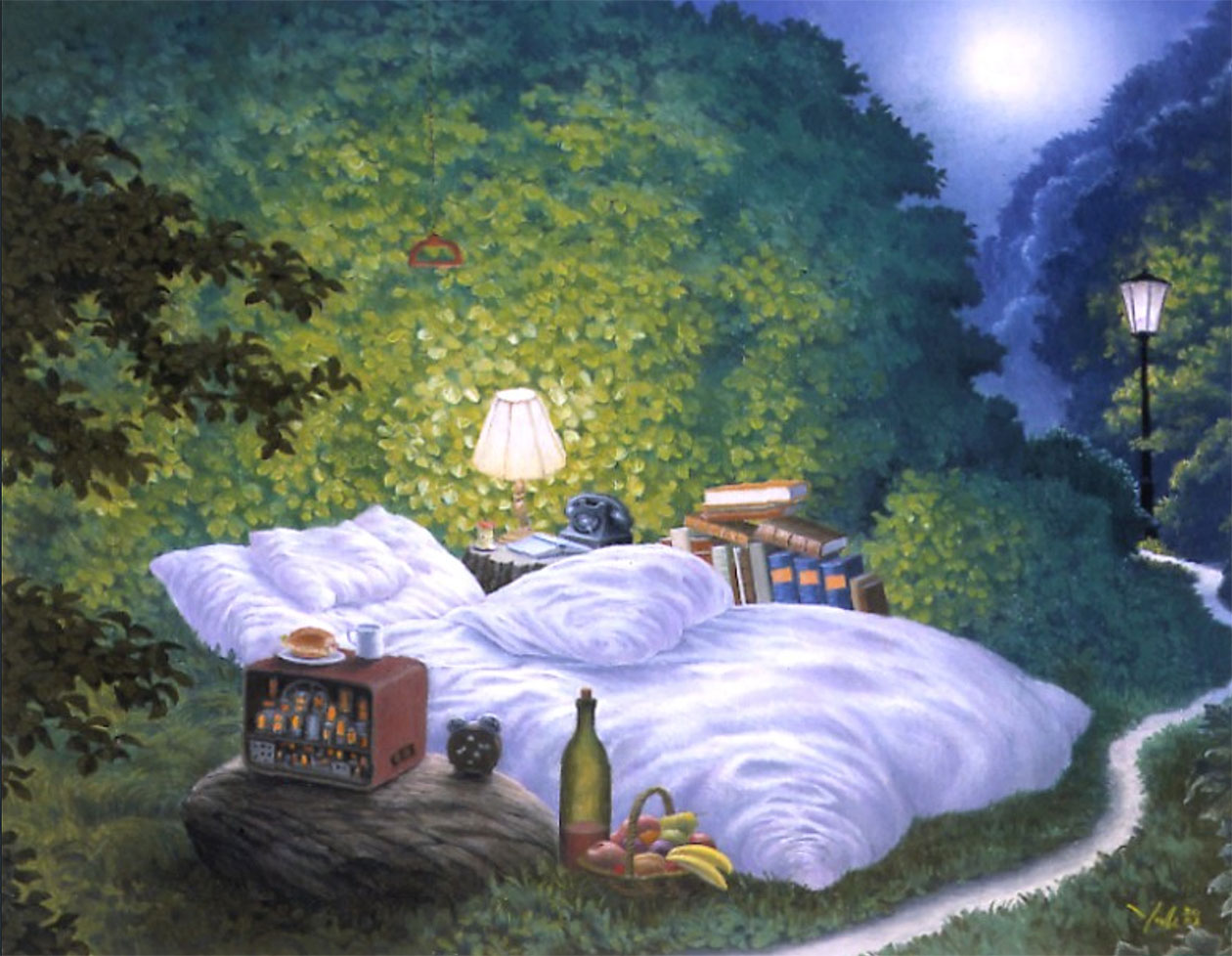
I love the painting at the beginning of this issue of Creative Speaking: The Moonlight Bed, by Jacek Yerka. Yerka is a surrealist painter from Poland. His work, which you can see on his website yerkaland.com, is other-worldly.

Categories
Creativity

Listening to Your Ghosts

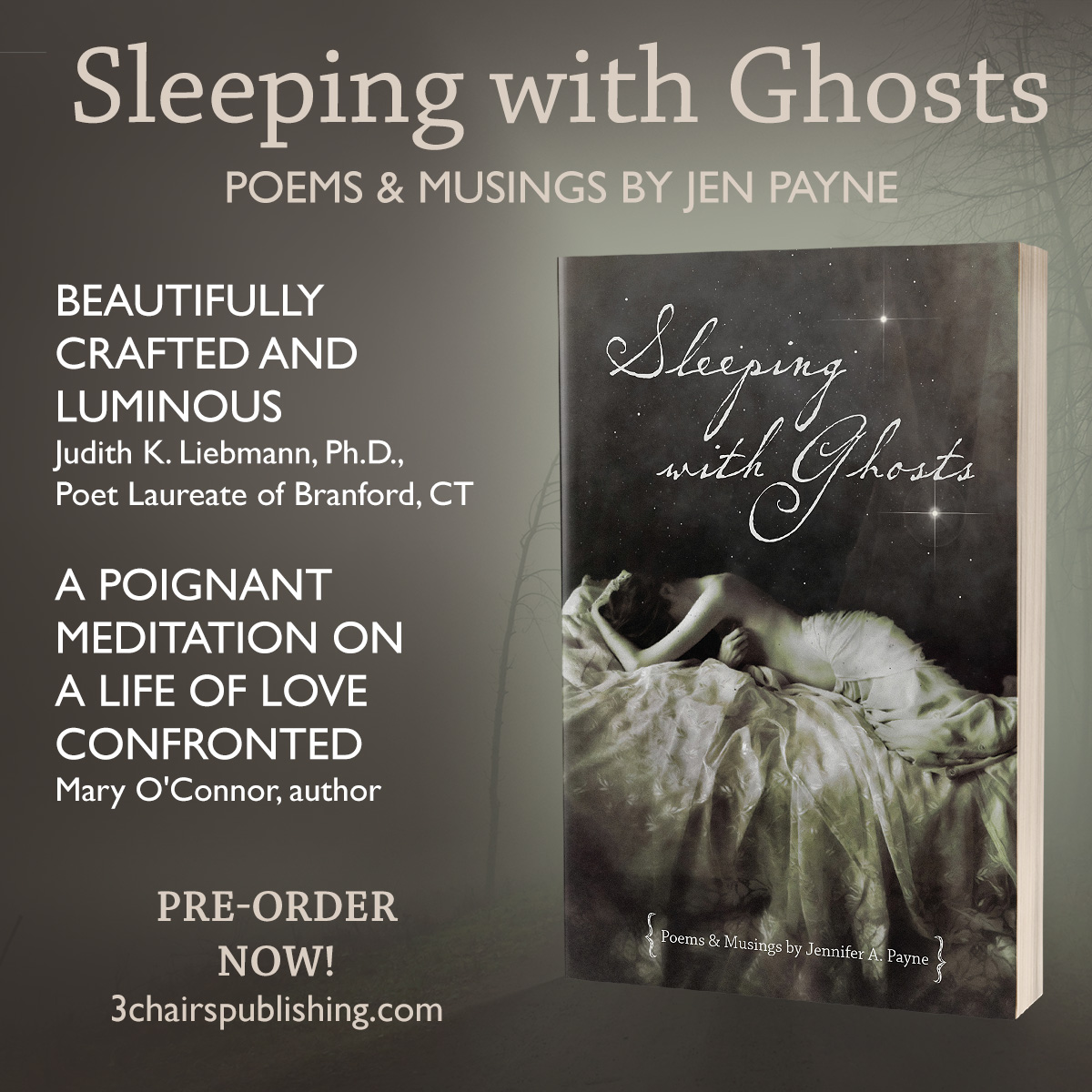
by Jen Payne, author, Sleeping with Ghosts

For the poet is a light and winged and holy thing, and there is no invention in him until he has been inspired and is out of his senses, and the mind is no longer in him… — Plato

Ghosts, Muses, Inspiration, Universe, God. Call it what you will — there is another layer of this world that we live in, and if you can quiet your mind, sometimes, you can hear it and be inspired by it!

As I was finishing up the manuscript for Sleeping with Ghosts, my editor and I both agreed something was missing. While I loved the final poem “Missing Banksy,” its alluded message about impermanence wasn’t quite strong enough to hold up the end of the book. But what would? I had no idea!

When I get stuck like that and can’t find answers — about my writing or about life in general — I like to walk in the woods. It’s where I can settle my mind, slow down the busy-ness, and sometimes…sometimes…hear ghosts.

On this particular walk, I started out at the trailhead by asking the Universe to help me find a final poem, a final message for the book. Often, I can entice Inspiration with a request like that, and this time, it responded in the voice of my Dad.

It’s not the first time my Dad’s ghost has spoken to me. He told me to PAY ATTENTION on I-95 once and saved me from a pretty awful accident; he often shows up unexpectedly as a hawk with a call of I AM HERE; and he responded to my poem query with a series of questions that became the poem “The Final Ghost.”

But connecting with our ghosts can be challenging! There is so much noise in the world today — we’re busier than ever, more distracted by things, more seduced by technologies. There are so many things demanding our attention, how can we possibly hear Ghosts, listen to Muses, or tune into our Inspiration?

One of my all-time favorite movies is Contact with Jodi Foster. The scene I think about often is when she is in the portal pod that’s been reconfigured with an anchored chair and seat belt — things to keep her rooted in place as she travels across space through wormholes. But as she starts her journey, the chair and seat belt cause more harm than good. She may be OK to Go, but they keep her too firmly in place. It’s only when she releases what holds her down that she projects openly forward.

In the same way, listening to your Ghosts requires that you release what’s holding you back.

For Jodi Foster’s character Ellie Arroway, what was holding her back was physically obvious. For me, I know that my biggest obstacle is technology and how it eats up my time and siphons my attention span.

So, what gets in the way of listening to your Ghosts?

Just this weekend, I talked with a woman who told me in a whispered voice how she stopped listening to her Ghosts because it seemed a little scary. And I have a friend who is a phenomenal painter, but she often ignores her Inspiration because it feels too powerful, almost possibly un-godlike.

But the idea of listening to Ghosts or Inspiration or Muses reaches far back into human history.

Did you know that “the word inspiration ultimately derives from the Greek for ‘God-breathed’ or ‘divinely breathed into.’ In Greek myth, inspiration is a gift of the muses, the nine daughters of Zeus and Mnemosyne (Memory).”

Similarly, “the Oxford English Dictionary defines inspiration as “a breathing in or infusion of some idea, purpose, etc. into the mind; the suggestion, awakening, or creation of some feeling or impulse, especially of an exalted kind.”

In his article “How to Find Inspiration, the Psychology and Philosophy of Inspiration,” writer and philosopher Neel Burton offers seven 7 simple strategies to encourage inspiration:

1. Wake up when your body tells you to.
2. Complete your dreams.
3. Eliminate distractions, especially the tedious ones.
4. Don’t try to rush or force things.
5. Be curious.
6. Break the routine.
7. Make a start.

I will add two more to that list:

8. Read Neel’s article (click here)

and…

9. Listen to your amazing, wonderful, chatty Ghosts.

You never know what they have to say or in what creative direction they might take you!

Photo by Ayşe İpek.


This essay was originally featured in the WOW! Women on Writing national Blog Tour for my book Sleeping with Ghosts: Poems & Musings.

Categories
Creativity

GUEST WRITER: Listening to Your Ghosts

by Jen Payne, author, Sleeping with Ghosts

For the poet is a light and winged and holy thing, and there is no invention in him until he has been inspired and is out of his senses, and the mind is no longer in him… — Plato

Ghosts, Muses, Inspiration, Universe, God. Call it what you will — there is another layer of this world that we live in, and if you can quiet your mind, sometimes, you can hear it and be inspired by it!

As I was finishing up the manuscript for Sleeping with Ghosts, my editor and I both agreed something was missing. While I loved the final poem “Missing Banksy,” its alluded message about impermanence wasn’t quite strong enough to hold up the end of the book. But what would? I had no idea!

When I get stuck like that and can’t find answers — about my writing or about life in general — I like to walk in the woods. It’s where I can settle my mind, slow down the busy-ness, and sometimes…sometimes…hear ghosts.

On this particular walk, I started out at the trailhead by asking the Universe to help me find a final poem, a final message for the book. Often, I can entice Inspiration with a request like that, and this time, it responded in the voice of my Dad.

It’s not the first time my Dad’s ghost has spoken to me. He told me to PAY ATTENTION on I-95 once and saved me from a pretty awful accident; he often shows up unexpectedly as a hawk with a call of I AM HERE; and he responded to my poem query with a series of questions that became the poem “The Final Ghost.”

But connecting with our ghosts can be challenging! There is so much noise in the world today — we’re busier than ever, more distracted by things, more seduced by technologies. There are so many things demanding our attention, how can we possibly hear Ghosts, listen to Muses, or tune into our Inspiration?

One of my all-time favorite movies is Contact with Jodi Foster. The scene I think about often is when she is in the portal pod that’s been reconfigured with an anchored chair and seat belt — things to keep her rooted in place as she travels across space through wormholes. But as she starts her journey, the chair and seat belt cause more harm than good. She may be OK to Go, but they keep her too firmly in place. It’s only when she releases what holds her down that she projects openly forward.

In the same way, listening to your Ghosts requires that you release what’s holding you back.

For Jodi Foster’s character Ellie Arroway, what was holding her back was physically obvious. For me, I know that my biggest obstacle is technology and how it eats up my time and siphons my attention span.

So, what gets in the way of listening to your Ghosts?

Just this weekend, I talked with a woman who told me in a whispered voice how she stopped listening to her Ghosts because it seemed a little scary. And I have a friend who is a phenomenal painter, but she often ignores her Inspiration because it feels too powerful, almost possibly un-godlike.

But the idea of listening to Ghosts or Inspiration or Muses reaches far back into human history.

Did you know that “the word inspiration ultimately derives from the Greek for ‘God-breathed’ or ‘divinely breathed into.’ In Greek myth, inspiration is a gift of the muses, the nine daughters of Zeus and Mnemosyne (Memory).”

Similarly, “the Oxford English Dictionary defines inspiration as “a breathing in or infusion of some idea, purpose, etc. into the mind; the suggestion, awakening, or creation of some feeling or impulse, especially of an exalted kind.”

In his article “How to Find Inspiration, the Psychology and Philosophy of Inspiration,” writer and philosopher Neel Burton offers seven 7 simple strategies to encourage inspiration:

1. Wake up when your body tells you to.
2. Complete your dreams.
3. Eliminate distractions, especially the tedious ones.
4. Don’t try to rush or force things.
5. Be curious.
6. Break the routine.
7. Make a start.

I will add two more to that list:

8. Read Neel’s article (click here)

and…

9. Listen to your amazing, wonderful, chatty Ghosts.

You never know what they have to say or in what creative direction they might take you!

Photo by Ayşe İpek.


This essay was originally featured in the WOW! Women on Writing national Blog Tour for my book Sleeping with Ghosts: Poems & Musings.

Categories
Creativity Writing Zine

Spinning Jenny

Volume S of our 1976 Encyclopedia Britannica collection did not have much to say about the Spinning Jenny. What it was: an early machine for spinning wool or cotton. Who created it: James Hargreaves from Lancashire, England. When: 1764. And a short sentence about its significance in the industrial revolution.

I can still see the two-sentence paragraph description and its line drawing of the Spinning Jenny sitting on the page. What I could not see at the time was the 500-word essay being requested by my 6th grade social studies teacher Mr. Jacobson.

So I did what any good writer would do. I improvised!

What is a spinning wheel used for? How does it work? Where does the wool and cotton come from? What was life like in Lancashire? What was life like in 1764? Who was James Hargreaves? What was the industrial revolution?

Et voila! Essay.

Pulling from different sources, I spun together that essay and earned an impressive A- for my effort.

Ironically, one of the reasons the Spinning Jenny was so important is that it allowed a worker to use multiple spindles of material in the forming of thread.

Fast forward 40-something years, and I am still spinning. Still pulling from multiple sources to form threads of thought that get woven into my writing and creative work.

I love the experience of that process. Going down the rabbit hole of “what do we have here?” and finding winding paths to all sorts of unexpected discoveries.

I love the organic nature of those discoveries — what reveals itself as I walk along those paths. A bit like Alice, I suppose, wandering and Wondering in that strange, unexplored land.

I love the challenge of digging deeper to find some key piece of information that completes the story. I love doing research and following breadcrumbs.

The best part, of course, is when it can all finally come together. Tie off all of the threads, weave the ends together. See the conclusion of the hard work: the poem, the book, the zine, this essay.

I suppose, if you think about it, that make me a Spinning Jenny, wouldn’t you say?

©2021, Jen Payne, but only 360 words. For more good words, check out my Etsy Shop now!