
When I was in grade school, I used to tell a silly story that went something like…
Once upon a time, there was a little universe.
And in that universe, there was a little solar system.
And in that solar system, there was a little planet.
And on that planet, there was a little continent.
And on that continent…
The story — which I could see in my mind — got closer and closer, periscoping in on a little house and maybe a little family or a little girl. I don’t remember the ending, if there even was one.
I found myself thinking about that as I was careening up I-95 for what creativity guru Julie Cameron might call an Artist Date.
“An artist date is a block of time, perhaps two hours weekly, especially set aside and committed to nurturing your creative consciousness, your inner artist. In its most primary form, the artist date is an excursion, a play date that you preplan and defend against all interlopers. You do not take anyone on this artist date but you and your inner artist, a.k.a. your creative child. That means no lovers, friends, spouses, children – no taggers-on of any stripe.”1
It was my first solo adventure since my knee replacement surgery four months ago, and I suspect I was breaking Artist Date rules. First of all, I was rushing to get there. It felt more like an errand run or a have-to-do than a creative outing.
Second, there were all sorts of interlopers — the client with erupting mental health issues, the pedophile president, the elementary schoolgirls bombed in Iran, the words of John Lennon — going round and round in my head.
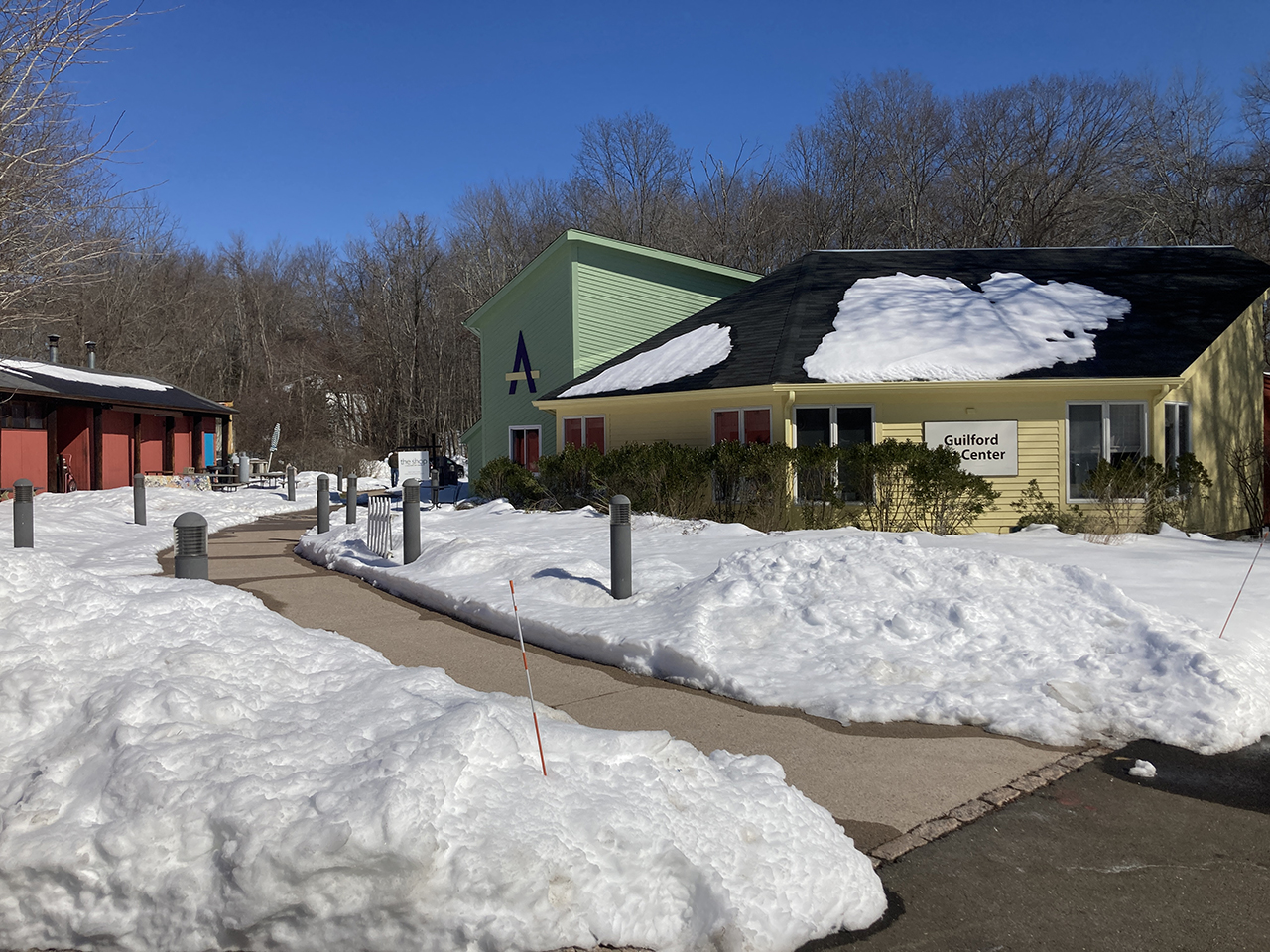
Nonetheless, I kept driving, thinking about the little universe and all of its big problems on my way to the Guilford Art Center, which was hosting an exhibit called, ironically, CIRCULAR THINKING.
CIRCULAR THINKING, featuring fiber art created by the Studio Art Quilt Associates, was “designed to explore the varieties of meanings, images, and experiences evoked by the circle…a shape, a symbol, a concept, or a metaphor.”2 The exhibit had been on view since the beginning of the month, and I was happy to slip into the colorful space on its last day.
So much color that I thought, for a moment, I might escape our little world and lose my interlopers all-together.
But there was a shadow of RFK across Hope Barton’s quilt Why We Need Vaccines; Lynne Allen and Cassandra Allen mentioned Endless Conflict, and Martha Wolf asked me to read between the lines of A Newspaper to see the loss of our black and white reality.
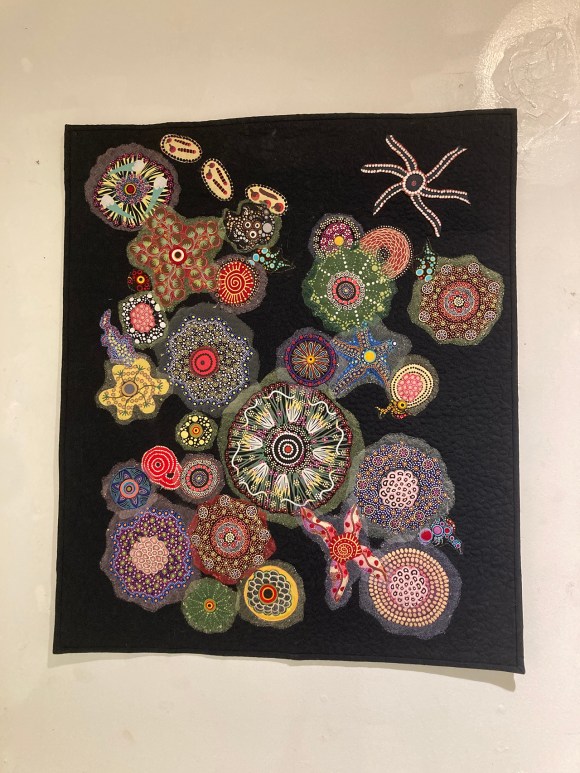
Why We Need Vaccines, Hope Barton 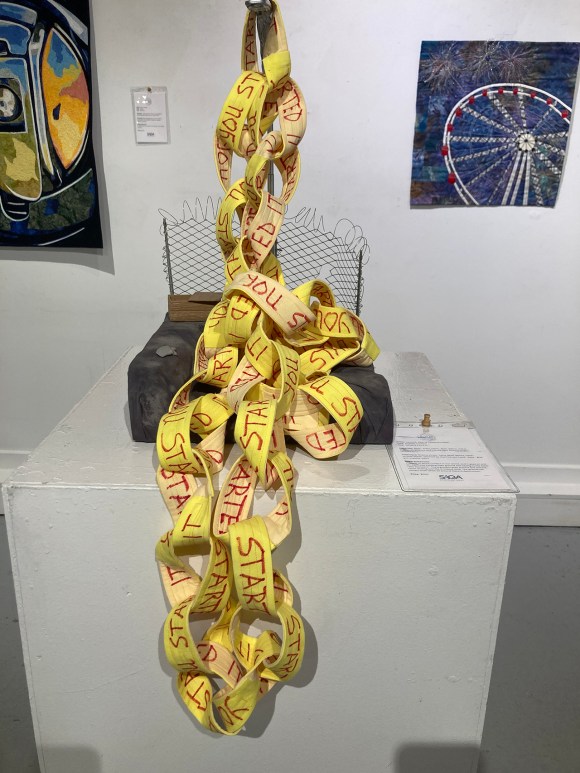
Endless Conflict, Lynne Allen and Cassandra Allen 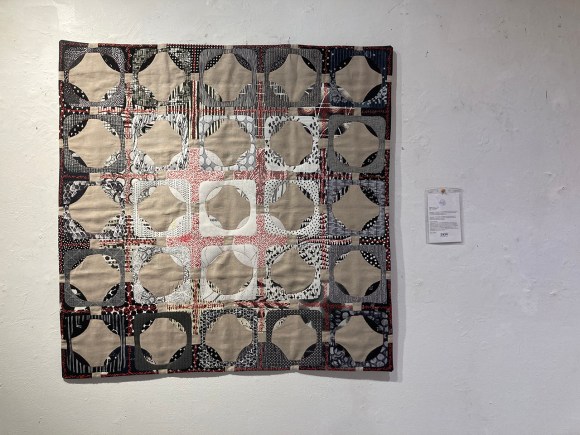
A Newspaper, Martha Wolf
I was buzzing. Hurried. Preoccupied. Definitely not of a “date” mindset. But then a bright bold sun called out and Catherine Lavoie’s piece called Shattered explained…
“Red slashes represent that moment when you finally admit your life is shattered and you need to make changes. The golden background fabric represents the glow of Hope that you can do this.”
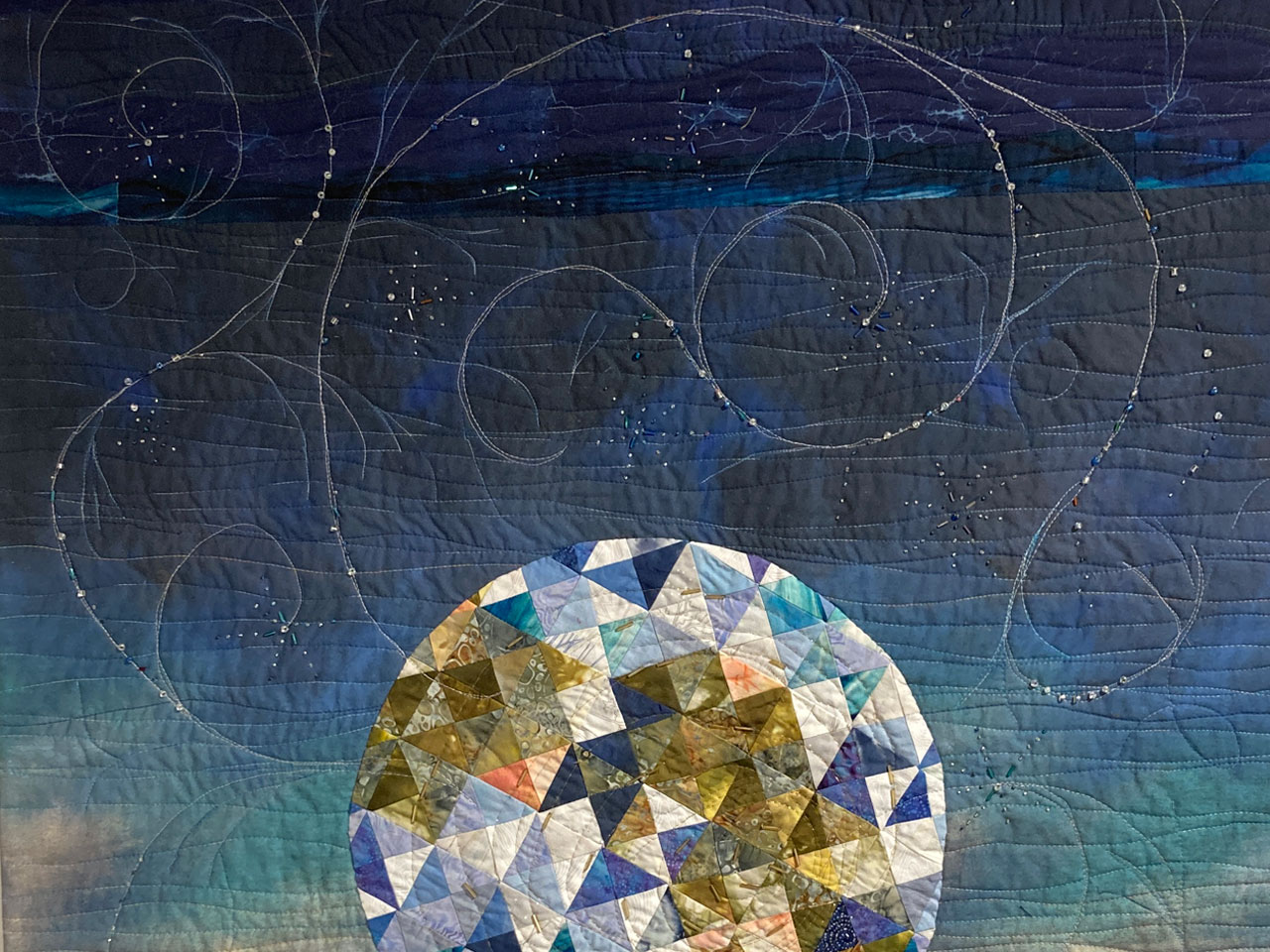
Then Rita Hannafin’s sparkling quilt reminded me that We Are Stardust, “part of the swirling, timeless energy that continues life.”
And slowly, slowly, slowly, I started to come back to myself. Settle in. A little.
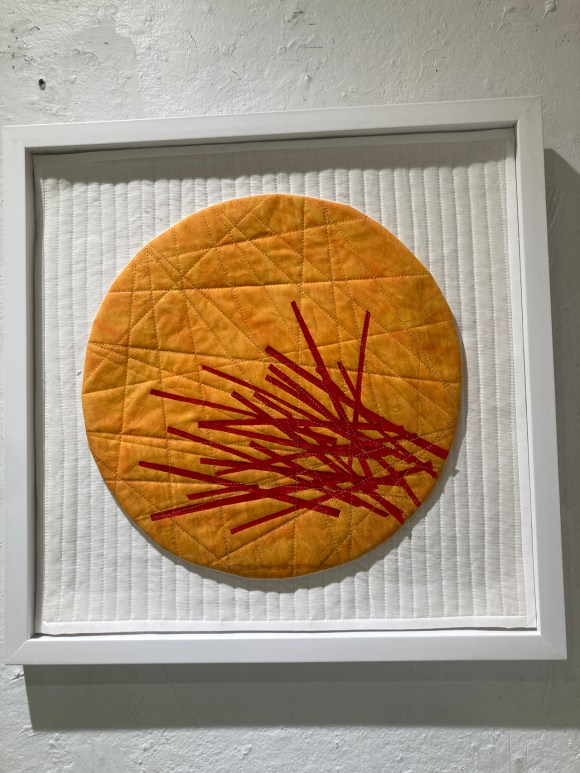
Shattered, Catherine Lavoie 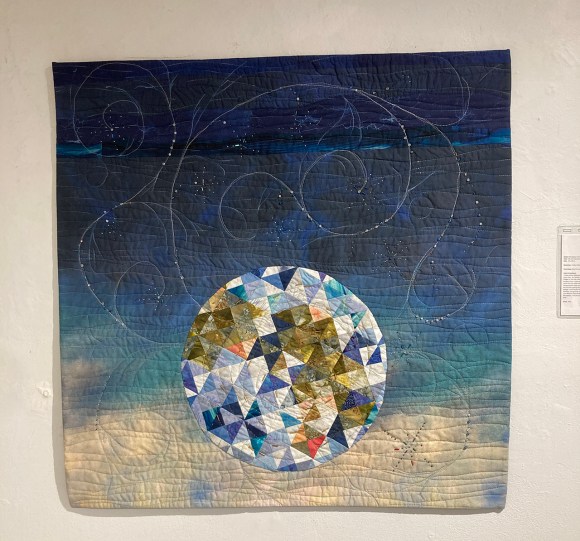
We Are Stardust, Rita Hannafin
I wandered through the rest of the gorgeous exhibit, browsed the amazing collection of gifts in The Shop — oh my! — then headed on to my next stop, City Gallery in New Haven.
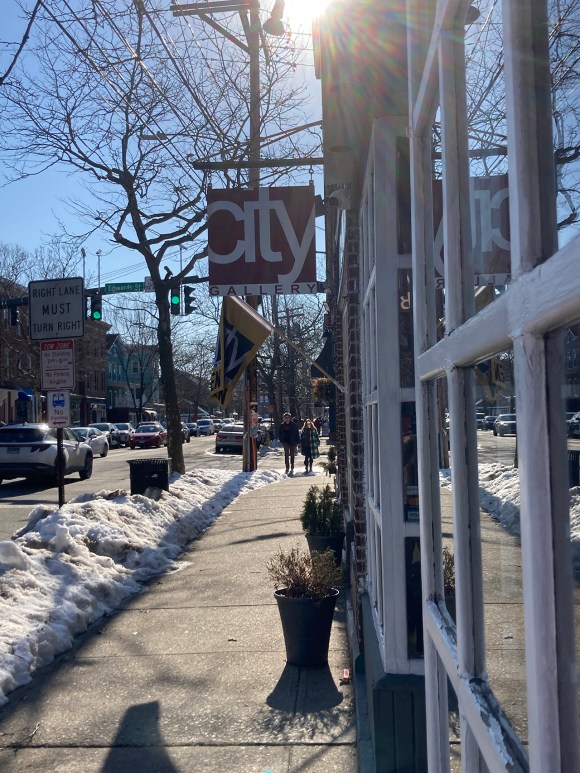
City Gallery was hosting painter Beatriz Olson and her solo exhibit UNMUTED: THE RETURN OF COLOR, “a body of work that traces her journey back to voice, embodiment, and the full spectrum of color that once lay quiet beneath the demands of culture, profession, and expectation.”3
Beatriz is an expressive artist, whose work “involves holistic approaches to healing the body mind and soul distress by using color, form and lack thereof to process emotions.”
Serendipitously, she was gallery sitting for the afternoon, so not only did I get a personal tour of the exhibit, I had the chance to talk with Beatriz about her work and the stories behind the paintings, including The Great Mother and Courage.
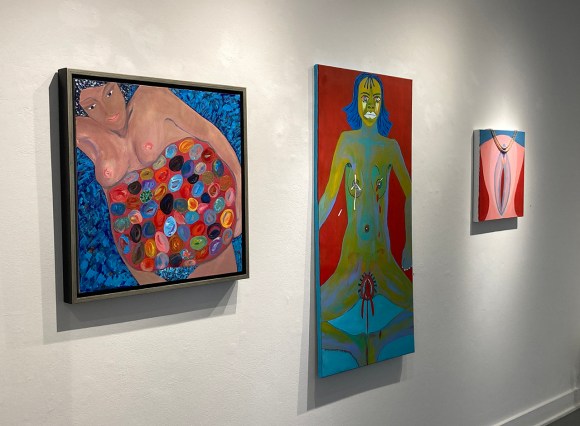
The Great Mother, Uncomfortable Truths, Ubabashed – Beatriz Olson 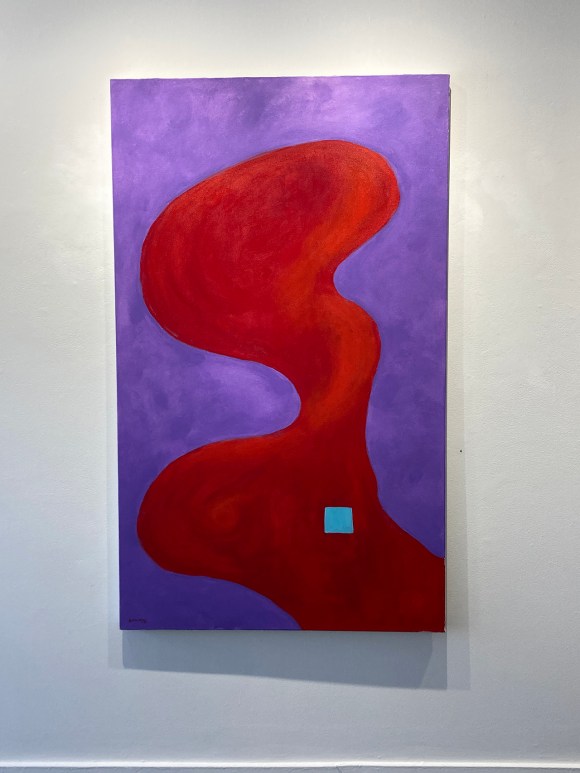
Courage, Beatriz Olson
(We also talked about knees — she’s a doctor and her husband is an Orthopedic Surgeon — and books. As a matter of fact, we’re exchanging books — a copy of my Sleeping with Ghosts for a copy of her Mind Body Secrets that I can’t wait to read!)
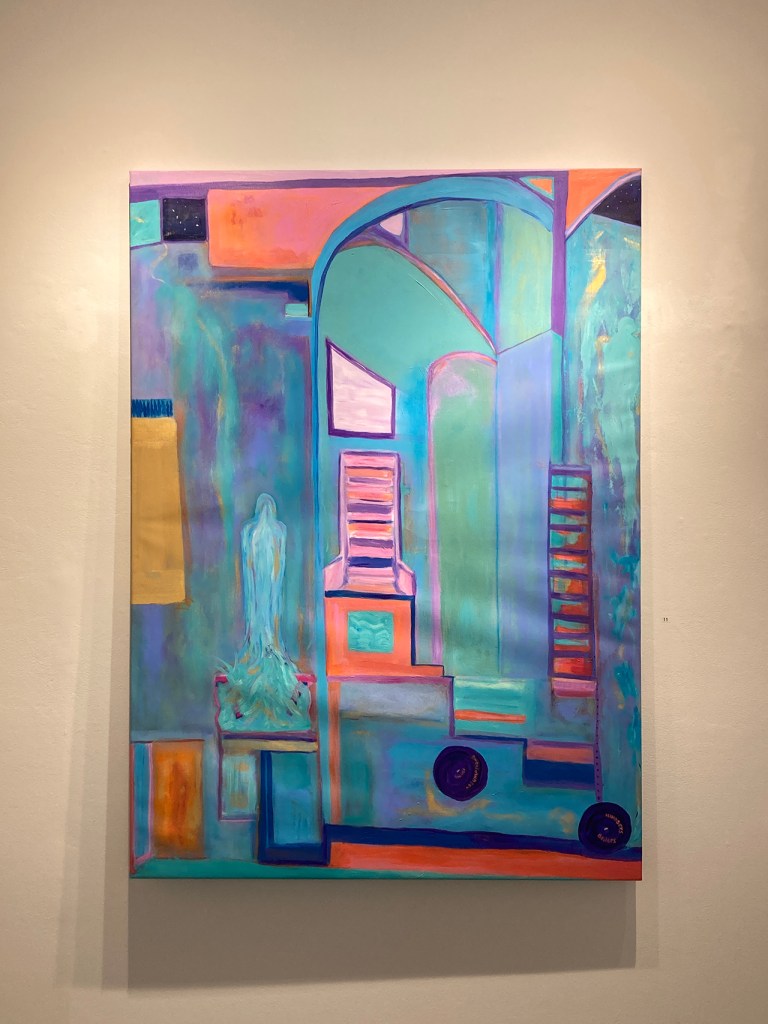
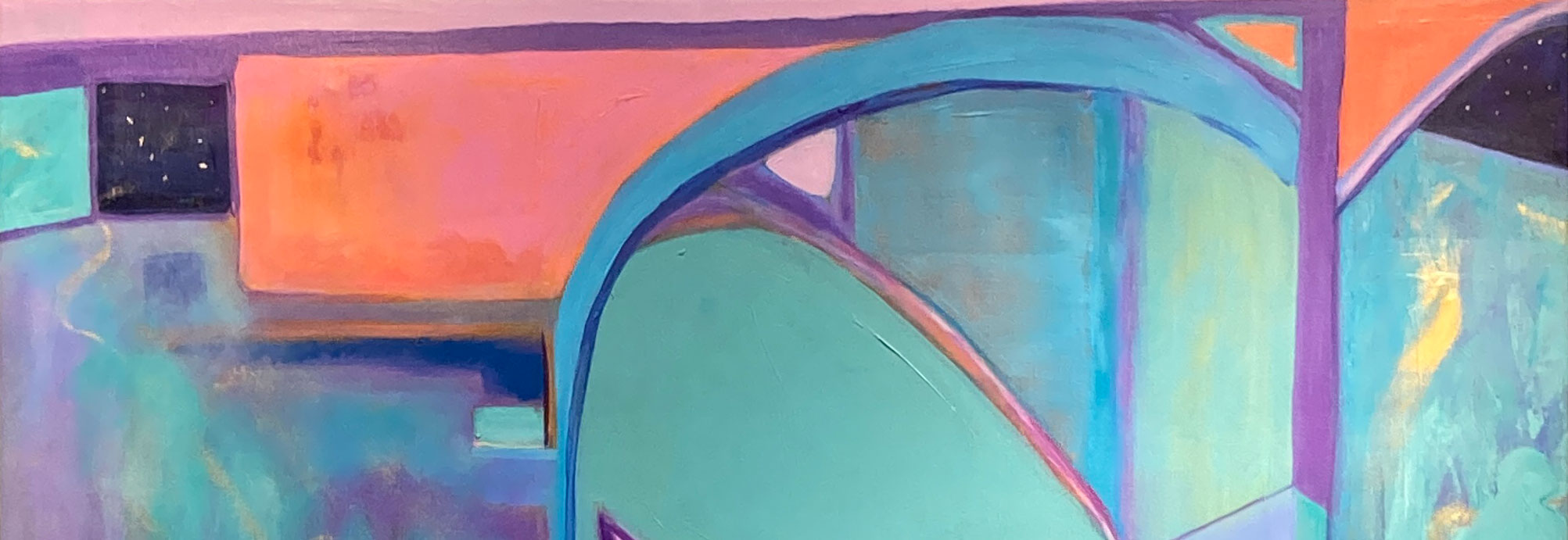
Perhaps my favorite piece in her show was Women’s Voyage to Freedom, hanging prominently on the back wall of the gallery. Its bold colors and gold accents tell the story of women coming into their own in this world — moving from what we’re taught, to what we learn, to how we emerge, flourish, and create our own stories.
Noticing the little Universe in the upper corners of the painting, it felt as if the Artist Date had come full circle. And, in a way, so had I — returning to the curious and mobile spirit who is more than ready to get back to living a creative life!
[1] Cameron, Julia. The Artist’s Way: A Spiritual Path to Higher Creativity. United States: Penguin Publishing Group, 2002.
[2] Art Quilts Take Shape Around ‘Circular Thinking’ at Guilford Art Center’s Newest Gallery Exhibit
[3] City Gallery presents Unmuted — The Return of Color: Where Color, Spirit, and the Feminine Rise

 randomactsofwriting.net