I have lived in this house they called New Eden for 25 years on a quarter acre lot around the corner from Long Island Sound.
There’s a claggy pond out back, and a nature preserve just a stone’s throw away.
It’s Heaven, really, never mind the state road on the other side of the eight foot privet that keeps the peace.
The day I moved in, two bright green parakeets landed on a branch of the great old Maple in the back corner of the yard.
They seemed as auspicious as the lilac, beloved since first sight, blooming at the edge of the driveway.
Every year, I pray the lilac will bloom again, that the Maple will survive another storm to keep company with her resident squirrels and raccoons. And me.
She and I wept together when the grand Oak came down, and we still laugh at dusk when the rabbits come out to play.
Seasons come and go here at a predictable pace,
the sublime hush of winter steps aside for spring birds who sing in sparks of poetry usually lost in the busy buzz of summer
before the breeze of autumn shivers the knotweed and startles the monarchs who make no tracks, but the field mice do
tiny footprints criss-cross with bird notes and the straight firm steps of the coyote
turtles come and go, too, snakes, hawks, owls, and once a frog so big I thought he might be a prince!
this sweet spot has revealed its secrets for ages — snowdrops bloom where never planted, a robin’s nest appears beside a window, and salamanders tuck in by the bird feeder
just last week I discovered a small sliver of ocean just to the south, in between some saplings, hidden from view until now
No wonder the ospreys fly so low, and waves sometimes wake me from dreams.
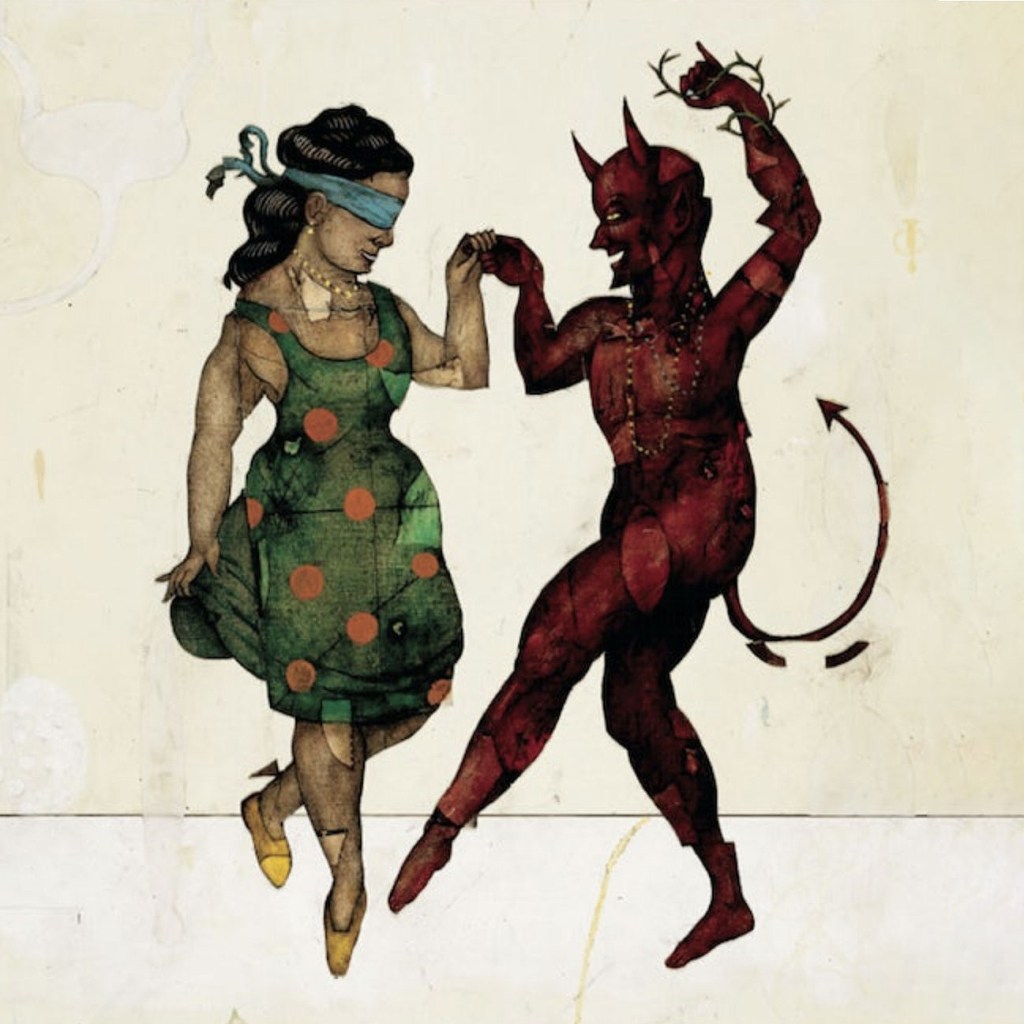
There’s an archnemesis on the playground and devils at the pulpit, people are afraid of words words! ideas, thoughts, stories
the holy rage through traffic to get to their entertainment complex
pass by the street beggar praying he’s not gay or trans or black or blue or whatever their god teaches them to hate this week, this century
and history repeats
I had an archnemesis once she threw rocks at my face and called me a whore but names will never hurt me
it’s the rage I worry about the everything-that’s-old-is-new-again-rage fueled by the mouths of demons and poor pages of books tossed in the street, there next to the beggar who picks one up and reads
“He that is without sin among you, let him cast the first stone.”
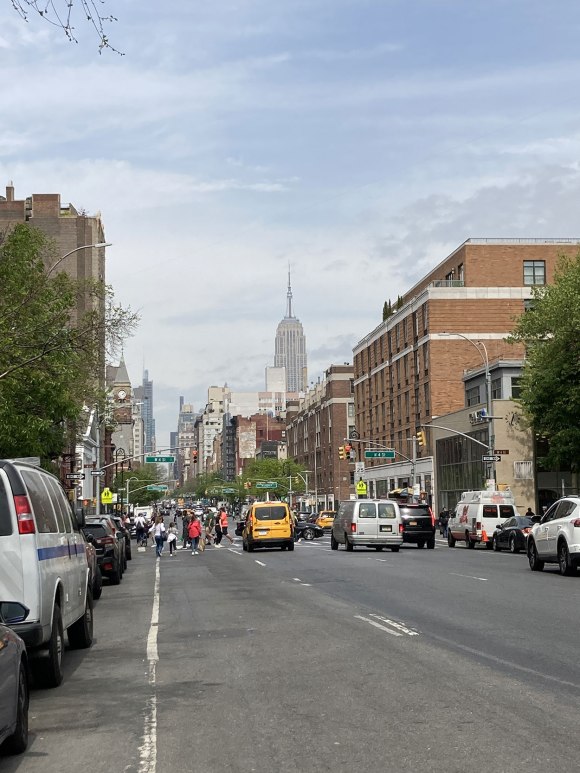
In my next life, I want to live here in this crazy loud city where everything feels iconic and ordinary all at once, where pavement steps aside for flowers and small spots of cool grass, and trees carry the sound of musicians and pigeons, where the ordinary walk side-by-side with the out-of-this-world and I, anonymous, don’t care about reflections in buildings made of glass, where everyone arrives at the park by noon and it doesn’t matter who or what you are, because you leave soon, for a few bucks careen through the underworld, arrive somewhere else entirely, like magic, knowing where you were, and every place else, goes on without you.
I promised you a diamond he says of our courtship, but never a ring — and he laughs with that smile, like I’m in on the joke. We make a contract — verbal, never signed, then I invite them in and tell them my stories.
I’m charming and kind, in just the right ways, endearing and fun everything they want, until it’s time for me to leave. That’s the hardest part, as they forget the agreement, so I do it slow to start.
I pack up my interesting bits, then take back my affection, I pull at the threads of what’s left until there’s nothing to hold onto. That’s when they leave — THEY end it and the contracts breaks by default.
He sees me crying then and shapeshifts to the one I remember, pulls me to his chest and holds on as tight as that first embrace years ago, the perfect fit, the smell of old books and cedar, then a devilish laugh and I wake to the sound of tears pouring down, midnight thunder and wicked, wicked lightning.
This is to be expected. I don’t come with a pedigree or a PH.D. I don’t wear laurels or titles well I haven’t kissed ass (or any of you), and I know, I know I should have bowed low and deep before the queen but I’ve never been one to follow the rules or jump through hoops of anyone’s making but my own.
You’ve got a bit of hate there stuck between your teeth
cover up that weak mind, it’s embarrassing
not cool dude more wrong side of history than team spirit or patriotism, even
maybe patriarchy
kinda red car nuclear missile escalation compensation
if you ask me
which you didn’t
and wouldn’t
because you know already everything I didn’t say
and you’re gonna wear it like a badge of honor proud and defiant full of fear and lockstep down a path towards an epitaph that dogma won’t ever resolve
and the people went thirsty and the animals died and the viruses spread and the innocent suffered and the kids were slaughtered and the fires raged and the books were burned and the idols were worshipped and the empires crumbled
and the people argued and the people took sides and the people hated and the people judged and the people fought and the people cried
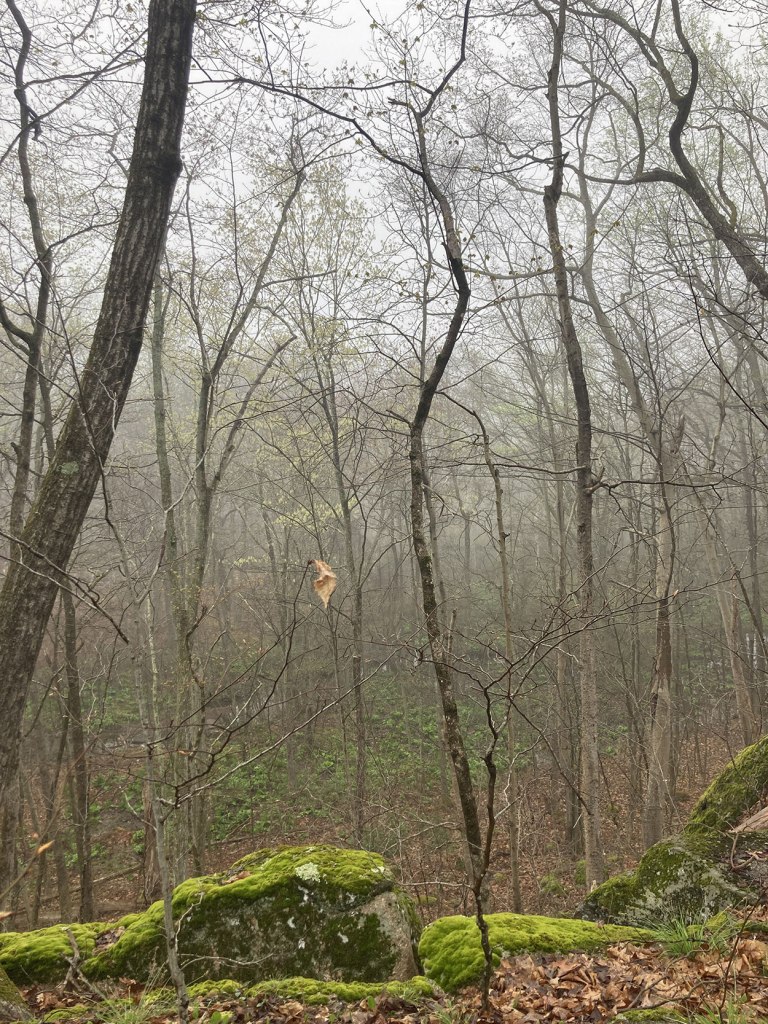
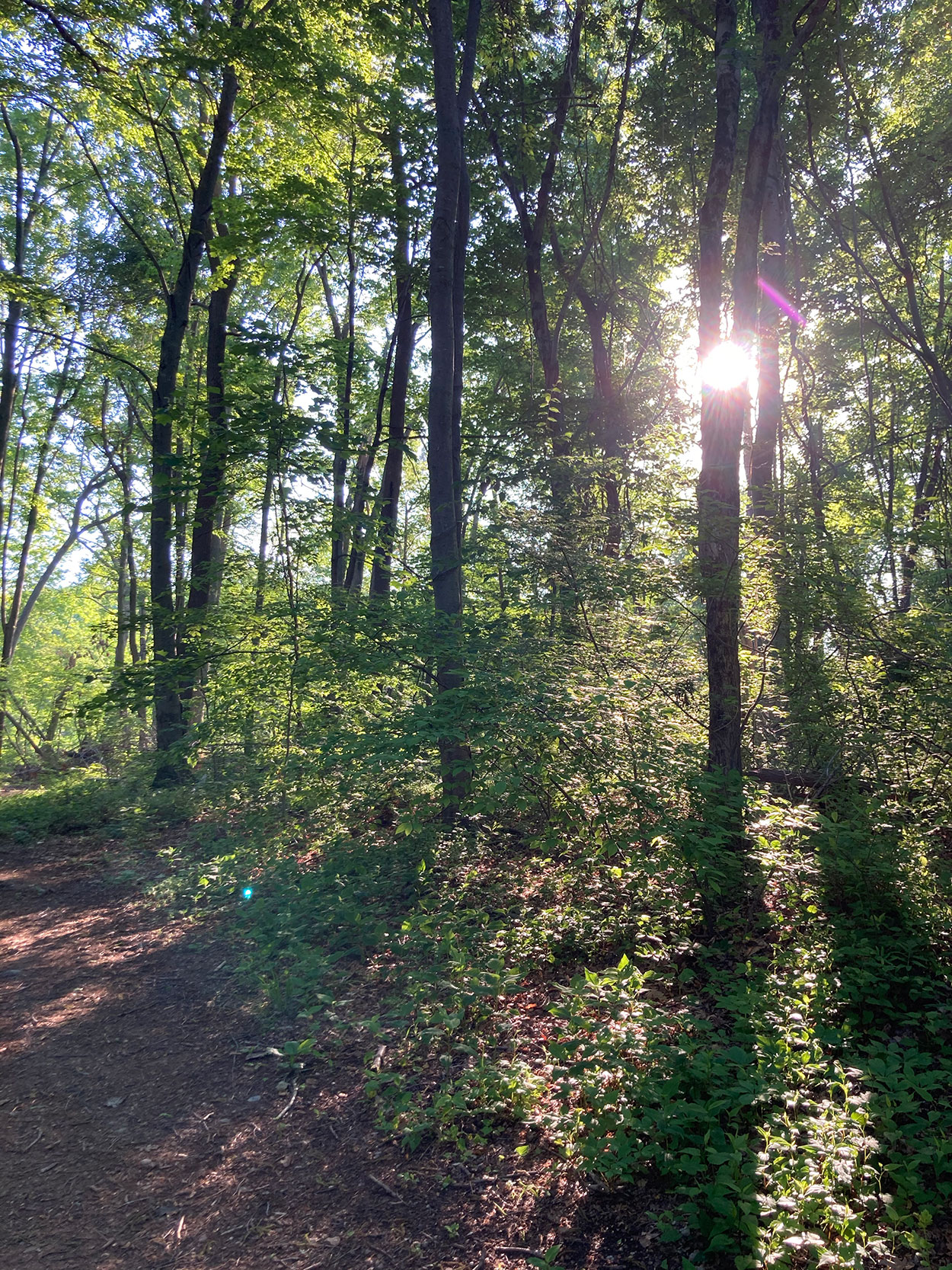
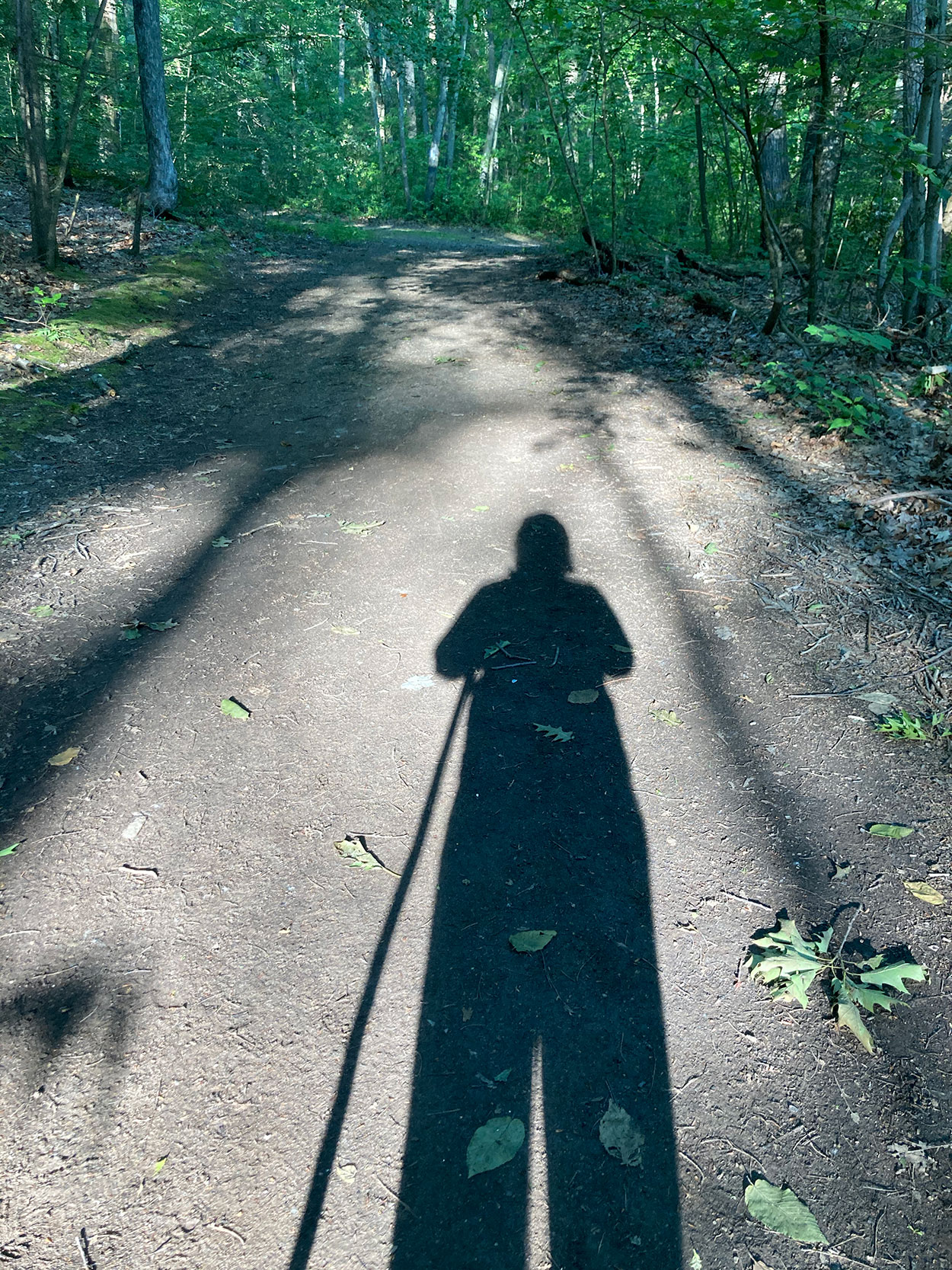
My path along the ridge this morning gives the impression of sky walking the fog heavy in branches that burst in cumulous tufts of the palest spring green like clouds, to be expected here meeting eye level with birds who suggest I should be singing
Val-deri, val-dera Val-deri, val-dera Ha, ha, ha, ha, ha, ha, ha
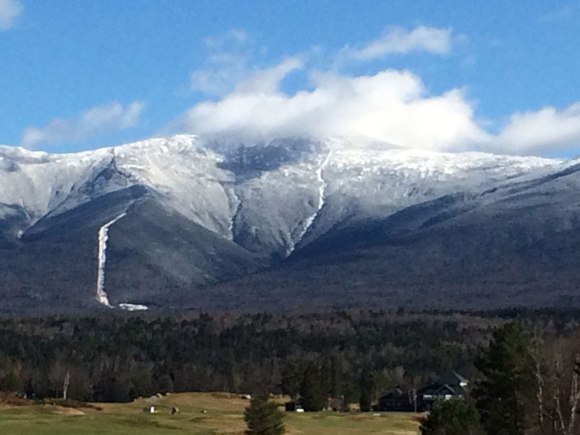
It was New Hampshire for God’s sake and I hoped it would imprint us how could it not? those ridiculous mountains their shock of snow and sharp air so fresh your lungs get greedy — But you were miles away ghosts on your lead line climbing summits of regret a backpack full of memories bitter and sweet stuck to the roof of your mouth — which explains the dead silence yours and mine as we watched the snow fall covering over our footprints on the path outside.
The half-life of Uranium is either 4.5 billion years, 700 million years, or 250 thousand years depending on how you examine its primordial isotopes, that which remains of its interstellar medium its stardust — like us, formed inside of stars when stars collide so what then is the half-life of love? its biochemical chain of events a Big Bang complex interplay of pheromones, dopamine, and oxytocin elemental does it decay more or less quickly than that which lights up the sky? does it leave traces? its luminescence still seen sometimes its volatility, too rapid and unpredictable change just another reaction, expected meltdown, its core damage
I love these places of waiting this quite axis of the world a point around which things spin he on his way there and she on hers there they, together, embrace and part or run, race, return and I, here, silent silent and of no consequence to their what-comes-next nor to my own, really I am here-and-now, a great pause a smudge of time a nothingness into which pours everything peace, poetry, god
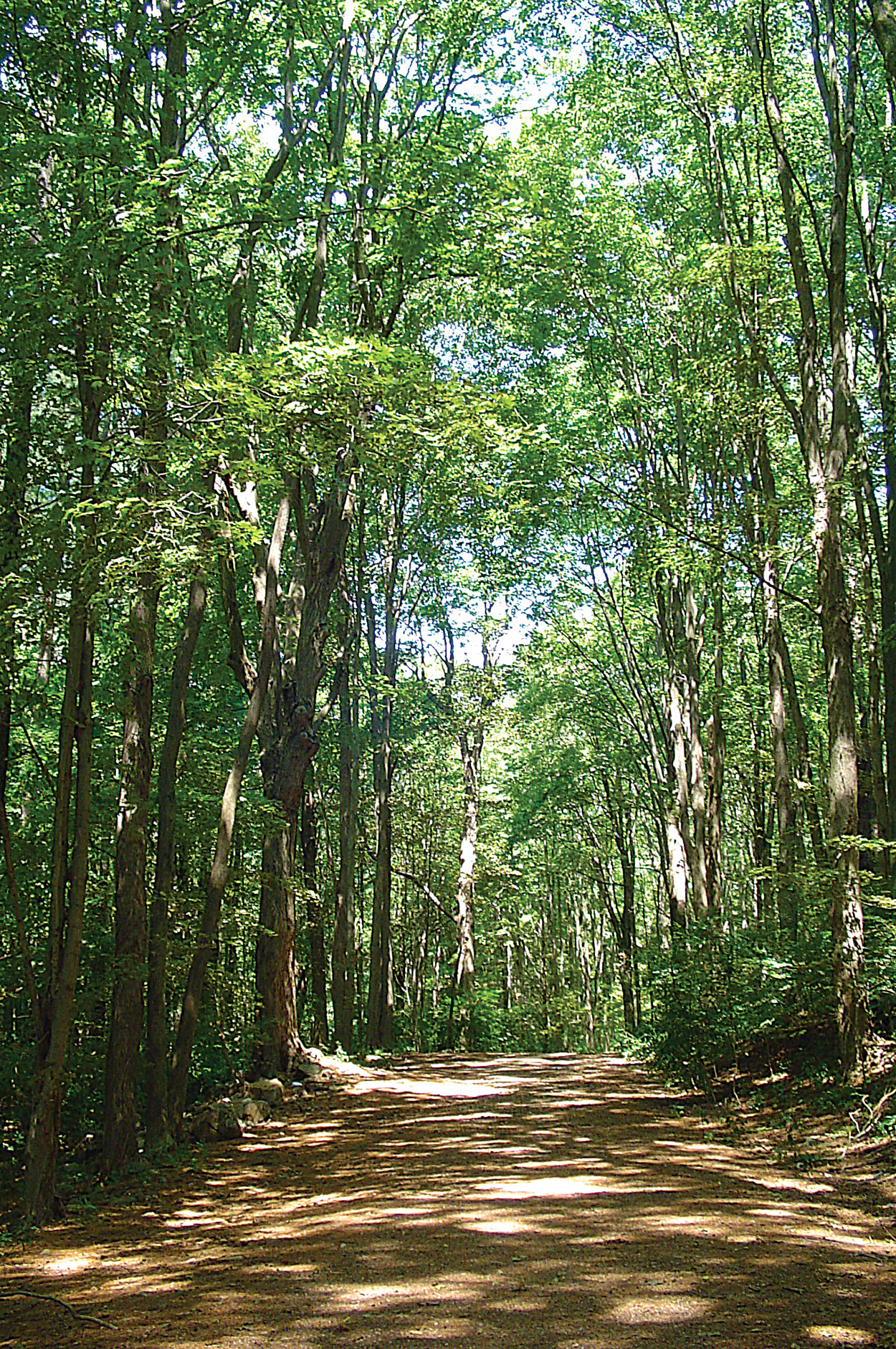
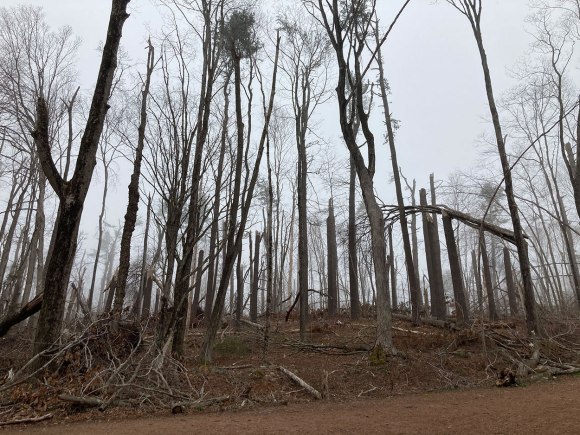
before the painted parking lines and engineered bridges before the pervasive blazes that welcomed every one before the storm that created a war zone there was a trail in the woods a simple trail that wound from an unpaved lot up a long, slow incline and down, slowly, into Eden or Shangri-La or Paradise or whatever you call the place that brings you back to yourself without contortions without effort except for moving and breathing and letting go and paying attention to the song of white pines, and the path of the pileated, to the fetal curl of spring ferns and the sweet Spring Beauty so small but significant you get down on your knees like a prayer whisper your apologies for the trespass weep at the loss of her secret spot, there at the base the Oak now fallen, our heavy footfall her sure demise
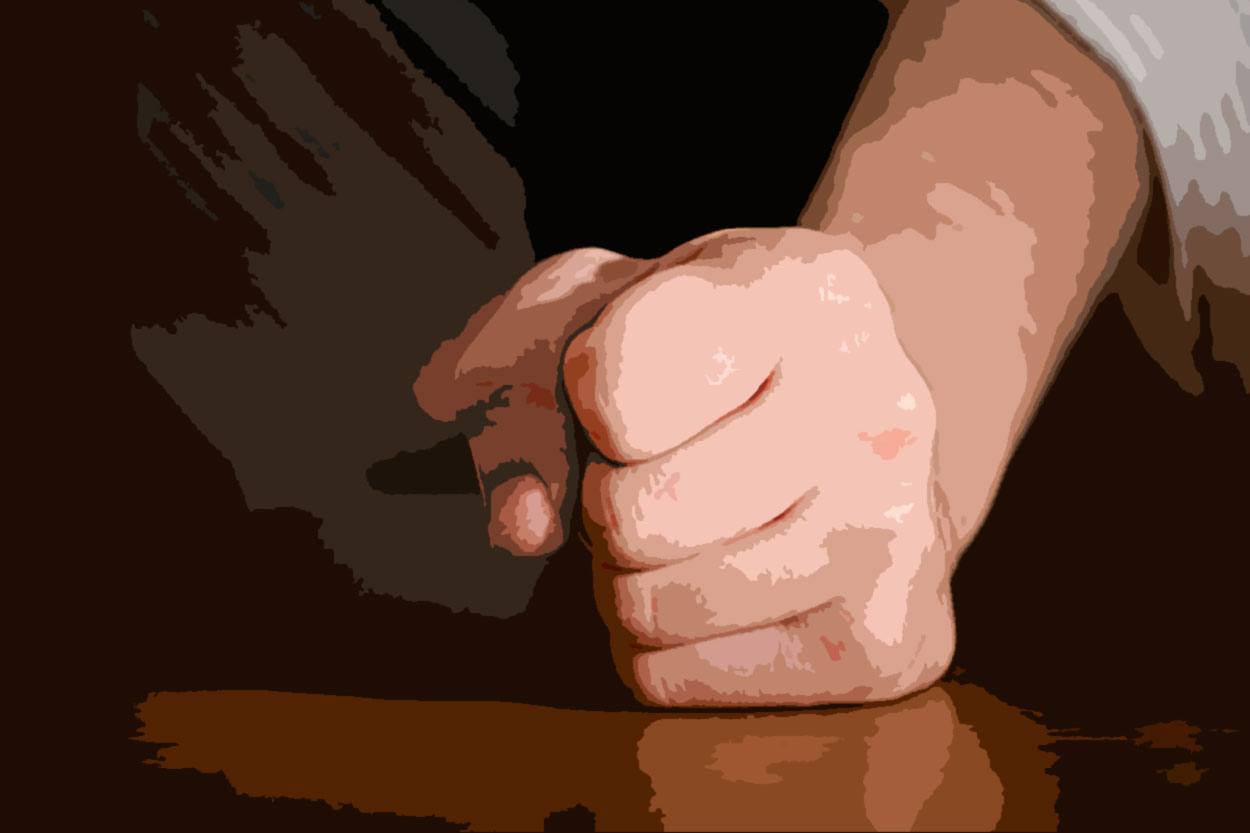
He makes headlines now and then one book and then another false tears and faulty claims a prophet for profit. How do you know for sure, a friend asked. It’s posture, I explained. No, not how he sits — though his aggressive leaning and pointing are tells, for sure it’s how he postures his point twists his words like he twists his face pushes his prophecies and perversions like he pushes the energy in a room hand gestures feign truth like magicians or priests at the pulpit, predator preaching his Rules, his black and white dogma with a heavy fist to the table so it must be true, and you must believe God Damn It.
From the fascia that constricts — wants my body fetal some days — I cannot extract the kamikaze pilot, tweeze him from his destructive path save those who drowned or the family of survivors who struggle, still, some days, to keep their heads above water.
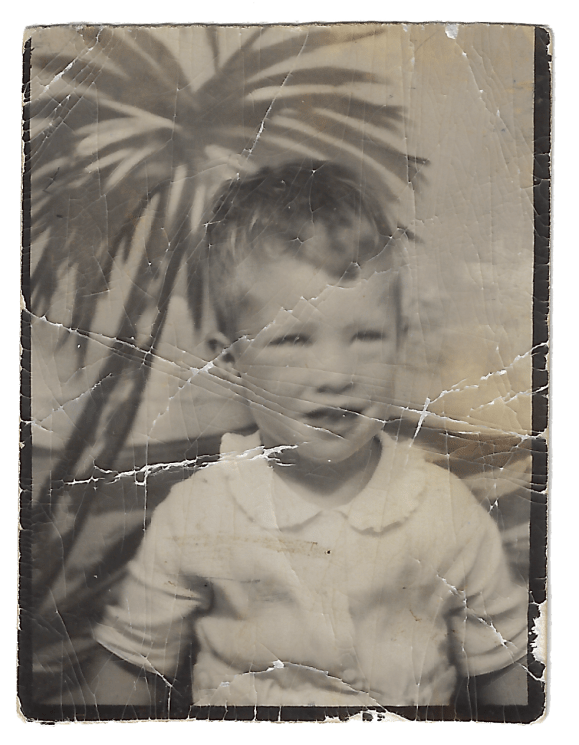
I cannot extract the boy in the photo unawares and smiling while sea battles raged and mothers wept eyes blind to the the hard fist of the drunk who pounded on doors and broke happy spirits.
Some things float, you see, carry on despite the damage.
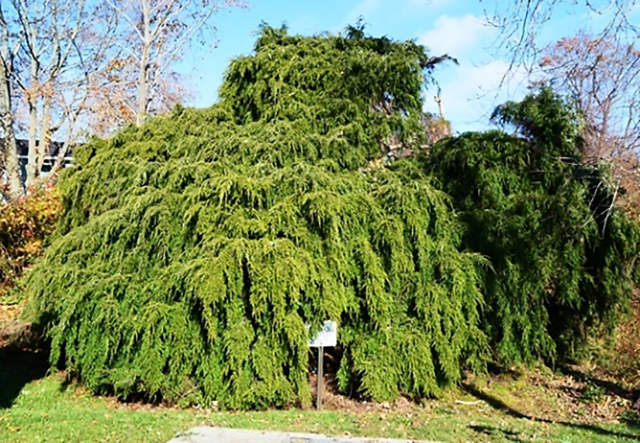
A most graceful dense mounding shrub with broadly spreading branches that create a weeping effect with the deep green, finely textured foliage.
What would the old tree say of her current predicament — wedged between the state road and the utility substation, her circadian rhythm forever disrupted by the flashing traffic light, her water source, runoff from the nearby shopping plaza
More than a century ago, she lived here on farmland acres, and they named her Weeping despite her attributes — a vernal fountain of perpetual joy — she, a specimen, divine fated to become more beautiful a champion of time
But the hour is cruel marches against the Sargent’s desire changes our perception of beauty sephos, Sepphōra, Sephora®
Her graceful curves and fountain sprays of green have grayed, and she is deaf to the song of her breeze
She is not long for this world — and probably for the best — we insist ourselves so loudly now even the bees are grieving.
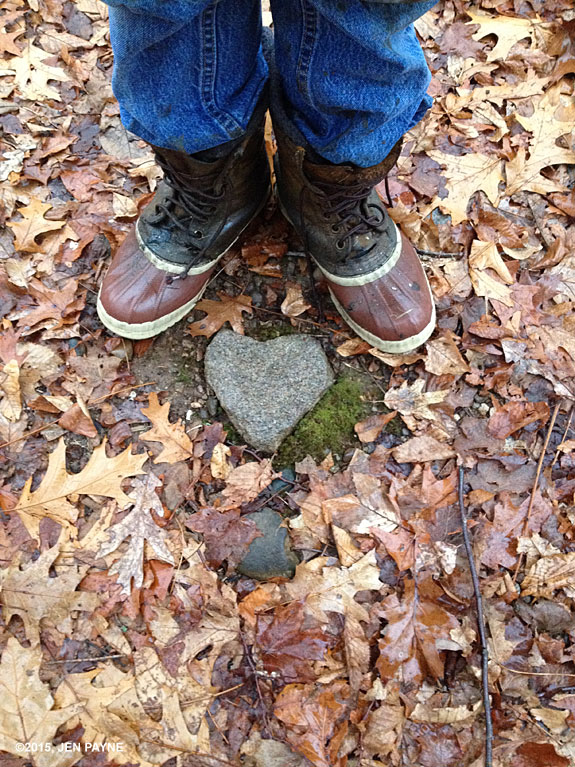
In my version of the 2020 apocalypse, I lit incense and whispered fervent prayers to Saint Anthony and Ganesh. I started meditating. He bought a gun safe. It’s as definite in his living space now as the altar to Buddha is in mine. This should not come as a surprise. I have loved on the cusp of the yin and yang all my life, and it has been no different with him these past seven years. Of the first gift I gave him, he wondered: Speartip? Pestle? Arrowhead? “It’s a heart shape rock,” I swooned, our end-time a forgone conclusion.
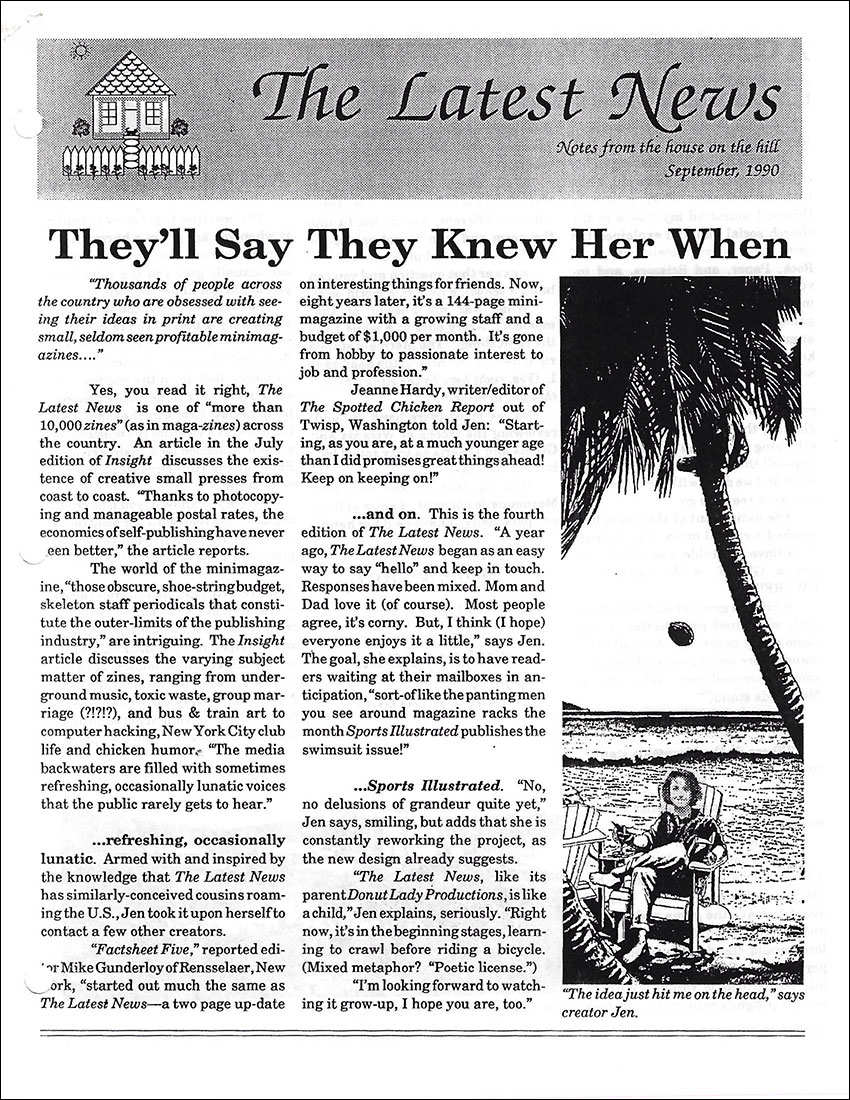
Back in the early 90s, I created a newsletter called The Latest News as a way to keep in touch with college friends and family. It had essays, quotes, photos, bits and pieces of personal news.
I didn’t know it was a “zine” until I read about the zine phenomenon and learned about Mike Gunderloy who reviewed and cataloged thousands of zines in his publication Factsheet Five. I sent him a copy of The Latest News and he reviewed it, and the next thing I knew — BAM! More than 350 people had subscribed and were reading my little 4-page, photocopied newsletter zine!
And then more BAM! The New York Times interviewed me about zines. And Tom Trusky, a professor at Boise State University invited me to be part of a zine exhibit called Some Zines: American Alternative & Underground Magazines, Newsletters & APAs. And later, The Latest News was featured in several retrospective books about the zine phenomenon: Notes from Underground: Zines and the Politics of Alternative Culture and The World of Zines: A Guide to the Independent Magazine Revolution.
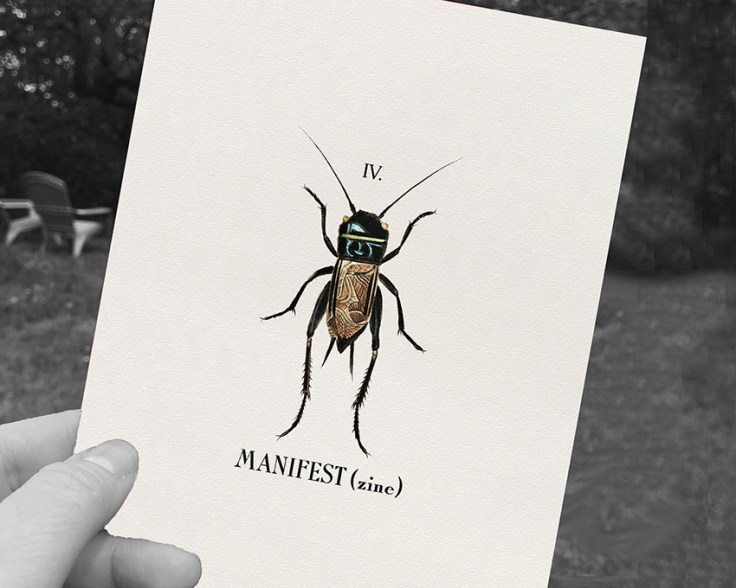
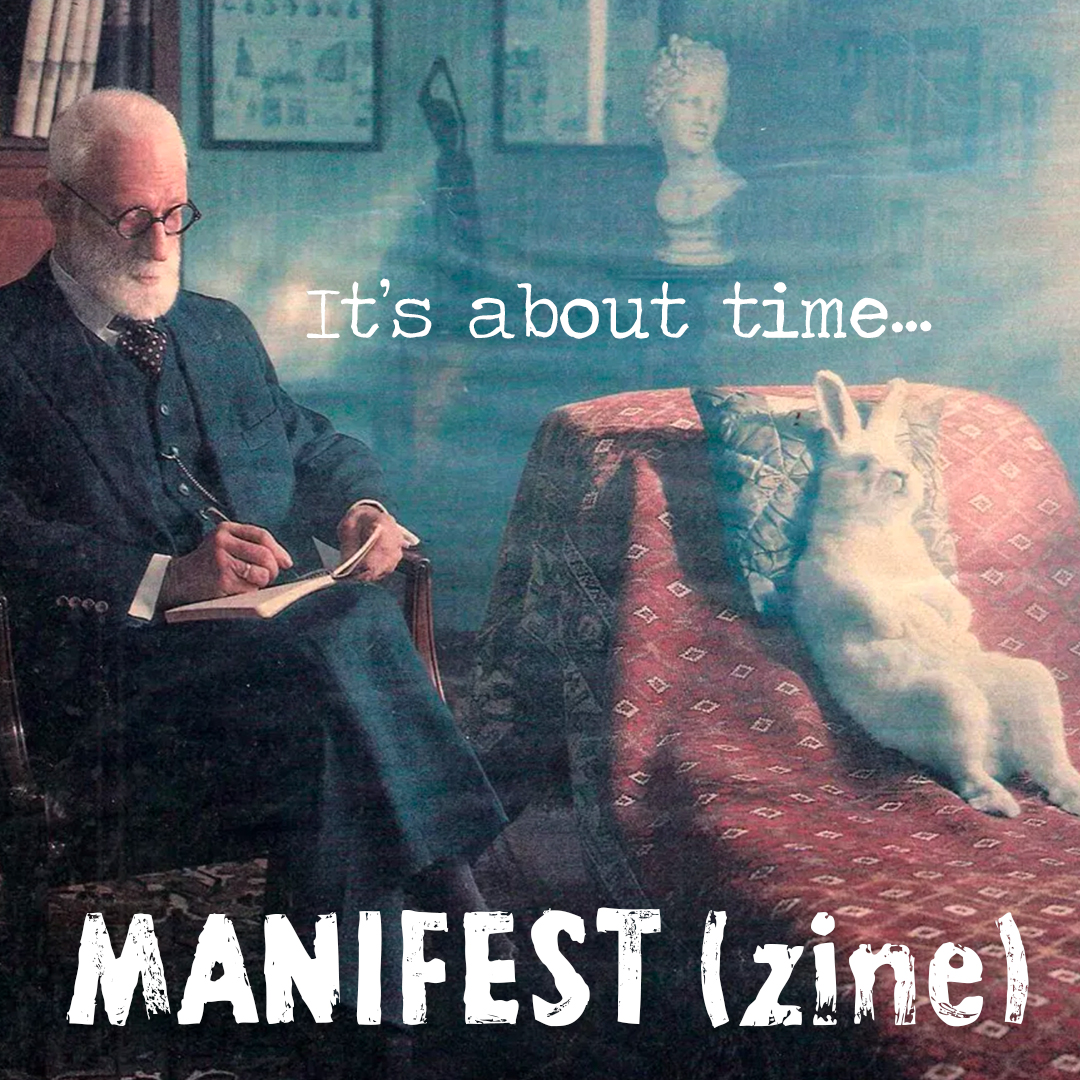
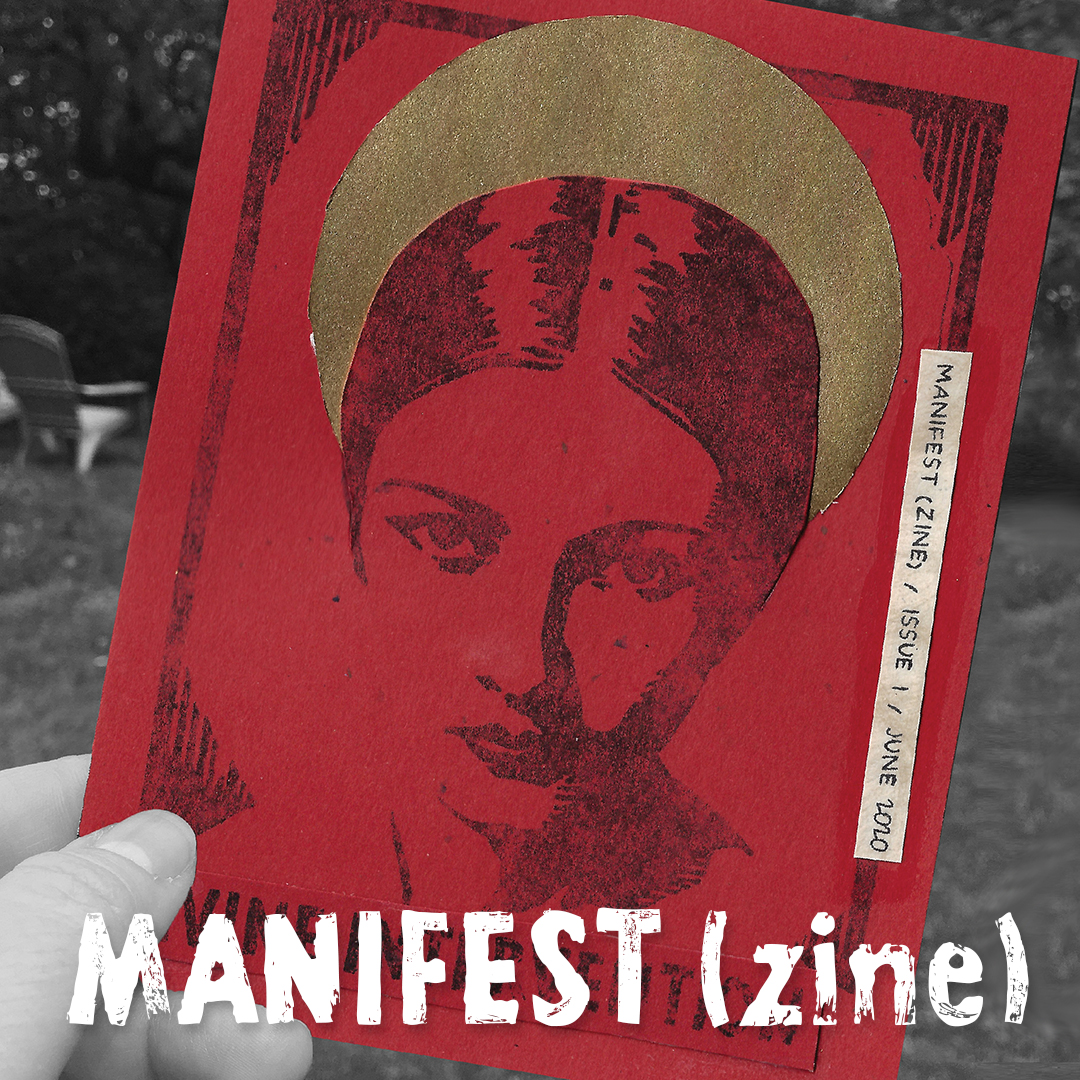
Flash forward…I hate to say this, OMG…30 years, and BAM! MANIFEST (zine) showed up on my creative radar.
It’s been 12 months since I launched this new project, and I can’t tell you how amazed I am at the response. Folks from all over the planet have read about Divine Intervention and Cat Lady Confessions, they’ve discovered It’s About Time and what one does about Crickets. And they’ve been enthusiastic and supportive about what comes next.
I don’t know what comes next…or should I say which idea comes next, because I have a bunch! I hope you’ll stick around for the adventure.
If you are a dreamer, come in, If you are a dreamer, a wisher, a liar, A hope-er, a pray-er, a magic bean buyer… If you’re a pretender, come sit by my fire For we have some flax-golden tales to spin. Come in! come in!
— Shel Silverstein
Indeed, if you are a dreamer, a wisher, a magic bean buyer…then you must visit THE SHOP at Guilford Art Center. It’s truly one of the most unique shopping destinations, offering a selection of contemporary American crafts and jewelry handmade by local artists and others from across the country. You’ll find works in glass, metal, ceramics, wood, fiber, paper, toys and much more.
Much more…like copies of MANIFEST (zine)!
I’m excited to say that MANIFEST (zine) can now be purchased at THE SHOP at Guilford Art Center, along with copies of my books and postcards. Check it out!
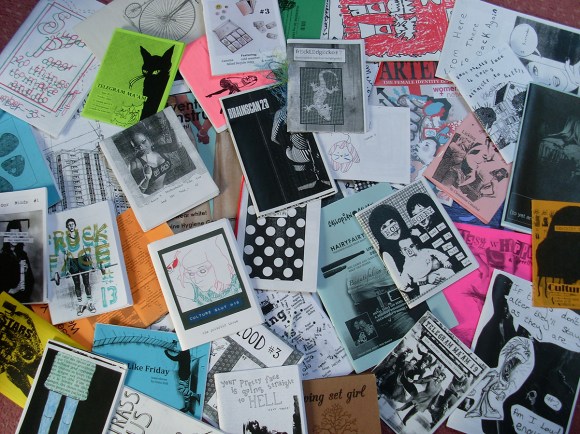
Photo from the Sojourner Truth Library’s Zine Library at the State University of New York, New Paltz
LET’S START WITH: WHAT IS A ZINE? According to Wikipedia, a zine — pronounced zeen — is a small circulation, self-published work of original or appropriated texts and images, usually reproduced via photocopier. It has no defined shape or size, and may contain anything from poetry, prose, and essays, to comics, art, or photography.
A zine is a multi-purposed publication form that has deep roots in political, punk, feminist, artistic, and other subculture communities. Original zinesters are rumored to include Thomas Paine, Ben Franklin, Ralph Waldo Emerson, and Margaret Fuller.
SO THEN, WHAT IS MANIFEST (zine) ? Let’s consider…
MANIFEST (noun): a list of contents
MANIFEST (verb): to make a record of; to set down in permanent form
MANIFEST (adjective): easily understood or recognized by the mind
Then see alsoMANIFESTO (noun): a written statement declaring publicly the intentions, motives, or views of its issuer;
and see also, especially, MANIFESTING (noun) : the creative process of aligning with the energy of the Universe to co-create an experience that elevates your spirit and the spirit of the world;
at which point, you might begin to understand… Manifest (zine)!
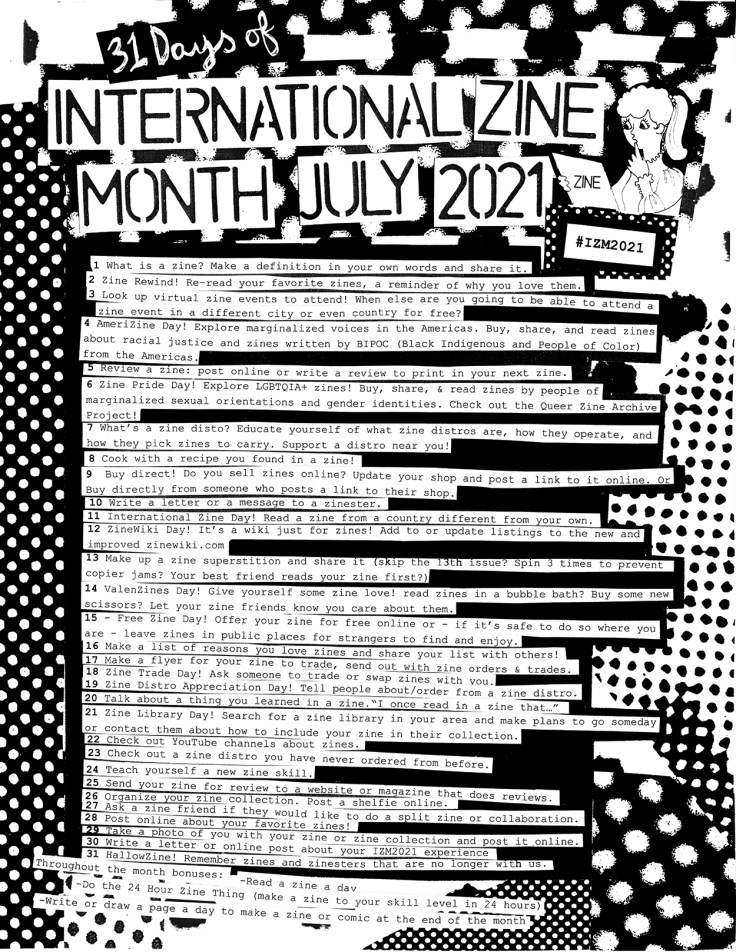
Thanks to Alex Wrek at Stolen Sharpie Revolution, we’re celebrating INTERNATIONAL ZINE MONTH! Stay tuned for lots of good zine things and consider these ways to celebrate throughout the month of July!
One of my favorite things about the work I get do to for my books and zines is the sleuthing. Hunting down random (often misappropriated) quotes, getting permissions to reprint, finding hard copy proof. Evidence for my readers — and myself — that I have done due diligence to make what you hold in your hands valid and true to the best of my abilities.
As a student of English literature and journalism, and as a life-long writer and citer, I feel an incredible responsibility to validate as many of my references as possible. To remind my readers, for example, that it was Henry Stanley Haskins who wrote “What lies behind us and what lies before us are but tiny matters compared to what lies within us,” not Ralph Waldo Emerson or Gandhi, and not Buddha.
When I was writing LOOK UP! Musings on the Nature of Mindfulness, in which I used that quote, I actually spent six months researching and properly attributing quotes. That task included rabbit holes like the quote sourced to a 1970s motivational poster printed by an academic publisher in Texas written by a retired social worker in Oak Park, Illinois.
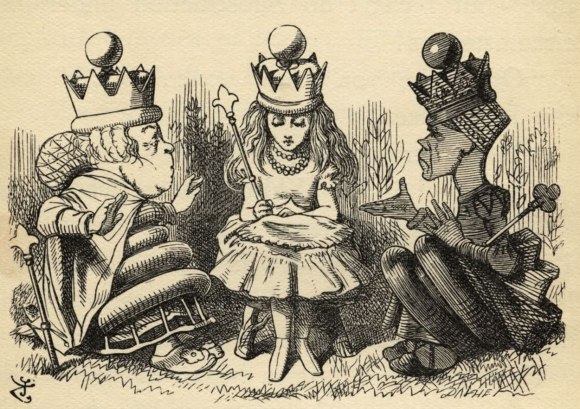
I get a little geeky when it comes to that kind of thing. Like a dog with a bone. Truth be told, I love it as much Alice loved going on her adventures!
My most recent adventure involved Leonard Cohen and a 60-year-old book.
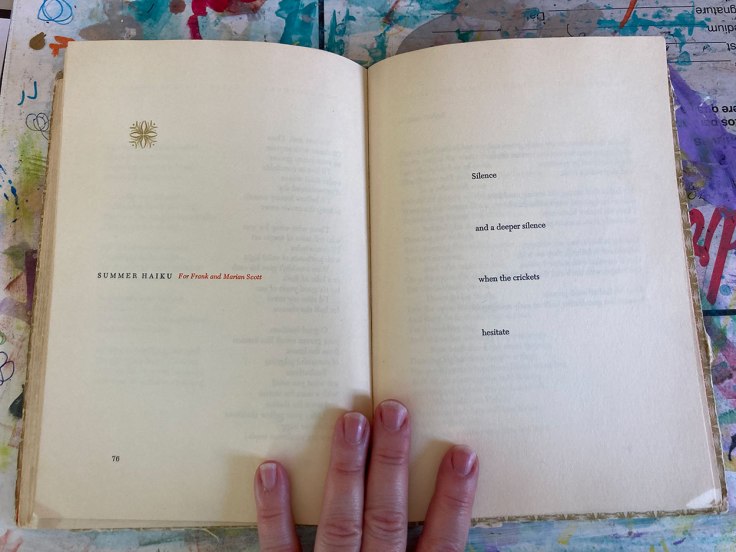
While I was working on the spring issue of MANIFEST (zine): CRICKETS, I found a beautiful poem by Cohen called “Summer Haiku.” The poem appeared in his book The Spice-Box of Earth of which there was a rare, limited edition hardcover edition that included illustrations by Frank Newfeld, a renowned Canadian illustrator and book designer.
There were several copies of the book available online starting at around $200, which is a tad higher than my budget for the zine project. Less expensive copies did not include the Newfeld illustrations, and by this point in the adventure those were key.
I did find and purchase issue number 56 of The Devil’s Artisan: A Journal of the Printing Arts that featured Newfeld’s work on delicious, offset-printed, antique laid pages. It even included a letterpressed color keepsake of Newfeld’s illustration for Cohen’s poem “The Gift,” which appears in The Spice-Box of Earth.
I went on to find a bookseller in Canada, Steven Temple, who owns a copy of the 1961 edition. Searching through the 10,000 books he attends to in his home-based bookshop, he found and took the photo of “Summer Haiku” that appears in CRICKETS.
Of course, I was still curious. What did the rest of the book look like? How many poems were there? How many illustrations? How could I see it? Read it?
My local library did not have a copy of the book, nor did Google Books. According to a 2016 article in Toronto Life, the University of Toronto’s Thomas Fisher Rare Book Library is “home to 140 banker’s boxes worth of Cohen’s archives” including “handwritten notes and letters, portraits, CDs, paintings, novel manuscripts, books, early drafts of his poetry and lyrics, and even art he made when he lived as a Buddhist monk.” Would it include a digital copy of The Spice-Box of Earth?
It did not.
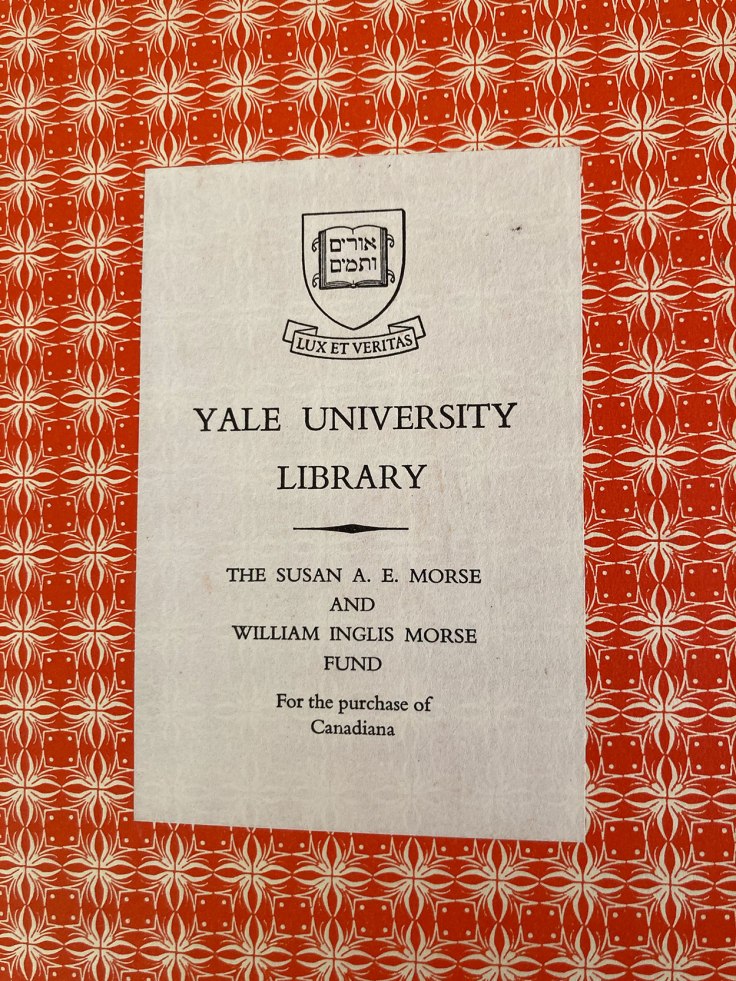
Nor did the online Library and Archives of Canada or the Canadian Electronic Library. But on the Hathi Trust Digital Library website there was a helpful “Find in a Library” link that, when clicked, revealed some familiar and within-driving-distance names: Yale University, Wesleyan University, Connecticut College.
Lightbulb! I immediately emailed a woman I know at our local library, Deb Trofatter, who is the Associate Librarian for Reference Services and Technology, and asked…by any chance…can you get a copy of…
Which is how, on May 15, I came to have in my hands a 60-year-old hardcover copy of Leonard Cohen’s The Spice-Box of Earth to savor and share.
NOTES & LINKS
• The Spice-Box of Earth, illustrated by Frank Newfeld. (Toronto: McClelland & Stewart, 1961).
Alice photo from a Fortnum & Mason (London) holiday window display, possibly 2006. Photographer not found yet.
MANIFEST (zine): Crickets is a riff and a rant about the consequences of creative bravery. It’s a 24-page, full color booklet that includes a curated Spotify playlist for your listening pleasure. Click here to order your copy today!
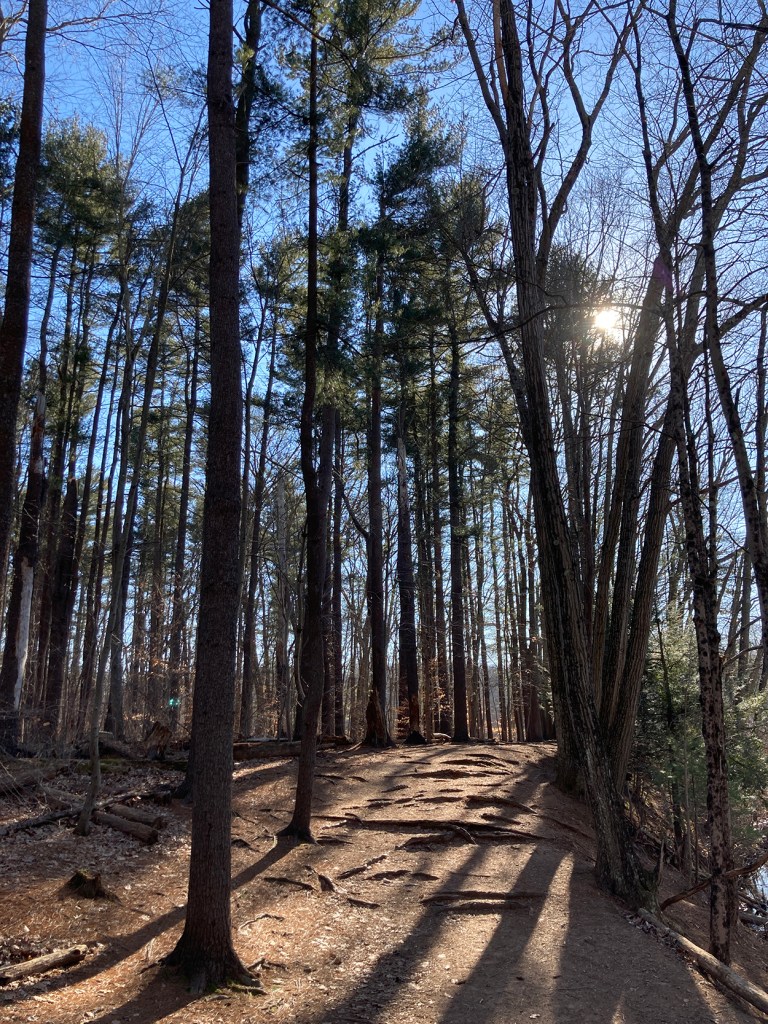
The storm took so much it’s difficult to consider — gone the familiar, the known path. Feet so sure there was no need to gauge progress. It was how I became present again, how I stepped back in the moment.
It was where I could breathe, let go, release my rooted stride. Slough off thoughts. Embrace the solitude with just a heartbeat and birdsong for company.
But her wide canopy of solace is gone now, and I have been hobbled.
Those sacred spaces of breath and respite are changed.
And so am I.
So I take a different path this morning and it comforts me.
It whispers…
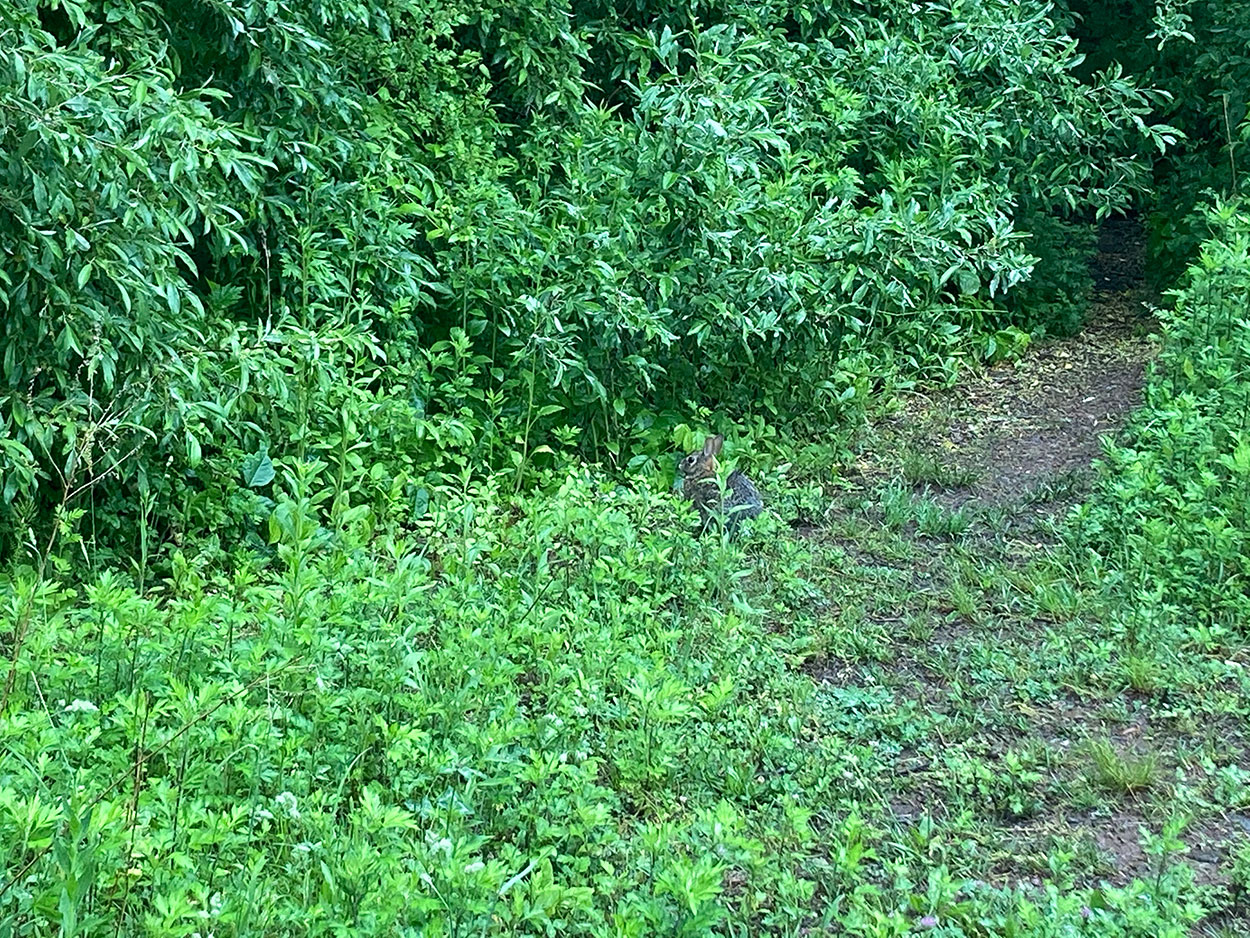
This rabbit will caretake the old path.
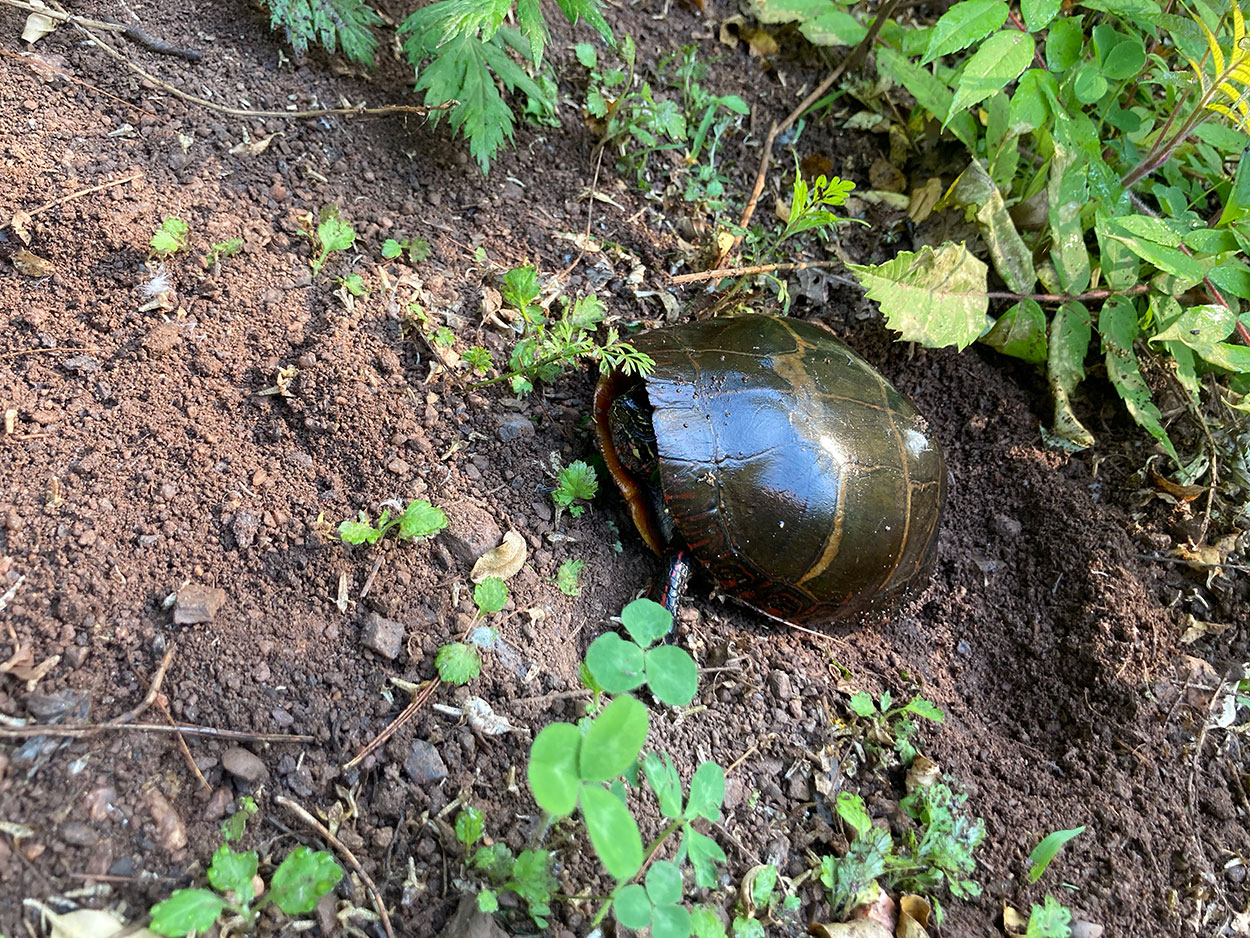
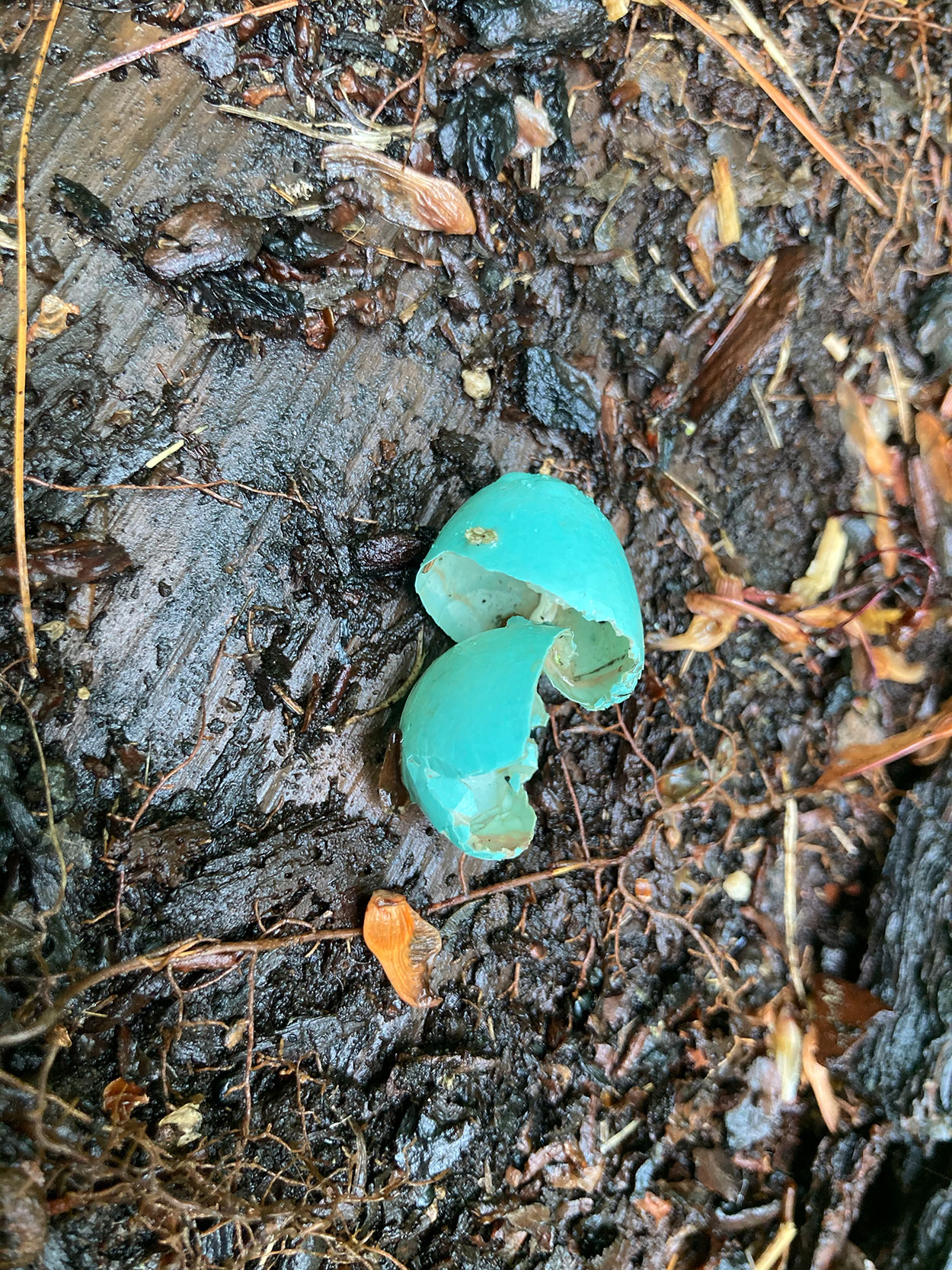
This turtle, hopeful, lays its eggs. As does the robin.
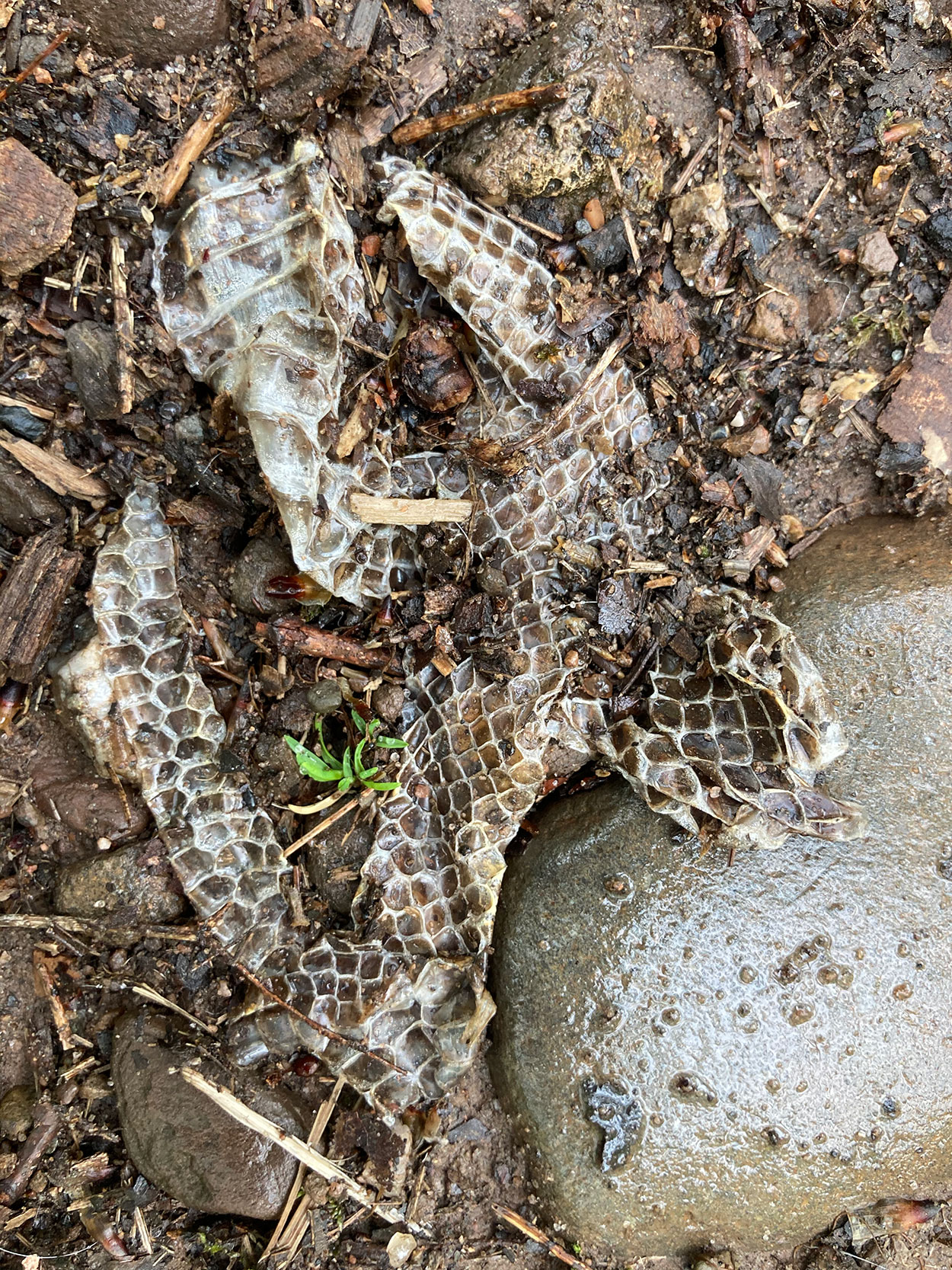
Part of this snake is here but its heart has moved forward,
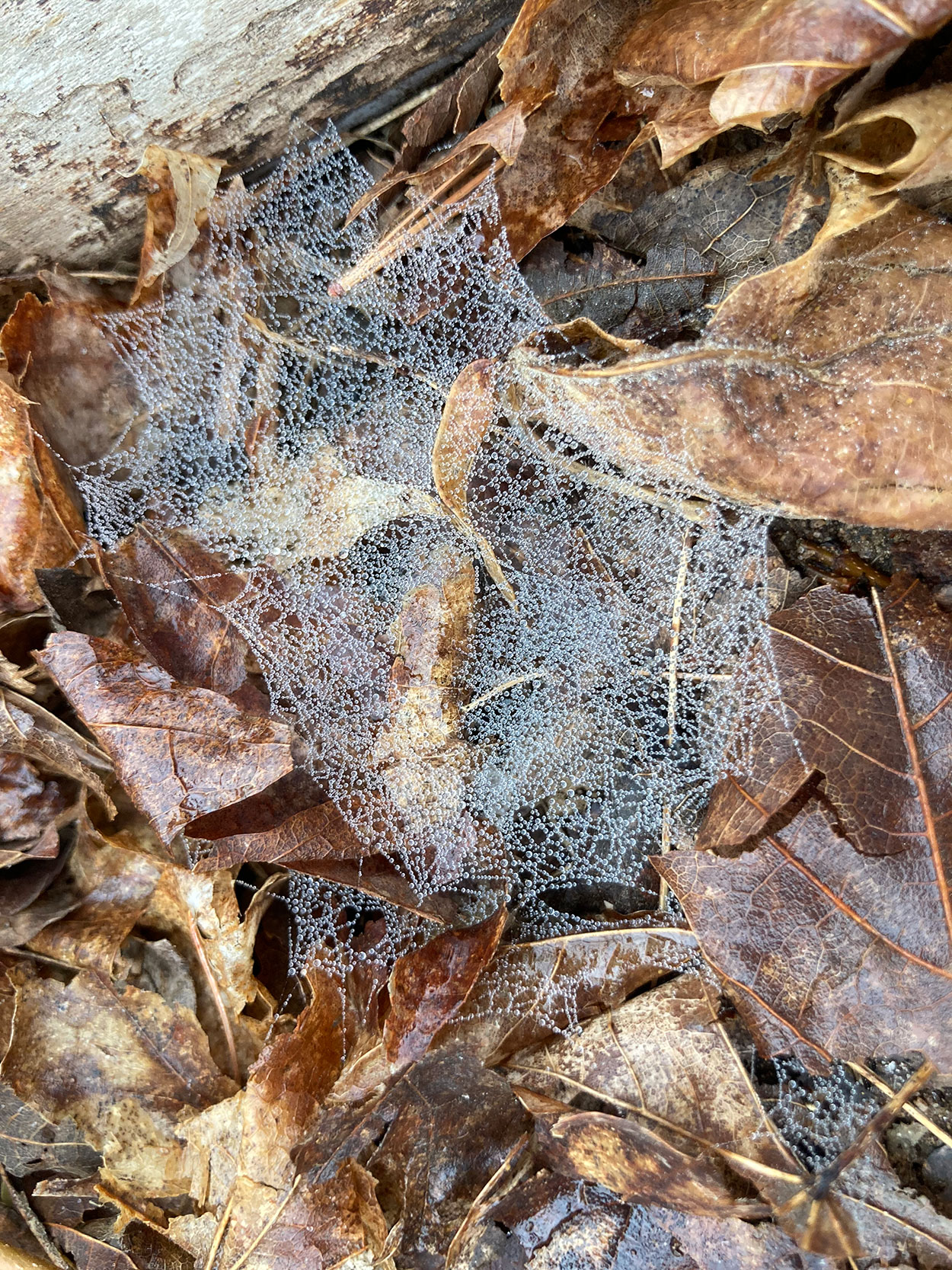
and this spider writes her poems in the spaces left behind.
Volume S of our 1976 Encyclopedia Britannica collection did not have much to say about the Spinning Jenny. What it was: an early machine for spinning wool or cotton. Who created it: James Hargreaves from Lancashire, England. When: 1764. And a short sentence about its significance in the industrial revolution.
I can still see the two-sentence paragraph description and its line drawing of the Spinning Jenny sitting on the page. What I could not see at the time was the 500-word essay being requested by my 6th grade social studies teacher Mr. Jacobson.
So I did what any good writer would do. I improvised!
What is a spinning wheel used for? How does it work? Where does the wool and cotton come from? What was life like in Lancashire? What was life like in 1764? Who was James Hargreaves? What was the industrial revolution?
Et voila! Essay.
Pulling from different sources, I spun together that essay and earned an impressive A- for my effort.
Ironically, one of the reasons the Spinning Jenny was so important is that it allowed a worker to use multiple spindles of material in the forming of thread.
Fast forward 40-something years, and I am still spinning. Still pulling from multiple sources to form threads of thought that get woven into my writing and creative work.
I love the experience of that process. Going down the rabbit hole of “what do we have here?” and finding winding paths to all sorts of unexpected discoveries.
I love the organic nature of those discoveries — what reveals itself as I walk along those paths. A bit like Alice, I suppose, wandering and Wondering in that strange, unexplored land.
I love the challenge of digging deeper to find some key piece of information that completes the story. I love doing research and following breadcrumbs.
The best part, of course, is when it can all finally come together. Tie off all of the threads, weave the ends together. See the conclusion of the hard work: the poem, the book, the zine, this essay.
I suppose, if you think about it, that make me a Spinning Jenny, wouldn’t you say?
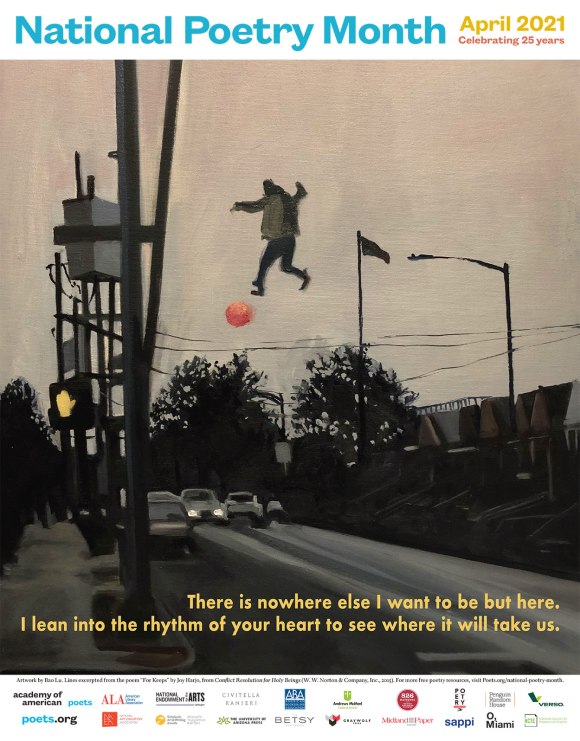
National Poetry Month was inaugurated by the Academy of American Poets in 1996. Over the years, it has become the largest literary celebration in the world with schools, publishers, libraries, booksellers, and poets celebrating poetry’s vital place in our culture. Click here to learn more.
Here at Random Acts of Writing, I’ll be writing a poem a day at part of NaPoWriMo…or attempting to, at least, muse willing. Join me? Or check out these other…
Record yourself reading a poem, and share why you chose that work online using the hashtag #ShelterinPoems. Be sure to tag @poetsorg on twitter and instagram!
The S.S. Pussiewillow II is a whimsical machine by inventor-sculptor Rowland Emett, who was known worldwide for his intricate machines that whirr, spin, flash, sway, and quiver, going nowhere, doing nothing, poking fun at technology. It appeared on display circa 1980 in the Flight in the Arts gallery at the National Air and Space Museum in Washington, DC, complemented by music composed and performed on antique harpsichords by Trevor Pinnock. This indescribable kinetic work became a favorite of adults and children alike. The object was taken off display in 1990, but visitors with long memories still ask about it.
From the postcard:
The S.S. Pussiewillow II, a Personal Air and Space Vehicle of unique Stern-wheel configuration, with Flying Carpet attributes, by Rowland Emett, O.B.E. An adapted Kashmir carpet is enmeshed within a light Jupiter-ring, which undulates and spins to provide False Gravity. Twelve variable-speed Zodiacs spin up to ensure activation of suitable Sign, to nullify adverse contingencies. In combined Control Module and Hospitality Room, the Pilot, accompanied by his Astrocat, pedals lightly (aided by helium-filled knee-caps) to energize Stern Paddle-wheel. There is an elevated Power-boost G.E.O.R.G.E. (Geometric Environmental OARiented Row-Gently Energizer), and a Solar Transfuser for trapping random sun-rays. Module is shown in open attitude, revealing possible Extraneous Being being won-over by Afternoon Tea, and toasted tea-cakes.
“A memory I wasn’t entirely sure was real, of finding something that seemed completely but wonderfully out of place in the National Air and Space Museum,” says the person who took the video below, and I completely agree. Like them, I too, remember wandering around the Air and Space Museum and finding myself in this magical room with its dancing machine and fantastical music. I’ve kept the postcard (above) tucked away ever since — what fun to revisit the memory all these years later!
Postcard and text from the National Air and Space Museum, Smithsonian Institution, 1981
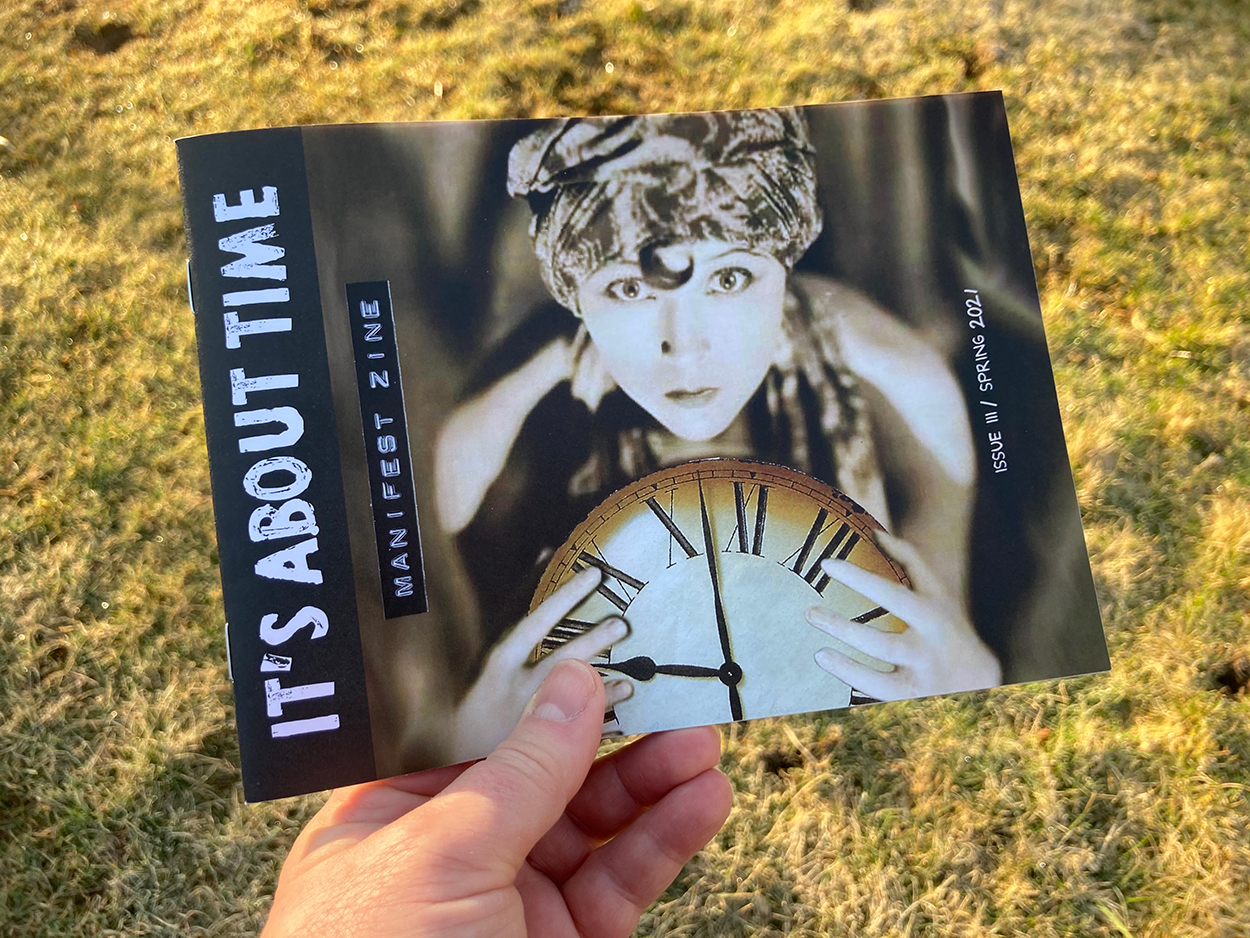
If you like this magical creation, you’ll LOVE the It’s About Time issue of MANIFEST (zine). On sale now!
In the pieces of memory
and scraps of conversations
transcribed in situ
I will tell you about
the headless groom
and the dead dog,
about the failure of Saint Raphael
and the irony of the phrase
“you could get hit by a bus.”
I’ll tell you the 15,000 words that broke me
and the ones that almost put me back together
until I realized my heart was better
cracked wide-open like that anyhow.
Now all I need to do is type
No matter what we think
or how it feels,
we don’t really break break,
even our break downs
imply eventual turn ups.
Oh sure, we bend a little,
(bend over backwards, too)
fold under pressure sometimes
lean into the pain
collapse with exhaustion
appear to come apart at the seams
and yet…
And yet.
Upon this holy ground of spirit
there is still room to breathe,
we are not damaged, we are flexible
we are not falling apart, we are rebuilding
we are not broken or undone.
By the very fibers of our being,
we are strength and grace
unyielding.
Perhaps it is the same flock,
the one I met years ago,
the one that startled me
here on this shore
that very first walk,
when every rock and curve,
every wind and wave
was unfamiliar still.
Perhaps it knows me now,
this flock of small fidgety birds,
always nervous or impatient,
quickened by anticipation of
the next wave, skittering
to the beat of their sharp trills, quickly quickly ahead
never near enough for hello again.
Until this morning when I,
in keen focus on a resting shell,
became for a moment
likewise and warmed by the sun,
looked up to find myself surrounded,
heart quickened and nervous
that one false move would startle them,
their gathering at my feet.
This morning, not feeling particularly one way or the other, I took a walk in the woods. My Eeyore-gray rain jacket seemed enough, I thought, until the louder rains came. So, I tucked myself under the branches of a sweet, young hemlock who smelled green and damp and seemed not to mind me much. I was less alone than one might imagine, there on the torrential edge of morning — in the air, I could smell the fox lingering and musing to herself on my wet and getting wetter predicament. I think I heard her laugh. Then the storm subsided just enough for me to start again, and so I did, up and towards the simmering pond when there — just around the bend — I spied the bobbing yellow coat of a kindred spirit. He sloshed through a puddle or two, and nodded with a smile that said Hallo as we passed. Hallo I smiled back, good thinking, that umbrella. Yes, yes. Good thinking and good morning.
This year — oh this year — has been challenging. The pandemic seeps into all of the nooks and crannies, as silent as air but as powerful as water. It brings with it immediate and obvious damage; it slowly wears away at what we thought bedrock; with time and time and time, it creates fissures and chasms.
But just like water, the pandemic also brings change. It washes away what was stagnant; reveals the things we were needing to see; carries with it a different way of moving around in this world. And in that way, creates new life…even when it seems to not.
The challenge, as we wait for this sickness to ebb, is to settle into the contradiction. To get comfortable with the unknowing, to sink our bare feet into the here and now, to consider what we might find hidden in the flotsam and jetsam.
And in that way, no matter, here on this day of Thanksgiving, we are — each of us — able to give thanks.
Thanks for struggle and challenge.
Thanks for breathe and the semblance of health.
Thanks for the clamor of the world still turning.
Thanks for the silence of stillness.
Thanks for what we let go.
and thanks for what we hold dear.
Alive without breath,
As cold as death;
Never thirsty, ever drinking,
All in mail never clinking.
My nephew, fresh from the pages of Tolkien,
sees a fish carcass on the beach,
predicts Gollum! though we both wonder.
He considers the waves left from a storm,
the wind that blows us each askew,
thinks with furrowed brow, like me
as I sift through those things I know:
the trespass of raw sewage
and slick film of leached oil,
the change of warming waters,
our persistent lack of rain.
But he’s off on a new adventure now,
throwing boulders with grunts and gasps, Take that! he yells, a holler into the wind
as loud as mine would be if allowed
to grieve the things he cannot see.
The view from here today is this: a shelf in my office. A still life snapshot: longtime friend Winne the Pooh, introduced to me by my Dad when I was a baby; my UMass diploma; the when-in-Paris photo with my friend DeLinda; a Wonder Woman mug; and the very last photo I have of my Dad.
He died less than two weeks later, August 31…twenty-five years ago today.
I always think: I’m glad I asked him to take off his sunglasses that day, because you can see his eyes in this photo. How they connect up with his smile, mirror his laugh.
I always think — if I look hard enough — I’ll see an angel hovering above our heads, hidden in the shadows, waiting.
I remember that day: a cousin’s wedding, the whole family together for the first time in 20 years, his laugh while he played on the floor with his great-nephew, the feeling of not wanting to leave, of wanting just a few more minutes with him.
Now it’s a photo that says more than I can ever tell you. And it sits on a shelf, next to the love he introduced, next to the education he encouraged and the travel he inspired. On a shelf, and on shoulders strong enough to carry all of that forward.
And more: me, Wondering through this life without and yet so very much WITH him. Every day.
There was snow
and she was her usual
ornery self about the matter — I don’t like snow
in a sweet huffy fit
mirroring her petulant I don’t like trees
when she’d sneeze.
How I miss all of that,
but I digress…
There was snow
and she was her usual:
the smile-and-laugh
approach to hard hard life,
a big and bold disguise
a wink even, I think,
and then she left.
She left and then
the living room light
turned on by itself
lit from a beam of sun
she never saw coming
coming through the window
then the radio lit for morning…
Tell me all your thoughts on God ‘Cause I’m on my way to see her
In the pieces of memory
and scraps of conversations
transcribed in situ
I will tell you about
the headless groom
and the dead dog,
about the failure of Saint Raphael
and the irony of the phrase
“you could get hit by a bus.”
I’ll tell you the 15,000 words that broke me
and the ones that almost put me back together
until I realized my heart was better
cracked wide-open like that anyhow.
Now all I need to do is type
The new white tuft in my hair
reminds me of the rabbit
who lived in my yard last spring.
I called her Idiom,
soft brown fur, also white tufted,
she taking time to smell roses
when I could not.
Now there is all the time in the world
to smell roses,
to smell daffodils, tulips, lilacs, iris, peonies
each in succession, not waiting for us
or virus or waves or protests or
the great collective consciousness to
wake the fuck up and see how it’s all connected
the microscopic virus,
the pandemics of greed and hate,
the white tuft in my hair,
the small new rabbit,
the small new baby, even
who mews like all new creatures
white, black, furred, feathered
who may or may not outrun the fox
to meet the multiflora rose next June
introduce themselves to the clover
its bumble and honey companions
I step softly over so as not to disturb
their humble prayers or mine
to a god who needs no standard,
requires no bloodletting,
asks no more than sweet, simple reverence
I SWEAR I DIDN’T PLAN IT! I swear I didn’t plan to launch my new zine, MANIFEST (zine), on the cusp of International Zine Month (thanks Alex Wrekk). But sometimes really good things happen that way!
WHAT IS A ZINE, YOU ASK? A zine — pronounced zeen — is a small circulation, self-published work of original or appropriated texts and images, usually reproduced via photocopier. It has no defined shape or size, and may contain anything from poetry, prose, and essays, to comics, art, or photography.
A zine is a multi-purposed publication form that has deep roots in political, punk, feminist, artistic, and other subculture communities. Original zinesters are rumored to include Thomas Paine, Ben Franklin, Ralph Waldo Emerson, and Margaret Fuller. Google it. You’ll be surprised by what you find!
NOW, TALK ABOUT REALLY GOOD THINGS HAPPENING… Back in the early 90s, I created a newsletter called The Latest News as a way to keep in touch with college friends and family. It had essays, quotes, photos, bits and pieces of personal news. I didn’t know it was a zine until I read about the zine phenomenon and learned about Mike Gunderloy who reviewed and cataloged thousands of zines in his publication Factsheet Five. Then I sent him a copy of The Latest News and he reviewed it, and the next thing I knew — BAM! More than 350 people had subscribed and were reading my little 4-page, photocopied zine!
And then more BAM! The New York Times interviewed me about zines once. And Tom Trusky, a professor at Boise State University invited me to be part of a zine exhibit called Some Zines: American Alternative & Underground Magazines, Newsletters & APAs. And later, The Latest News was featured in several retrospective books about the zine phenomenon: Notes from Underground: Zines and the Politics of Alternative Culture and The World of Zines: A Guide to the Independent Magazine Revolution.
Flash forward…I hate to say this, OMG…30 years, and here we are: MANIFEST (zine) and International Zine Month. Go figure!
The experience of MANIFEST (zine) so far has been pretty go-figure magical. Maybe enchanted? The idea to do a zine (again) just appeared. The first issue, Divine Intervention, practically gathered itself together — one piece inspiring the next and the next. The final printed piece makes me smile every time I look at it, and folks who have read it so far seem to feel the same way.
Bottom line? It’s really, really good to be back!
So Happy International Zine Month!
ONE ISSUE July 2020 Divine Intervention $5.00
SUBSCRIPTION Annual, 2020 2 issues $10.00
PROJECT SPONSOR 2 issues, 2020 plus a special gift $25.00
I’m reading Mary Oliver again
and for the first time, too, it seems,
meeting once more my kindred
in these quieter, solitary days —
only she likes dogs and I’m allergic, so
I think of the love I’ve shared with cats
and superimpose that over
what she so easily offers on the page,
allowing me to sink my feet
deep into the sand of beaches we love,
find borrowed respite and fresh salt air
as she walks and they walk and we walk.
This is not unlike my general effort of late,
translating dogs into cats,
crumbs into cake, lemons into aid,
finding devotion somewhere
in the twists and turns of what is,
of here and now, of no I don’t love dogs but I do love you,
and damn it someone should write that down
to remember before it’s too late.
Like Mary did:
gathered up all of her words
her favorite words, her treasured words
her words so precious and important
they required devotion
in this heavy record
of everything she wanted to say
and everything she held in silence
“This,” my friend says, “is lovely.”
Lovely is never a word
I use to describe the ugly afghan
crocheted by my grandmother
and dragged out of storage
when guests sleep on the sofa.
It is avocado green and orange,
milk chocolate brown,
and amber gold,
like the gold my parents
painted the kitchen
of our new house back then.
“She picked each color herself,”
my friend explains,
as she carefully runs her fingers
up and over the zigzag pattern
with awe and affection,
though she never
met my grandmother.
It is the color palette
of my seventies family,
when Mom and Dad
were almost-happy still,
my sister played with Barbie
by the sliding glass window,
and my bangs were
appropriately feathered
away from my face.
“She thought about
you and your family
with each stitch.”
I could see her then,
sitting in her green recliner,
counting stitches like
the beads on her Rosary. Love Boat on the Sylvania,
drinking instant iced tea
while a cigarette smokes
from the ashtray.
It was after her husband died,
and she traveled with her dog Coco,
bringing Shoo Fly Pie and
Moravian Sugar Cake from
Pennsylvania to our house
in Connecticut.
That Christmas,
she crocheted ponchos for us, too,
and took me to Hawaii
to see my Grandfather’s name
carved in marble at the
Pearl Harbor Memorial,
watch as she traced his name
with her fingers, slowly.
The same deft hands
that crafted this blanket
raised a son and daughter
independently in the fifties;
folded in prayer
for neighbors and friends;
prepared feasts
with love
for grandchildren.
“So much thought went into this,”
my friend continues,
as we carefully fold the afghan
and place it on top
of the antique hope chest
in the corner.
When I told a friend last spring that I was writing a poem a day for National Poetry Month and NaPoWriMo, she asked me how I found the inspiration for 30 poems.
“It’s like rummaging around in a junk drawer,” I told her. “You’re bound to put your hands on something!”
And sure enough, one April, I found inspiration from a seagull, bugs, a haiku class, a trip to the Dollar Store, and pizza. Among other things. (See the full tally here.)
Now granted, they are not all masterpieces. But that’s not the point. Like any writing challenge — NaNoWriMo, HistNoWriMo, SciFiWriMo — the goal is simply to get into the habit of writing.
“Simply” of course being somewhat of an issue if you are lacking inspiration. Which brings us back to that junk drawer. There are so many things in your junk drawer – think about it!
the first time you rode a bike
your best friend from kindergarten
your mother
what you had for breakfast
your first kiss
last night’s dream
what you saw on a hike last weekend
your favorite painting
the song you can’t get out of your head (and why)
an object sitting on your coffee table
So, GO! Rummage around — see what you can find. Reach way far back if you have to…and then CREATE! Describe, elaborate, enumerate, paint a picture with words (or even paint if you are so inclined). It doesn’t have to be perfect…as Nike says, JUST DO IT!
Here is some evidence of rummaging. This quirky little poem showed up from a post-it note I found on my desk one morning:
(Chinese Food)
The note says (Chinese Food)
but it is random
out of context on a piece of paper
in a stack of papers
at least 2 months passed
my past included (Chinese Food)
but what?
and with whom?
and what is the purpose
of this little clue
set out for me to follow
too early even for General Tso,
though I never met him personally
rumor has it, he was a press man…
as a proponent of the written word
do you think he rose early
to consider form and function,
rhyme, reason and rice —
like this poet now hungry
for the pork fried variety at 6?
But a fair warning about rummaging…you have to be brave. You have to be brave because you never know what you’re going to find in that drawer. Sometimes, it will be as benign as a post-it note about Chinese take-out. Other times, you may pull out a ghost, some long lost memory that needs to see the light of day.
Hans Christian Anderson is credited with saying: “Everything you look at can become a fairy tale, you can get a story from everything you touch.”
Ultimately, isn’t that our job as creatives? Telling the story. No matter our medium — poetry, painting, prose — we are charged with the task of putting our hands on the story and sharing it with others.
So, get in there! Rummage around for the inspiration. Reach way far back if you have to…and then TELL THE STORY!
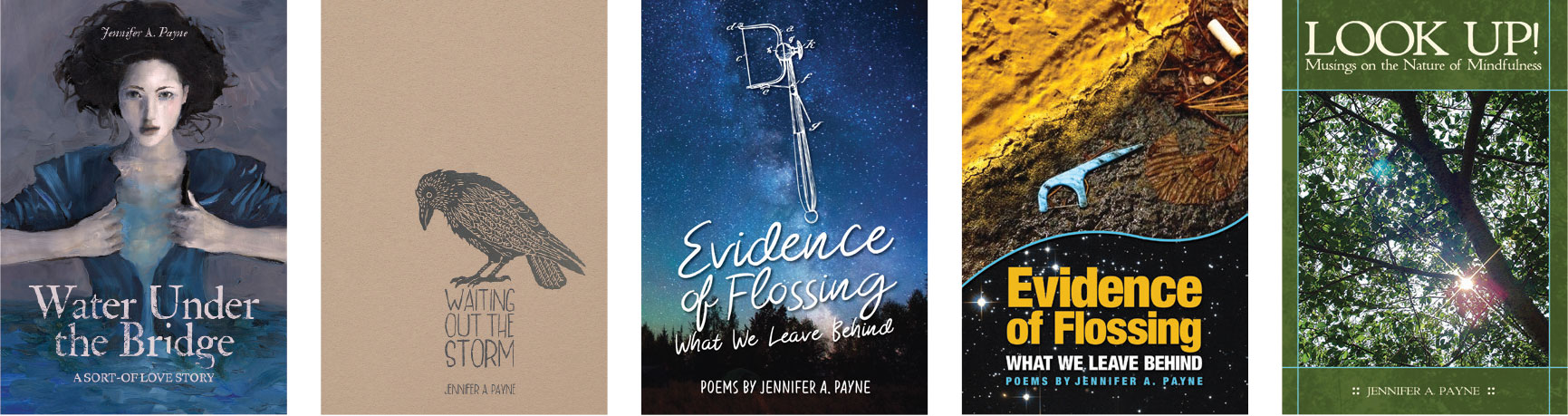
You can read more of Jen Payne’s poetry in her books Evidence of Flossing: What We Leave Behind and Waiting Out the Storm, available from Three Chairs Publishing.

















 randomactsofwriting.net