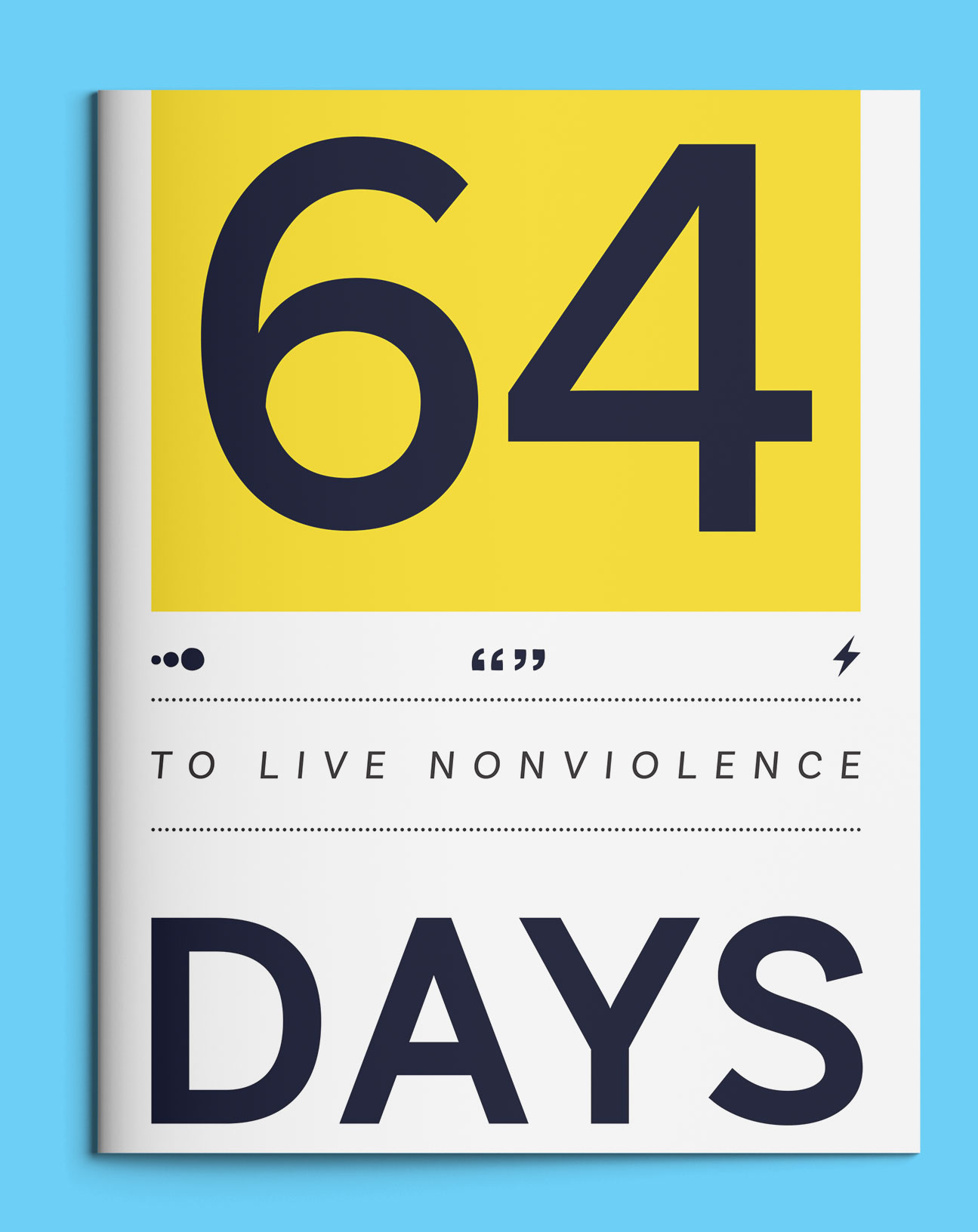
“64 Days to Live Nonviolence” SEASON FOR NONVIOLENCE
The Season for Nonviolence marks the 64 days between the anniversaries of the deaths of Mohandas Gandhi on January 30 and Martin Luther King Jr. on April 4. Cesar Chavez‘s birthday also falls within the Season on March 31. The Season for Nonviolence was co-founded by Arun and Sunanda Gandhi and the Leadership Council of The Association for Global New Thought (AGNT) in 1998.
To help you learn to practice nonviolence one step at a time, one choice at a time, one day at a time, the M.K. Gandhi Institute for Nonviolence created a booklet called “64 Days to Live Nonviolence.”
They explain:
Through our daily nonviolent choices and action, our noble and courageous spirits rise to move the world in the direction of peace. Wherever you are in your journey, we hope this booklet will support your growth and encourage you, reminding you that you are part of a worldwide community working for nonviolence and peace.
Will you join me for “64 Days to Live Nonviolence”? I’ll be posting on Random Acts of Writing’s Facebook page starting tomorrow, if you’d like to share your thoughts or you can:
“They tried to bury us, but they didn’t know we were seeds.”
Yesterday, I had the privilege of attending the 40th annual MLK Breakfast, presented by the Rev. Dr. Martin Luther King, Jr. Heritage Foundation. It was a beautiful community event that included readings, music, and a presentation by Pulitzer Prize winning author Dr. Jeffrey C. Stewart who spoke about the history and importance of non-violence.
I went at the invitation of my friend Laura Noe, who has her finger on the pulse of activism in truly inspiring ways. She reads voraciously, volunteers liberally throughout town, and knows how to make good connections for others. She’s currently working towards her second Master’s Degree, in Public Health (her first was in Gender Studies), and she’s teaching two courses at Southern Connecticut State University this semester, Psychology of Women and Adolescent Development.
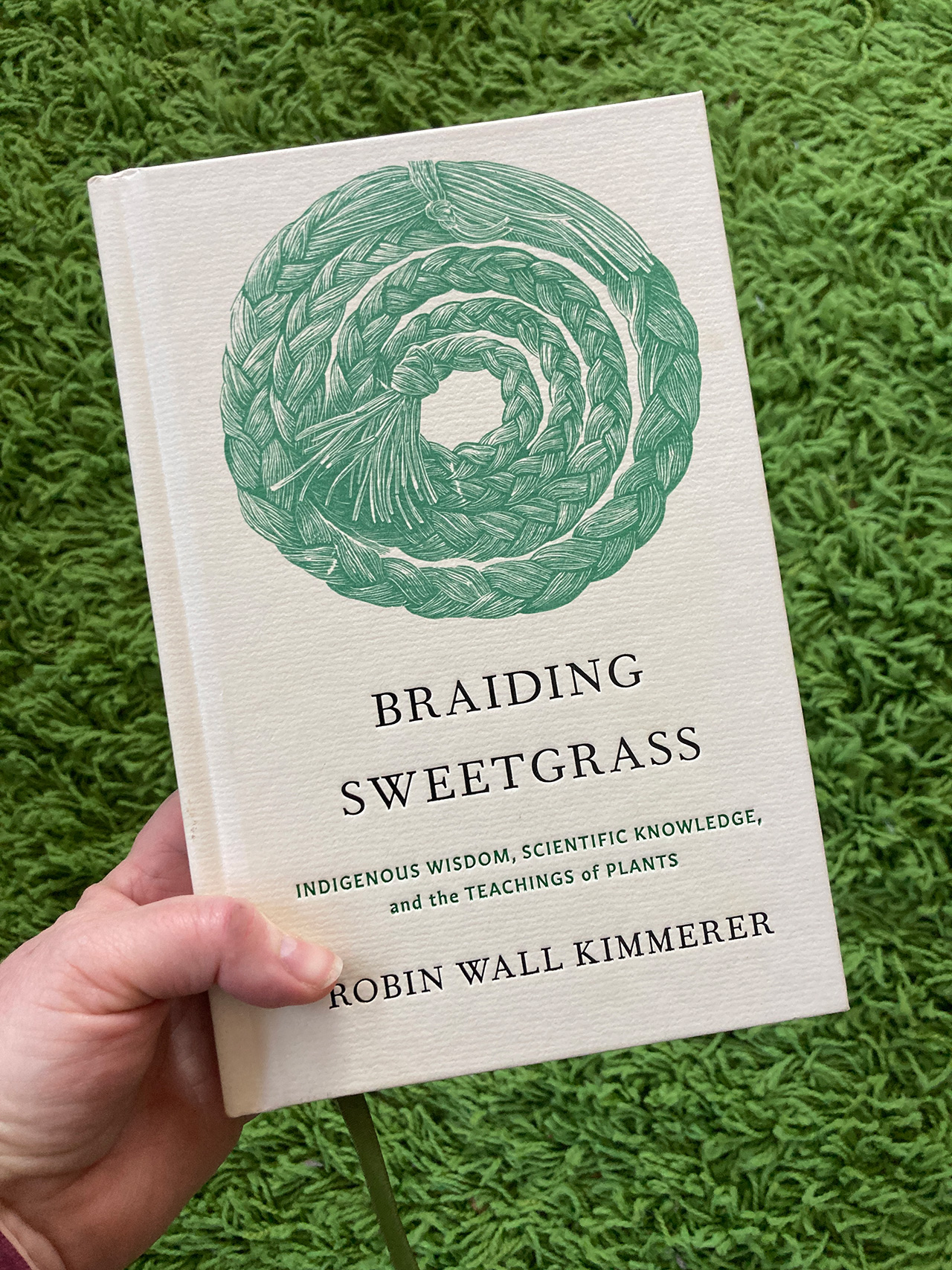
For several years, Laura has recommended I read the book Braiding Sweetgrass by Robin Wall Kimmerer, about the reciprocal relationships between humans and the land, with a focus on the role of plants and botany in both Native American and Western European traditions.
So yesterday afternoon, while the world around us marched to a seemingly different beat, I picked up my beautiful hardcover copy of Braiding Sweetgrass and began to read.
I suspect this was a divinely inspired moment — something somewhere knew it was exactly what I was supposed to be reading yesterday, the odd ironic day in 2025 when we simultaneously honored a great leader like Martin Luther King Jr. and inaugurated a demon and his minions.
I wanted to share with you this gorgeous passage from the new Introduction in the 2020 edition…it delivers, I think, beautiful blades of hope.
I began writing Braiding Sweetgrass in what seems, from this moment in the midst of a global pandemic and the upheavals it has generated, a more innocent time, when climate catastrophe was a hot glow on the horizon. We could smell smoke but our home was not yet engulfed in flames. There was guarded optimism for leadership on climate change and justice for land and people, human and otherwise.
A lot has happened since in climate urgency, with the political pain of vile Windigos come to office and all the wounds they have inflicted. I don’t need to say more. This evidence might suggest that the medicine of plant stories has not worked very well to heal our relationships with land and each other. The powerful purveyors of destruction are still in power, the skies darkening. But as always, I take my guidance from the forests, who teach us something about change. The forces of creation and destruction are so tightly linked that sometimes we can’t tell where one begins and the other leaves off. A long-lived overstory can dominate the forest for generations, setting the ecological conditions for its own thriving while suppressing others by exploiting all the resources with a self-serving dominance. But, all the while it sets the stage for what happens next and something always happens that is more powerful than that overstory: a fire, a windstorm, a disease. Eventually, the old forest is disrupted and replaced by the understory, by the buried seedbank that has been readying itself for this moment of transformation and renewal. A whole new ecosystem rises to replace that which no longer works in a changed world. Braiding Sweetgrass, I hope, is part of that understory, seeded by many thinkers and doers, filling the seedbank with diverse species, so that when the canopy falls, as it surely will, a new world is already rising. “New” and ancient, with its origins in the Indigenous worldview of right relation between land and people. What the “overstory” of colonialism tried to suppress is surging. It is the prophesied time of the Seventh Fire, a sacred time when the collective remembering transforms the world. A dark time and a time filled with light. We remember the oft-used words of resistance, “They tried to bury us, but they didn’t know we were seeds.”
Kimmerer, Robin Wall. Braiding Sweetgrass: Indigenous Wisdom, Scientific Knowledge, and the Teachings of Plants. United States: Milkweed Editions, 2020.

 randomactsofwriting.net